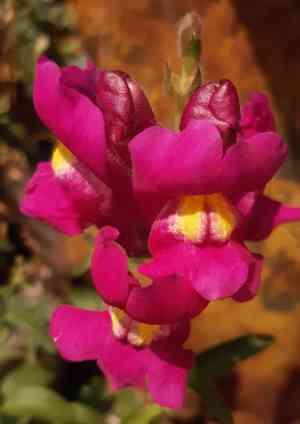
American Speedwell (Veronica americana)
Also known as: American Brooklime, American Speedwell
American Speedwell, a perennial herb native to North America and Asia, features small violet flowers. It thrives in moist areas such as stream banks and wetlands, spreading via creeping rhizomes. It prefers rich, well-drained soil and partial to full sunlight.
In This Article
Attributes of American Speedwell
Lifespan
Perennial
Plant Type
Herb
Plant Height
10 cm to 51 cm
Spread
90 cm to 1.2 m
Leaf Color
Green Blue
Flower Size
8 mm
Flower Color
Purple Blue
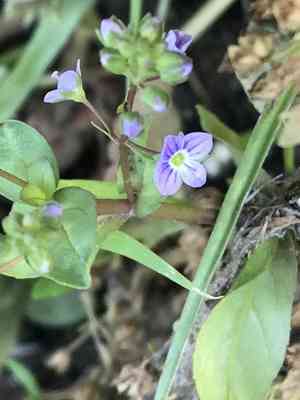
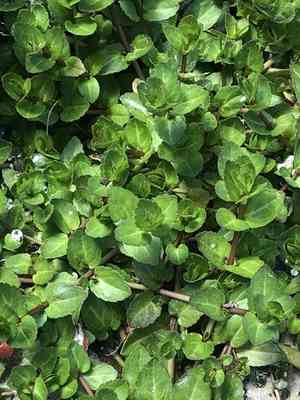
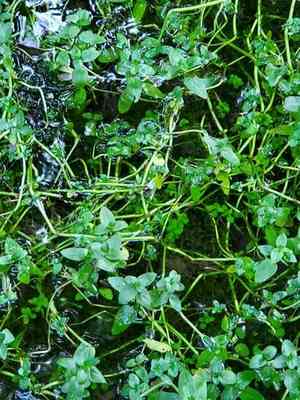
Images of American Speedwell
Quickly Identify American Speedwell
1
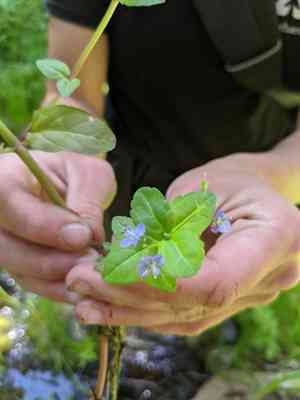
Veronica americana has small, delicate blue to violet flowers with prominent white centers. The leaves are oval, slightly serrated, and green, arranged in opposite pairs along the stem. The plant mainly grows along streams and wetlands.
Scientific Classification of American Speedwell
Phylum
Vascular plants
Class
Dicotyledons
Order
Lamiales
Family
Plantain
Genus
Speedwells
Species
American Speedwell
Planting and Growing of American Speedwell
Care Difficulty
Easy
Watering Schedule
Every 8 days
Sunlight Requirements
Partial sun
Sunshine Duration
6-12 hours
Ideal Temperature
60-75℉
Soil Type
Potting Mix, Peat Mix
Soil pH
6.5-7.5
Fertilizer Type
Balanced
Pruning Season
Spring, Summer
Pruning Area
Branches, Leaves
Pruning Frequency
2 times a year
Repotting Season
Spring
Pot Type
Plastic, Ceramic
 How to Water American Speedwell?
Veronica americana thrives in consistently moist environments, so it's important to water it thoroughly. Aim for about 150 milliliters per session, ensuring the soil remains damp but not waterlogged. It's key to maintain steady moisture without flooding the plant, so the roots have access to water while preventing rot.
What are the symptoms of an underwatered American Speedwell?
›
What should I do if my American Speedwell is not getting enough water?
›
What are the symptoms of an overwatered American Speedwell?
›
How to save an overwatered American Speedwell?
›
 What Are the Sunlight Requirements for American Speedwell?
Veronica americana prefers partial sun, ideally benefiting from around 4 to 6 hours of sunlight daily. This range supports effective photosynthesis and fosters thriving growth without the risk of scorch.
More About Sunlight Requirements Techniques→
Understanding Ideal Conditions
›
Solutions for Optimal Lighting
›
Benefits of Ideal Light
›
 What Is the Ideal Temperature Range for American Speedwell?
Veronica americana thrives best within a temperature range of 60°F to 75°F. This range ensures optimal growth, allowing the plant to develop strong roots and vibrant foliage. Such conditions mimic its natural habitat, promoting the physiological processes essential for its growth.
 What Soil is Best for American Speedwell?
Veronica americana thrives in well-draining soil, which prevents water from stagnating around its roots. This is crucial as it helps avoid root rot and encourages healthy growth by ensuring adequate oxygen access to the roots. Rich soil loaded with organic matter provides essential nutrients and improves the plant's immunity against diseases and pests. This fertile environment supports robust growth and vibrant blooms, enhancing the plant's overall vitality. Maintaining a consistent level of soil moisture without saturation is vital for Veronica americana. The balance prevents stress from drought while averting rot from excessive water, therefore sustaining its lush greenery and abundant flowering.
 How to Fertilize American Speedwell?
For Veronica americana, it's crucial to apply a balanced fertilizer specifically for flowering plants. Utilize a diluted liquid fertilizer, ideally a 10-10-10 NPK ratio, mixed at half the recommended strength. This ensures the plant receives sufficient nutrients without risking over-fertilization. Watch the plant's response and adjust accordingly.
 How to Prune American Speedwell?
Begin by closely examining your Veronica americana for any old, damaged, or diseased growth. These sections should be your primary focus for pruning as removing them will promote healthier and more vigorous growth throughout the rest of the plant. Use sharp, clean pruning shears to cut back any excess growth that disrupts the plant's overall shape or competes with other stems for nutrients. Aim to maintain a full yet balanced form to ensure even sunlight exposure and air circulation. To encourage a bushier and more compact plant, strategically trim back the tips of taller shoots. This technique promotes branching and leads to a denser, more vibrant display of foliage and flowers as the plant develops.
More About Pruning Techniques→
 How to Propagate American Speedwell plant?
1
Collect mature seeds from the plant in late spring. Clean them and allow them to dry for a few days before planting them shallowly in a prepared seed tray.
2
Select healthy, non-flowering stems and cut them just below a node. Remove lower leaves and insert the cuttings into a suitable rooting medium.
3
Dig up the mature Veronica americana using a spade or garden fork. Carefully separate the root clumps into smaller sections and replant them in desired locations.
 How to Repot American Speedwell plant?
1
Veronica americana needs repotting when its roots outgrow the current pot and start appearing through the drainage holes. Also, it should be repotted if the soil turns compacted, reducing water absorption. Ideally, repot during its growth period in spring or early summer when the plant can recover swiftly.
2
Select a pot that is one or two sizes larger than the current one, allowing sufficient room for root growth. Ensure it has proper drainage holes to avoid waterlogging, a crucial aspect to prevent root rot in Veronica americana. The material should facilitate airflow around the roots, promoting healthy growth.
3
Opt for a soil mix that retains moisture yet drains well, as Veronica americana thrives in such conditions. A mix of loam, perlite, and some organic matter is ideal. This ensures the roots remain hydrated without sitting in stagnant water, fostering healthy root development.
Learn More About American Speedwell Diseases
Anthracnose
Bacterial Leaf Spot
Bacterial Soft Rot
Crown Gall
Cyst Nematode
Damping-off
Downy Mildew
Drought Stress
Fusarium Wilt
Gray Mold
Leaf Curl
Leaf Spot
Mosaic
Nutrient Deficiency
Nutrient Toxicity
Powdery Mildew
Root Rot
Root-knot Nematode
Rusts
Sooty Mold
Spider Mites
Temperature Stress
Thrips Damage
White Mold
Chemical Injury



