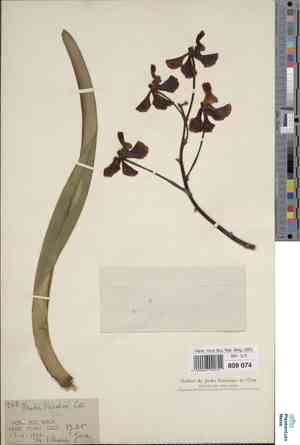
Three-colored vanda(Vanda tricolor)

Three-colored vanda (Vanda tricolor)

Also known as: Tri-color Vanda Orchid

The three-colored vanda orchid, or Vanda tricolor, captivates with its vivid, multi-hued flowers. These blossoms typically feature a base color of white or light shades adorned with striking spots or streaks of purple, pink, and brown. This orchid species is epiphytic, meaning it grows on trees and other structures, relying on its environment for moisture and nutrients through its long, aerial roots.

**Key Features**:
- **Flowers**: Large, fragrant, and adorned with a mix of lighter backgrounds and darker spots or streaks.
- **Leaves**: Long, strap-like, and leathery, well-suited to fluctuating wet and dry conditions.

**Habitat**:
- **Climate**: Prefers warm, humid tropical environments with good air circulation.
- **Light**: Thrives in bright, indirect light, with some tolerance to direct sunlight.
- **Elevation**: Found from lowlands up to elevations of about 1500 meters.

This orchid is native to Southeast Asian regions like Indonesia, Thailand, and the Philippines, often inhabiting forested areas where it attaches to tree trunks and branches.

Attributes of Three-colored vanda

Lifespan
Perennial
Plant Type
Herb
Plant Height
30-60 cm
Spread
N/A
Leaf Color
Green
Flower Size
6-8 cm
Flower Color
White, Yellow, Red

ForwardPlant - Identify plants with a snap

Identify and diagnose plants, get toxicity alerts, and explore safety guides for all types of fungi.

Try for Free

Images of Three-colored vanda

Three-colored vanda(Vanda tricolor)

Quickly Identify Three-colored vanda

1
Look for large, showy flowers that are typically white with yellow and red spots. The leaves are long and strap-like, and the plant has thick, aerial roots. The flowers often exhibit a tricolor pattern, making them easily recognizable.

Scientific Classification of Three-colored vanda

Phylum
Vascular plants
Class
Monocotyledons
Order
Asparagales
Family
Orchid
Genus
Vanda
Species
Three-colored vanda

Planting and Growing of Three-colored vanda

Care Difficulty
Hard
Watering Schedule
Every 4 days
Sunlight Requirements
Partial sun
Sunshine Duration
4-8 hours
Ideal Temperature
70-85℉
Soil Type
Potting Mix, Peat Mix
Soil pH
6.5-7.5
Fertilizer Type
Balanced
Pruning Season
Spring, Summer
Pruning Area
Branches, Leaves
Pruning Frequency
2 times a year
Repotting Season
Spring
Pot Type
Ceramic, Plastic

water icon How to Water Three-colored vanda?

When watering Vanda tricolor, ensure that each plant receives about 200 milliliters of water per session. This amount is enough to moisten the roots without drowning them. The ideal rule is to provide enough moisture so that excess water drains through the bottom of the pot, ensuring the roots have sufficient drainage and are not sitting in water.
What are the symptoms of an underwatered Three-colored vanda?
What should I do if my Three-colored vanda is not getting enough water?
What are the symptoms of an overwatered Three-colored vanda?
How to save an overwatered Three-colored vanda?

sunlight icon What Are the Sunlight Requirements for Three-colored vanda?

Sunlight Requirements: Partial sun
Duration of light: 2 to 4 hours
Partial sun exposure is ideal for Vanda tricolor, allowing it to take advantage of fleeting morning sunlight and avoid the harsh afternoon sun. This balance fosters lush foliage, healthy blooms, and sustained growth throughout the year.
Optimal Placement
Enhancing Growth
Monitoring Light Levels

temperature icon What Is the Ideal Temperature Range for Three-colored vanda?

Ideal Temperature: 70 ~ 85℉
For optimal growth, Vanda tricolor thrives best within a temperature range of 70°F to 85°F. Maintaining temperatures within this range allows the plant to photosynthesize efficiently and supports healthy flower and root development.

soil icon What Soil is Best for Three-colored vanda?

Soil type: Loam, Sandy loam
Soil PH: 6.5 ~ 7.5
Vanda tricolor thrives best in well-draining soil that prevents water from pooling around its roots, which can lead to root rot. This type of soil ensures that the roots receive adequate oxygen and reduces the chances of fungal infections, promoting healthier growth. The plant's epiphytic nature means that it prefers an airy potting medium that replicates its natural growing conditions on tree branches. This allows air circulation around the roots, which is crucial for their respiration and nutrient uptake, thus enhancing overall plant vigor. A soil mixture enriched with organic matter such as bark, charcoal, or peat moss provides essential nutrients to Vanda tricolor. These materials also help retain just the right amount of moisture, creating a balanced environment that supports robust root health and vibrant blooms.

fertilize icon How to Fertilize Three-colored vanda?

Fertilizer type: Balanced
For Vanda tricolor, careful fertilization is crucial. Use a balanced fertilizer at 1/4 to 1/2 strength to avoid overfeeding. This amount ensures the plant receives steady nutrients without the risk of root damage. Adjust the amount to be lighter during the winter months.

prune icon How to Prune Three-colored vanda?

Pruning Time: Spring, Summer, Autumn
When pruning Vanda tricolor, focus on removing dead or damaged leaves and stems to promote healthy growth. Use clean, sharp pruning shears to make precise cuts just above a node. Ensure that you also clear away any old flower spikes, as these can hinder new growth and flowering. This practice helps in maintaining a tidy appearance and can also prevent pest issues. To encourage new blooms in Vanda tricolor, carefully prune the flower spikes after they have bloomed and started to wilt. This directs the plant’s energy back into leaf and root growth, thus enhancing its overall vitality and increasing the probability of repeat blooming cycles throughout the year. More About Pruning Techniques

propagate icon How to Propagate Three-colored vanda plant?

Propagate Time: Spring, Early spring
1
Before planting, sterilize Vanda tricolor seeds with a mild bleach solution to remove any microbial contamination, ensuring successful germination.
2
Place sterilized seeds in a culture vessel with an orchid-specific medium, ensuring optimal conditions for growth with controlled temperature and humidity.
3
Once seedlings reach a viable size, carefully transplant them to pots with suitable media, ensuring not to damage roots during the process.
More About Propagating Techniques

repot icon How to Repot Three-colored vanda plant?

Repotting frequency: Every 2-3 years
1
Vanda tricolor should be repotted when its roots outgrow the current pot or if you notice signs of overcrowding and poor aeration. Look for a visible overgrowth of aerial roots, the pot drying out too quickly, or degraded potting medium. Spring and early summer provide optimal conditions for repotting because of active growth, ensuring the plant can settle well into its new environment.
2
Select a pot with excellent drainage and one that accommodates the plant's root system with room for growth. A slightly larger pot than the previous one is ideal. Clay pots can work well, providing stability and preventing overwatering through their porous nature. Make sure it has several drainage holes, which is crucial for avoiding root rot in orchids.
3
Vanda tricolor thrives in an orchid-specific potting mix that promotes excellent aeration and drainage. Look for a mix that includes pine bark, perlite, and charcoal; these materials help provide the right support and air to the roots. This mix mimics the orchid's natural habitat, ensuring the roots get the moisture they need without sitting in water, thereby reducing the risk of rot.

ForwardPlant - Identify plants with a snap

Find the best spots for them to optimize their health, simply using your phone.

Try for Free