
Rabbiteye blueberry (Vaccinium virgatum)
Also known as: Southern black blueberry, Twiggy whortleberry
The shrub you are referring to is likely the European blackcurrant (Ribes nigrum). This deciduous shrub can reach heights of up to 183 cm and has spirally-arranged leaves that mature into a dark green color, approximately 8 cm in length. It produces small berries, around 5 mm in diameter, which are commonly used in making sauces and syrups.
In This Article
Attributes of Rabbiteye blueberry
Lifespan
Perennial
Plant Type
Shrub
Plant Height
91 cm to 1.8 m
Spread
90 cm
Leaf Color
Green
Flower Size
2.5 cm
Flower Color
Pink White
Images of Rabbiteye blueberry
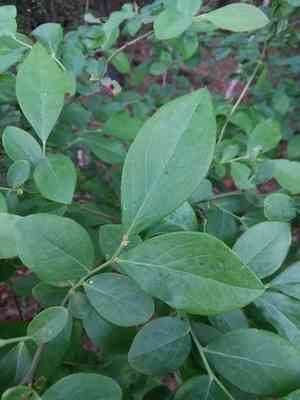
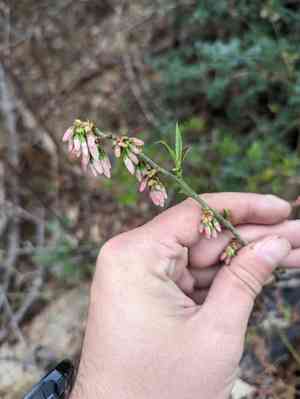
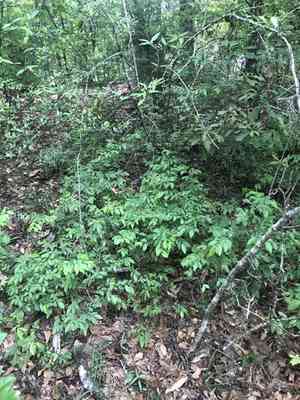
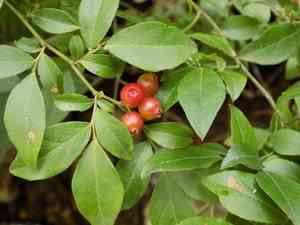
Quickly Identify Rabbiteye blueberry
1
Rounded to vase-like growth, 6-10 feet tall (1.8-3 meters)
2
Bell-shaped white to pink flowers in spring
3
Distinct blue-black berries, smooth surface, ripe in late summer
4
Alternate, elliptic to obovate leaves, 1-3 inches long (2.5-7.5 cm)
5
Green to reddish stem, slender, smooth, up to 2 feet long (60 cm)
Scientific Classification of Rabbiteye blueberry
Phylum
Vascular plants
Class
Dicotyledons
Order
Ericales
Family
Heath
Genus
Blueberries
Species
Rabbiteye blueberry
Planting and Growing of Rabbiteye blueberry
Care Difficulty
Easy
Watering Schedule
Every 3 days
Sunlight Requirements
Full sun
Sunshine Duration
4-8 hours
Ideal Temperature
65-75℉
Soil Type
Potting Mix, Peat Mix
Soil pH
4-5.5
Fertilizer Type
Balanced
Pruning Season
Spring, Summer
Pruning Area
Branches, Leaves
Pruning Frequency
2 times a year
Repotting Season
Spring
Pot Type
Plastic, Ceramic
 How to Water Rabbiteye blueberry?
When watering Vaccinium virgatum, also known as the rabbiteye blueberry, aim for about 500 ml of water each session. The goal is to moisten the top several inches of soil without causing runoff or waterlogging, replicating a gentle and consistent rainfall pattern.
What are the symptoms of an underwatered Rabbiteye blueberry?
›
What should I do if my Rabbiteye blueberry is not getting enough water?
›
What are the symptoms of an overwatered Rabbiteye blueberry?
›
How to save an overwatered Rabbiteye blueberry?
›
 What Are the Sunlight Requirements for Rabbiteye blueberry?
Vaccinium virgatum thrives best in full to partial sun conditions. Ideal lighting ensures optimal photosynthesis, increasing fruit yield and maintaining lush foliage.
More About Sunlight Requirements Techniques→
How much sunlight does Vaccinium virgatum need daily?
›
What solutions can I use to ensure ideal sunlight?
›
What are the benefits of providing ideal sunlight?
›
 What Is the Ideal Temperature Range for Rabbiteye blueberry?
The ideal temperature range for Vaccinium virgatum, commonly known as the rabbiteye blueberry, is between 65°F and 75°F. These temperatures provide optimal conditions for growth and fruit development, ensuring the plant produces a healthy yield. This temperature range enables the plant to efficiently photosynthesize while maintaining water balance and nutrient uptake.
 What Soil is Best for Rabbiteye blueberry?
Vaccinium virgatum thrives in well-draining soil to prevent root rot and allow for healthy growth. Ensuring good drainage will help maintain the plant's vigor throughout its growing cycle. The plant benefits from soil rich in organic matter, which retains moisture and supplies essential nutrients. Incorporating compost or leaf mold supports lush and fruitful growth. While Vaccinium virgatum prefers well-draining soil, it requires consistent moisture levels to flourish. A layer of mulch can help retain moisture, keep the roots cool, and enhance fruit production.
 How to Fertilize Rabbiteye blueberry?
Vaccinium virgatum, commonly known as Rabbiteye Blueberry, requires a balanced approach to fertilization. Use a balanced liquid fertilizer diluted to half strength for younger plants and full strength for mature plants. Apply approximately 1 to 2 tablespoons of granular slow-release fertilizer per mature shrub annually.
 How to Prune Rabbiteye blueberry?
Start by identifying and removing any dead, damaged, or diseased wood. Cut back to healthy wood or completely remove the affected branch, ensuring not to leave stubs. Prune to improve air circulation by thinning out the center of the shrub. This helps in reducing the risk of fungal infections by allowing better airflow and light penetration. Aim to shape the plant by cutting back taller branches to maintain a uniform height. This not only keeps the shrub looking tidy but also encourages more uniform fruit production.
More About Pruning Techniques→
 How to Propagate Rabbiteye blueberry plant?
1
Begin by preparing a well-draining soil mix, ideally consisting of equal parts peat moss and perlite. This will provide the essential aeration and moisture retention properties needed for seed and cutting propagation.
2
Select healthy stems and use sterilized pruning shears to take cuttings of about 6 inches in length. Remove leaves from the lower half to prevent rot when the cutting is planted in soil.
3
After dipping the cut end in rooting hormone, plant the cuttings into the prepared propagation trays with soil. Ensure that half of the cutting is submerged to encourage root growth from the nodes.
 How to Repot Rabbiteye blueberry plant?
1
Vaccinium virgatum should be repotted when its roots start to fill the pot, or when its growth seems stunted. It typically signals the need for more room if you see excessive root growth through drainage holes.
2
Select a pot that is about 2 inches larger in diameter than the current one. Ensure it has good drainage holes. This allows the roots more space to grow, preventing waterlogging and promoting healthier root development.
3
Opt for an acidic, well-draining soil mix ideally suited for blueberries. This type of soil enhances nutrient uptake and prevents root rot, crucial for the plant's health and development.
Learn More About Rabbiteye blueberry Diseases
Anthracnose
Bacterial Leaf Spot
Bacterial Wilt
Chemical Injury
Crown Gall
Cyst Nematode
Damping-off
Drought Stress
Fusarium Wilt
Gray Mold
Leaf Curl
Leaf Spot
Mosaic
Nutrient Deficiency
Nutrient Toxicity
Powdery Mildew
Root Rot
Root-knot Nematode
Sooty Mold
Spider Mites
Temperature Stress
Thrips Damage
White Mold



