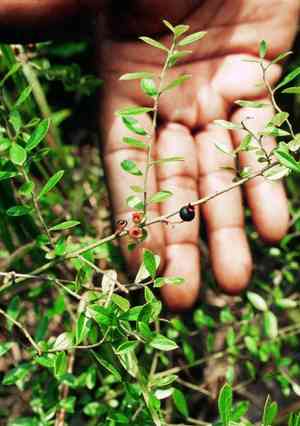
Shiny blueberry (Vaccinium myrsinites)
Also known as: Shiny Blueberry, Evergreen Blueberry
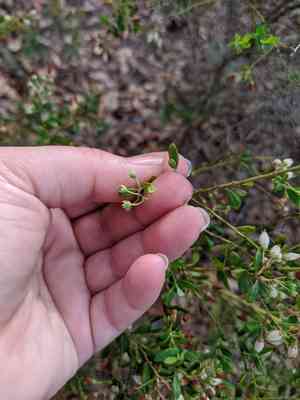
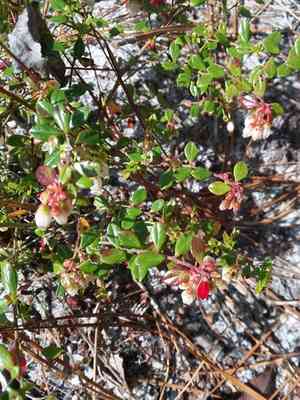
The undersides are covered with glands. The flowers are urn-shaped or cylindrical, ranging in color from white to pink or with a hint of red, and they grow in clusters of up to 8. Each flower can be almost one centimeter in length. The fruit is a black or waxy blue berry, measuring up to 8 or 9 millimeters long, and contains multiple seeds.
In This Article
Attributes of Shiny blueberry
Lifespan
Perennial
Plant Type
Shrub
Plant Height
1 m
Spread
1 m
Leaf Color
Green Blue Gray Silver
Flower Size
About 1 cm (0.4 inches)
Flower Color
Pink White
Images of Shiny blueberry
Quickly Identify Shiny blueberry
1
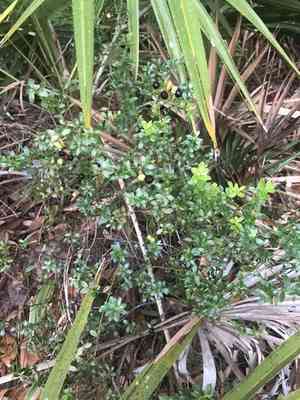
Evergreen lance-shaped glossy leaves with fine-toothed margins and subtle bluish cast.
2
Delicate pink calyx encasing white flowers blooming in clusters of 2 to 8.
3
Distinctive bluish-gray edible berries with a glaucous bloom and multiple seeds.
4
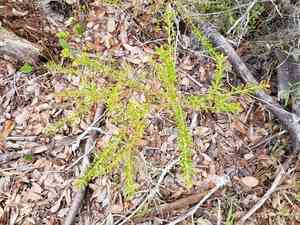
Slender stems varying from glabrous to pubescent, forming dense branching patterns.
5
Pubescent green bark transitioning to woody texture, evolving in thickness and pattern.
Scientific Classification of Shiny blueberry
Phylum
Vascular plants
Class
Dicotyledons
Order
Ericales
Family
Heath
Genus
Blueberries
Species
Shiny blueberry
Planting and Growing of Shiny blueberry
Care Difficulty
Easy
Watering Schedule
Every 2 days
Sunlight Requirements
Full sun
Sunshine Duration
6-10 hours
Ideal Temperature
60-75℉
Soil Type
Potting Mix, Peat Mix
Soil pH
4-6
Fertilizer Type
Balanced
Pruning Season
Spring, Summer
Pruning Area
Branches, Leaves
Pruning Frequency
Once a year
Repotting Season
Spring
Pot Type
Plastic, Ceramic
 How to Water Shiny blueberry?
For Vaccinium myrsinites, it's crucial to maintain a balanced moisture level. Each watering session should thoroughly moisten the soil, allowing it to become damp but not waterlogged. Ensure there is efficient drainage to prevent root rot while keeping the soil consistently moist for optimal growth.
What are the symptoms of an underwatered Shiny blueberry?
›
What should I do if my Shiny blueberry is not getting enough water?
›
What are the symptoms of an overwatered Shiny blueberry?
›
How to save an overwatered Shiny blueberry?
›
 What Are the Sunlight Requirements for Shiny blueberry?
Vaccinium myrsinites benefits from receiving 6-8 hours of sunlight—ideally full or partial sun. Proper sunlight ensures robust leaf color, prolific blooming, and overall plant vigor.
What is the best lighting condition for Vaccinium myrsinites?
›
How can you achieve ideal lighting for Vaccinium myrsinites?
›
What are the benefits of ideal lighting conditions?
›
 What Is the Ideal Temperature Range for Shiny blueberry?
Vaccinium myrsinites, commonly known as the shiny blueberry, thrives best in moderate temperatures ranging from 60 to 75 degrees Fahrenheit. This range ensures optimal growth, flowering, and fruiting. Temperatures within this range facilitate enzymatic activities and physiological processes that are crucial for the plant's health. Any significant deviation may lead to reduced growth and other developmental issues.
 What Soil is Best for Shiny blueberry?
Vaccinium myrsinites thrives in well-drained soil that prevents waterlogging, which can damage roots. This enhances root health and encourages robust growth and fruit production. Preferring acidic soils between pH 4.0 to 6.0, this plant benefits from a soil environment that maximizes nutrient availability, aiding in healthier foliage and improved berry yield. Rich in organic matter, the ideal soil provides essential nutrients and promotes beneficial microbial activity, enhancing soil structure and fertility.
 How to Fertilize Shiny blueberry?
Vaccinium myrsinites, commonly known as shiny blueberry, requires careful fertilization to thrive. It's important to apply a balanced fertilizer that supplies nitrogen, phosphorus, and potassium in equal measures. Depending on soil conditions and plant health, fertilize with a moderate amount, equivalent to approximately 1/3 cup of balanced granular fertilizer per plant. Ensure even distribution to avoid root damage.
 How to Prune Shiny blueberry?
Start by inspecting the shrub for dead or diseased wood. These branches should be removed first to prevent the spread of disease and improve air circulation through the plant. Make cuts just above a healthy bud or lateral branch to encourage new, vibrant growth. This technique helps maintain the plant's natural shape and promotes vigorous new shoots. Thin out a few older branches, cutting them back to the base. This allows sunlight and air to penetrate the bush's interior, supporting healthy fruit development. Shape the plant lightly by cutting back overgrown stems. This keeps the plant looking tidy, maintains its structural integrity, and enhances the overall aesthetic appeal.
More About Pruning Techniques→
 How to Propagate Shiny blueberry plant?
1
Collect ripe seeds from Vaccinium myrsinites berries. Clean the seeds by removing any pulp or debris, then dry them before sowing. This step ensures better germination rates when the seeds are planted.
2
Select a healthy, non-flowering stem from the plant. Cut a 4 to 6-inch section using pruning shears, making sure to remove leaves from the bottom half. This promotes root growth and prevents the cutting from losing too much moisture.
3
Plant seeds or cuttings in a suitable growing medium. Keep the medium consistently moist but not waterlogged, and place in an area with indirect sunlight. This ensures the cuttings do not dry out and encourages new growth.
 How to Repot Shiny blueberry plant?
1
Repot Vaccinium myrsinites when you observe signs like roots growing out of the drainage holes, soil drying out rapidly after watering, or reduced plant growth. These signals indicate the plant needs more space to thrive.
2
Select a pot slightly larger than the current one, with ample drainage holes. A larger pot allows for more root growth and prevents waterlogging, promoting healthy plant development and reducing root diseases.
3
Choose an acidic, well-draining soil mix. This type of soil mimics the natural habitat of Vaccinium myrsinites, ensuring optimal nutrient availability and preventing water retention issues that could harm the roots.



