
Darrow's Blueberry (Vaccinium darrowii)
Also known as: Evergreen Blueberry
Vaccinium darrowii, commonly known as Darrow's blueberry, is an appealing option for ornamental gardens due to its striking evergreen foliage that often showcases a mix of green with pink to reddish tips. This North American shrub not only adds visual interest with its colorful leaves but also delights with clusters of pale pink to white bell-shaped flowers in the spring. Additionally, it produces small, tasty blue berries, adding both aesthetic and edible value to the garden. Its compact size and low maintenance needs make it an excellent choice for garden borders or ground cover.
In This Article
Attributes of Darrow's Blueberry
Lifespan
Perennial
Plant Type
Shrub
Plant Height
1.2 m
Spread
1.2 m
Leaf Color
Green Blue Yellow White
Flower Size
0.2 to 0.4 inches (0.5 to 1 cm)
Flower Color
White Pink Purple
Images of Darrow's Blueberry
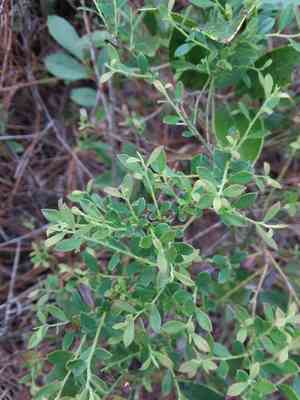
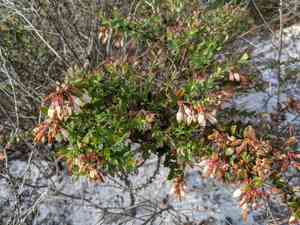
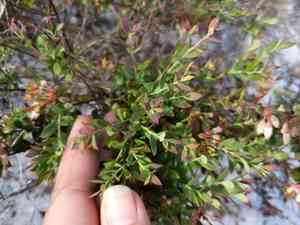
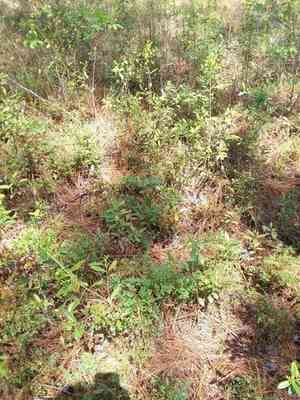
Quickly Identify Darrow's Blueberry
1
Look for an evergreen shrub with small, narrow leaves that are green with a silvery blue tint. The plant produces white or pinkish bell-shaped flowers and small blue to black berries.
Scientific Classification of Darrow's Blueberry
Phylum
Vascular plants
Class
Dicotyledons
Order
Ericales
Family
Heath
Genus
Blueberries
Species
Darrow's Blueberry
Planting and Growing of Darrow's Blueberry
Care Difficulty
Easy
Watering Schedule
Every 4 days
Sunlight Requirements
Partial sun
Sunshine Duration
4-6 hours
Ideal Temperature
60-75℉
Soil Type
Potting Mix, Peat Mix
Soil pH
4-5.2
Fertilizer Type
Balanced
Pruning Season
Spring, Summer
Pruning Area
Branches, Leaves
Pruning Frequency
Once a year
Repotting Season
Spring
Pot Type
Plastic, Terracotta
 How to Water Darrow's Blueberry?
Vaccinium darrowii thrives with well-planned irrigation. It's crucial to water the plant so that the soil remains consistently moist but not waterlogged. Aim for approximately 500 ml of water each time, ensuring that the soil is damp throughout but not sitting in pools of water.
What are the symptoms of an underwatered Darrow's Blueberry?
›
What should I do if my Darrow's Blueberry is not getting enough water?
›
What are the symptoms of an overwatered Darrow's Blueberry?
›
How to save an overwatered Darrow's Blueberry?
›
 What Are the Sunlight Requirements for Darrow's Blueberry?
Ideally, Vaccinium darrowii thrives in partial to full sun, benefiting from 4 to 6 hours of sunlight daily. This range encourages robust development and abundant harvests.
More About Sunlight Requirements Techniques→
What is the ideal sunlight amount for Vaccinium darrowii?
›
How can I ensure Vaccinium darrowii receives its ideal light conditions?
›
What are the benefits of providing ideal light for Vaccinium darrowii?
›
 What Is the Ideal Temperature Range for Darrow's Blueberry?
The ideal temperature range for Vaccinium darrowii, commonly known as Darrow's blueberry, is between 60°F and 75°F. These temperatures facilitate optimum growth and development, ensuring robust foliage and fruit production. During this range, the plant can efficiently perform photosynthesis and other metabolic processes, leading to healthier plants with better yields. Maintaining this temperature range can be particularly critical during the flowering and fruiting stages to ensure quality and quantity of the harvest.
 What Soil is Best for Darrow's Blueberry?
Vaccinium darrowii thrives in acidic soil conditions, typically with a pH range of 4.0 to 5.2. Acidic soils help in the absorption of vital nutrients, which supports vibrant foliage and robust growth. Maintaining such conditions is crucial for maximizing its ornamental and fruit-bearing potential. Proper drainage is essential to prevent root rot in Vaccinium darrowii. Sandy and loamy soils are ideal because they ensure excess water doesn't accumulate around the roots. This supports healthy root development and increases the plant's resistance to various fungal diseases. Incorporating organic matter like compost can significantly enhance soil fertility for Vaccinium darrowii. It improves soil structure, enhances moisture retention, and provides a slow-release source of nutrients, ensuring the plant remains well-nourished throughout its growing season.
 How to Fertilize Darrow's Blueberry?
For Vaccinium darrowii, it's vital to ensure you're not overfeeding or underfeeding. Use about 1/4 cup of a balanced 10-10-10 fertilizer per plant for solid applications, and for liquid fertilizers, dilute to half the recommended strength to avoid root burn.
 How to Prune Darrow's Blueberry?
Use sharp, clean pruning shears to make precise cuts, minimizing damage to the plant. Sterilize tools before and after use to prevent disease spread. Start by removing dead, diseased, or damaged branches. This helps the plant allocate resources effectively and prevents the spread of disease. Prune the plant to maintain its desired shape and size. Focus on cutting back overly long shoots and any branches that disrupt the plant's natural form. To promote bushier growth, cut back branches to above a leaf node. This encourages the plant to produce more lateral shoots, resulting in a fuller appearance.
More About Pruning Techniques→
 How to Propagate Darrow's Blueberry plant?
1
Harvest seeds from ripe berries of Vaccinium darrowii, ensuring seeds are plump and healthy. Clean off any pulp and allow the seeds to dry slightly before sowing.
2
Select and cut healthy stems of 4-6 inches in length from a mature plant. Remove the bottom leaves to keep 2-4 leaves at the top.
3
Choose a low-growing branch and bend it to the ground. Nick the bark to encourage rooting and cover it with soil, leaving the tip exposed.
 How to Repot Darrow's Blueberry plant?
1
Look for signs like roots circling the pot, reduced growth, or poor water retention. It's important to choose the right time—early Spring is ideal when the plant is coming out of dormancy and can quickly establish itself in the new pot.
2
Select a pot only slightly larger than the current one with drainage holes. A slightly larger pot prevents water stagnation, supporting root health and reducing the risk of root rot, which is crucial for Vaccinium darrowii.
3
Opt for acidic sandy loam as it mimics the plant's natural habitat, ensuring proper drainage and nutrient availability. This type of soil maintains the right pH balance, essential for nutrient uptake.



