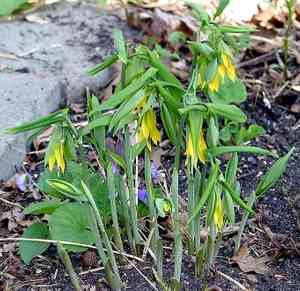
Large-flowered bellwort (Uvularia grandiflora)
Also known as: Largeflower bellwort
Commonly called merrybells, the large-flowered bellwort features drooping blooms with elongated, slender petals. This lily family member thrives in shaded gardens and creates a stunning display when planted in groups.
In This Article
Attributes of Large-flowered bellwort
Lifespan
Perennial
Plant Type
Herb
Plant Height
75 cm
Spread
30 cm
Leaf Color
Green
Flower Size
2.5 cm to 8 cm
Flower Color
Yellow
Images of Large-flowered bellwort
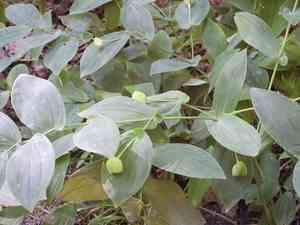
Quickly Identify Large-flowered bellwort
1
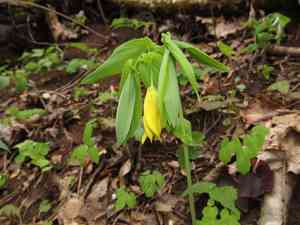
Large, pendulous yellow flowers with a droopy appearance in spring.
2
Smooth, twisted lemon-yellow petals forming a pendulous bell shape.
3
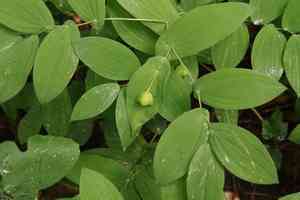
3-celled seed capsule with smooth, rounded lobes and green to yellowish hue.
4
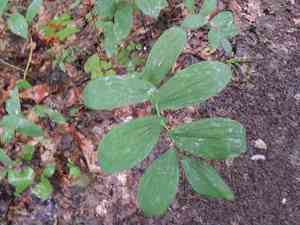
Pale green lance-shaped leaves with downy texture on lower surfaces.
5
Slender, branching stems with opposite pairs of side branches, reaching 1-2 feet in height.
Scientific Classification of Large-flowered bellwort
Phylum
Vascular plants
Class
Monocotyledons
Order
Liliales
Family
Colchicum
Genus
Bellworts
Species
Large-flowered bellwort
Planting and Growing of Large-flowered bellwort
Care Difficulty
Easy
Watering Schedule
Every 8 days
Sunlight Requirements
Partial sun
Sunshine Duration
4-6 hours
Ideal Temperature
60-75℉
Soil Type
Potting Mix, Peat Mix
Soil pH
5.5-7
Fertilizer Type
Balanced
Pruning Season
Spring, Summer
Pruning Area
Branches, Leaves
Pruning Frequency
2 times a year
Repotting Season
Spring
Pot Type
Plastic, Ceramic
 How to Water Large-flowered bellwort?
Uvularia grandiflora prefers consistently moist soil but not waterlogged. When watering, aim to soak the soil until it's evenly moist at a depth of about 15 cm. Ensure excess water can drain to prevent root rot.
What are the symptoms of an underwatered Large-flowered bellwort?
›
What should I do if my Large-flowered bellwort is not getting enough water?
›
What are the symptoms of an overwatered Large-flowered bellwort?
›
How to save an overwatered Large-flowered bellwort?
›
 What Are the Sunlight Requirements for Large-flowered bellwort?
Partial sun to full shade provides the best environment for Uvularia grandiflora's growth, as it needs a cooler and sheltered setting to maintain its health and beauty.
More About Sunlight Requirements Techniques→
What is the best lighting condition for Uvularia grandiflora?
›
How can I provide ideal lighting for Uvularia grandiflora indoors?
›
What benefits does Uvularia grandiflora experience with ideal lighting?
›
 What Is the Ideal Temperature Range for Large-flowered bellwort?
Uvularia grandiflora thrives best when temperatures are kept between 60°F and 75°F. This range ensures optimal photosynthesis and other physiological processes. Consistent temperature within this range fosters healthy growth and blooming, as it mimics the natural environment of this woodland plant.
 What Soil is Best for Large-flowered bellwort?
Uvularia grandiflora thrives in soils that retain moisture well, without becoming waterlogged. Moist soil mimics its natural forest floor habitat, helping to maintain steady growth and vibrant foliage. Rich organic matter is vital for Uvularia grandiflora to flourish. It provides essential nutrients that bolster plant health and support its flowering, ensuring spectacular spring blooms. While this plant enjoys moist soils, it doesn't tolerate stagnant water well. Good drainage prevents root rot, ensuring the plant remains vigorous and can reach its maximum potential size.
 How to Fertilize Large-flowered bellwort?
For Uvularia grandiflora, a moderate amount of fertilizer is advisable. Use approximately 1 tablespoon per gallon of water for liquid fertilizers, ensuring a balanced nutrient supply without overwhelming the plant.
 How to Prune Large-flowered bellwort?
Start by identifying and removing any deadwood or damaged parts of the plant. Carefully cut them back to the base or to healthy, active growth points. Gently reshape the plant by trimming the stems back lightly. Focus on creating a balanced form while ensuring not to cut too much off at once. Even outside of intense pruning sessions, throughout the growing season, remove any yellowed or decaying leaves to maintain the plant's visual appeal and prevent pest infestations.
More About Pruning Techniques→
 How to Propagate Large-flowered bellwort plant?
1
Carefully dig up the plant using a garden fork, being cautious not to damage the roots. Loosen the soil around the plant to ensure easy removal with minimal disturbance to the root system.
2
Use a sharp knife or pruning shears to separate the plant into smaller clumps. Each clump should have a healthy portion of the root system and several growth buds for successful propagation.
3
Replant each division at the same depth as the original plant in well-drained soil. Water the newly planted divisions thoroughly to help them establish in their new location.
 How to Repot Large-flowered bellwort plant?
1
Uvularia grandiflora shows signs of needing repotting when its roots start coming out of the bottom drainage holes or the plant seems crowded in its current pot. Spring is ideal for this task, as the plant can recover and adapt in the growing season.
2
Select a pot that is one size larger than the current one and has good drainage holes. This ensures enough room for root expansion and prevents waterlogging, which can be detrimental to the plant's health.
3
Opt for a well-draining loamy soil mix, rich in organic matter. This soil provides the right balance of moisture and nutrients, facilitating healthy growth and preventing root rot.
Learn More About Large-flowered bellwort Diseases
Anthracnose
Bacterial Leaf Spot
Bacterial Soft Rot
Bacterial Wilt
Black Spot
Chemical Injury
Crown Gall
Cyst Nematode
Damping-off
Downy Mildew
Drought Stress
Fusarium Wilt
Gray Mold
Leaf Curl
Leaf Spot
Mosaic
Nutrient Deficiency
Nutrient Toxicity
Powdery Mildew
Root Rot
Root-knot Nematode
Rusts
Sooty Mold
Spider Mites
Temperature Stress
Thrips Damage
White Mold



