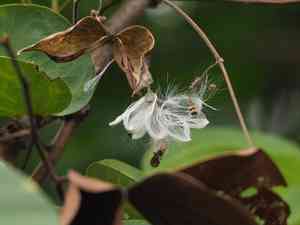
Pink-flowered urceola (Urceola rosea)
Also known as: Indian rubber vine, Malayan milkberry
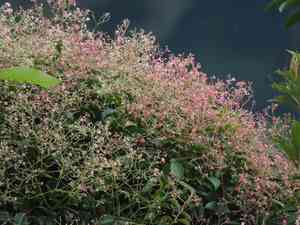
A climbing liana known for its clusters of rose-pink flowers is *Urceola rosea*. The species name "rosea" signifies its pink hue. This plant serves as a host for the Striped blue crow butterfly, among other Danaine species, providing a site for egg-laying and a food source for the larvae.
In This Article
Attributes of Pink-flowered urceola
Lifespan
Perennial
Plant Type
Vine
Plant Height
20 m
Spread
Variable, depending on the support structure
Leaf Color
Dark green
Flower Size
10 cm to 18 cm
Flower Color
Pink
Images of Pink-flowered urceola
Quickly Identify Pink-flowered urceola
1
Urceola rosea can be identified by its twining growth habit, leathery leaves, and distinctive trumpet-shaped flowers that range in color from pink to red.
Scientific Classification of Pink-flowered urceola
Phylum
Vascular plants
Class
Dicotyledons
Order
Gentians, dogbanes, madders, and allies
Family
Dogbane
Genus
Urceola
Species
Pink-flowered urceola
Planting and Growing of Pink-flowered urceola
Care Difficulty
Easy
Watering Schedule
Every 3 days
Sunlight Requirements
Partial sun
Sunshine Duration
6-10 hours
Ideal Temperature
68-77℉
Soil Type
Potting Mix, Peat Mix
Soil pH
6-7.5
Fertilizer Type
Balanced
Pruning Season
Spring, Summer
Pruning Area
Branches, Leaves
Pruning Frequency
2 times a year
Repotting Season
Spring
Pot Type
Plastic, Ceramic
 How to Water Pink-flowered urceola?
When watering Urceola rosea, it is important to aim for a thorough soaking without waterlogging the roots. Around 250 milliliters is often sufficient for potted plants, ensuring that the soil remains moist but not soggy. The water should percolate through the pot, reaching all the roots without accumulating at the base.
What are the symptoms of an underwatered Pink-flowered urceola?
›
What should I do if my Pink-flowered urceola is not getting enough water?
›
What are the symptoms of an overwatered Pink-flowered urceola?
›
How to save an overwatered Pink-flowered urceola?
›
 What Are the Sunlight Requirements for Pink-flowered urceola?
Urceola rosea thrives best in partial sun conditions. Consistent exposure to moderated sunlight ensures healthy leaf development and may support flowering, while preventing light-related stress or tissue damage.
What is the best light condition for Urceola rosea?
›
How can I achieve ideal lighting for Urceola rosea?
›
What are the benefits of ideal lighting for Urceola rosea?
›
 What Is the Ideal Temperature Range for Pink-flowered urceola?
Urceola rosea thrives best in a temperature range between 68°F and 77°F. This range provides the warmth needed for optimal growth and flowering, ensuring that the plant's physiological processes occur without stress.
 What Soil is Best for Pink-flowered urceola?
Urceola rosea thrives in well-drained soil conditions, which prevent root rot by allowing excess water to escape. This ensures that the plant roots receive sufficient oxygen and reduces the likelihood of fungal diseases. A nutrient-rich soil, such as loam, provides Urceola rosea with essential minerals and nutrients. This promotes strong growth and vibrant foliage, ensuring the plant can sustain itself through various growth stages. While well-drained, the soil should still retain enough moisture to keep the roots hydrated. Sandy loam achieves this balance, maintaining adequate moisture levels without becoming waterlogged.
 How to Fertilize Pink-flowered urceola?
For Urceola rosea, it's important to apply fertilizer sparingly. When using liquid fertilizer, mix it with water at half the recommended strength to avoid overfeeding. Solid fertilizers should be applied lightly, approximately one tablespoon per plant, spreading it evenly across the root zone.
 How to Prune Pink-flowered urceola?
Before pruning Urceola rosea, familiarize yourself with its natural growth pattern. This plant tends to have dense foliage, so aim to thin out crowded areas and shape the plant to maintain a pleasing aesthetic while ensuring sunlight reaches inner branches. Use clean, sharp pruning shears for cutting stems. Disinfect your tools with a mixture of water and bleach to prevent the spread of pathogens. Having gloves handy can protect your hands from potential irritation when handling the plant. Start by removing dead or diseased branches at their base to maintain plant health. Next, cut back overgrown branches to promote new growth. Make your cuts at a 45-degree angle to prevent water from settling on the cut surface, which can lead to rot.
More About Pruning Techniques→
 How to Propagate Pink-flowered urceola plant?
1
Begin by selecting healthy seeds that are free from any visible damage or disease. Clean them thoroughly to remove any debris, and soak them in water for 24 hours to improve germination rates.
2
Using sterilized pruning shears, take healthy cuttings of about 6 inches in length, ensuring each has at least one node. Strip the lower leaves, and dip the cut end in rooting hormone to encourage root development.
3
Plant seeds or treated cuttings into the propagation trays filled with well-draining growing medium. Place them in a location that receives indirect sunlight, and maintain a high-humidity environment by covering them with a plastic dome or a clear bag.
 How to Repot Pink-flowered urceola plant?
1
Urceola rosea should be repotted when you notice roots starting to grow out of the drainage holes or if the plant's growth becomes stunted, indicating the pot is too small. The best time for this is during the growth seasons of spring and summer, when the plant is best equipped to handle the change with minimal stress.
2
Select a pot that is only slightly bigger than the current one, ideally 1-2 inches larger in diameter. This helps avoid excessive soil that can retain too much moisture, which is not suitable for Urceola rosea. A pot with good drainage holes is also essential to prevent root rot and ensure the plant thrives.
3
Choose a well-draining potting mix, ideally one that includes components like pine bark, perlite, or sand. These components ensure adequate drainage and aeration, which are crucial for the health of Urceola rosea, preventing waterlogged soil and promoting healthy root growth.
Learn More About Pink-flowered urceola Diseases
Anthracnose
Bacterial Leaf Spot
Bacterial Wilt
Chemical Injury
Crown Gall
Cyst Nematode
Damping-off
Downy Mildew
Drought Stress
Fusarium Wilt
Gray Mold
Leaf Curl
Leaf Spot
Mosaic
Nutrient Deficiency
Nutrient Toxicity
Powdery Mildew
Root Rot
Root-knot Nematode
Rusts
Sooty Mold
Spider Mites
Temperature Stress
Thrips Damage
White Mold



