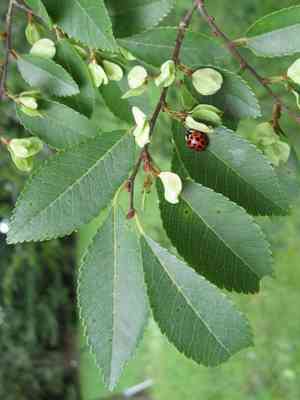
Chinese elm (Ulmus parvifolia)
Also known as: Leather-leaf elm
The Chinese elm (Ulmus parvifolia) is a small, deciduous tree native to China, Japan, North Korea, and Vietnam, renowned for having exceptionally hard wood among elm species. Commercially, its durable wood is often utilized in the production of furniture, tool handles, and occasionally in boat-building. Ornamentally, the Chinese elm is favored in landscaping for its attractive, peeling bark, glossy leaves, and elegant, arching branches, making it a popular choice for urban street trees, parks, and gardens. It also thrives in sunny locations and is commonly used in bonsai due to its small leaves and appealing form.
In This Article
Attributes of Chinese elm
Lifespan
Perennial
Plant Type
Tree
Plant Height
10 m to 18 m
Spread
15 m to 20 m
Leaf Color
Green Yellow Purple
Flower Size
2.5 cm
Flower Color
Yellow Green White
Images of Chinese elm
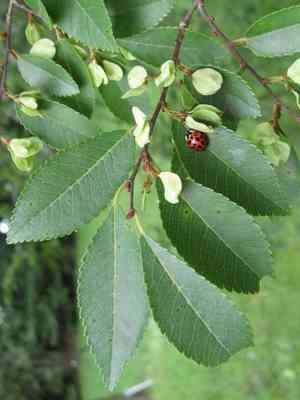
Quickly Identify Chinese elm
1
Exfoliating bark with brown, tan, olive, and cinnamon hues.
2
Small, inconspicuous reddish-green flowers in unisexual clusters.
3
Distinct light brown, oblong fruit with wing-like samaras.
4
Dark green leaves, asymmetrical, glossy upper surface, hairy lower texture.
5
Smooth grayish stem, zigzag branching, ellipsoidal buds with brown scales.
Scientific Classification of Chinese elm
Phylum
Vascular plants
Class
Dicotyledons
Order
Roses, elms, figs, and allies
Family
Elm
Genus
Elms
Species
Chinese elm
Planting and Growing of Chinese elm
Care Difficulty
Easy
Watering Schedule
Every 3 days
Sunlight Requirements
Full sun
Sunshine Duration
6-12 hours
Ideal Temperature
60-70℉
Soil Type
Potting Mix, Peat Mix
Soil pH
6.5-7.5
Fertilizer Type
Balanced
Pruning Season
Spring, Summer
Pruning Area
Branches, Leaves
Pruning Frequency
2 times a year
Repotting Season
Spring
Pot Type
Plastic, Ceramic
 How to Water Chinese elm?
For Ulmus parvifolia, the amount of water should be sufficient to thoroughly moisten the root zone, typically around 500 ml per session. It's essential to ensure water can drain efficiently to prevent root rot. Consider the dryness of the top 2 inches of soil as a reliable indicator for when it's time to water again.
More About Watering Techniques→
What are the symptoms of an underwatered Chinese elm?
›
What should I do if my Chinese elm is not getting enough water?
›
What are the symptoms of an overwatered Chinese elm?
›
How to save an overwatered Chinese elm?
›
 What Are the Sunlight Requirements for Chinese elm?
Ulmus parvifolia thrives under full to partial sun, which allows it to perform optimal photosynthesis, ensuring strong, healthy foliage and growth. This light range helps maintain the plant's vigor and resistance to environmental stressors.
More About Sunlight Requirements Techniques→
What is the ideal lighting condition for Ulmus parvifolia?
›
How can you achieve the ideal lighting for Ulmus parvifolia?
›
What are the benefits of ideal lighting for Ulmus parvifolia?
›
 What Is the Ideal Temperature Range for Chinese elm?
The ideal temperature range for Ulmus parvifolia, or Chinese Elm, is between 60°F and 70°F. Maintaining this temperature range ensures that the plant thrives, promoting healthy growth and reducing stress on the plant. This range is optimal as it mimics the natural conditions the tree would typically experience in its native habitat. While it can tolerate some fluctuations, staying within these temperatures helps keep the tree in peak condition.
 What Soil is Best for Chinese elm?
Ulmus parvifolia thrives best in well-drained soil. Ensuring the soil drains well prevents waterlogging, promoting healthy root growth and reducing the risk of root rot. This tree benefits from soil that is rich in organic matter and nutrients. A nutrient-rich environment supports lush foliage and enhances overall growth and health. While Ulmus parvifolia is somewhat drought-tolerant, maintaining consistent soil moisture facilitates steady growth. Avoid extremes of dryness or excessive wetness for optimal health.
More About Soil→
 How to Fertilize Chinese elm?
For Ulmus parvifolia, it is typically recommended to use 1/2 to 1 teaspoon of a balanced, all-purpose liquid fertilizer per gallon of water. For slow-release solid fertilizers, use about 2 to 3 pounds per 100 square feet of growing area.
More About Fertilizing Techniques→
 How to Prune Chinese elm?
Start by envisioning the desired shape and size of your Ulmus parvifolia. Use this as a guide to decide which branches need pruning. Aim for a branching structure that allows even light penetration and wind flow. Inspect the tree for any dead, damaged, or diseased branches. Use clean, sharp tools to remove these parts efficiently, cutting back to healthy wood or the main trunk to facilitate healing. Focus on thinning areas where branches are overcrowded. This will improve air circulation and reduce the risk of fungal infections. Cut back to the main trunk or a lateral branch that is at least one-third the diameter of the removed branch. Prune back by one-third any large branches that are not contributing to the desired shape. This stimulates new shoots and encourages a fuller appearance. Consider the natural growth pattern to avoid creating awkward shapes.
More About Pruning Techniques→
 How to Propagate Chinese elm plant?
1
Seeds should be collected from mature Ulmus parvifolia trees in autumn when the seeds are fully developed. Ensure that seeds are taken from healthy specimens to increase success rates.
2
Select healthy, semi-hardwood cuttings in early spring. Cut stems approximately 6 to 8 inches long. Remove lower leaves and apply rooting hormone to encourage root formation.
3
Graft selected scions onto rootstocks in late summer using the whip and tongue technique. Ensure that cambium layers are aligned for successful grafting.
 How to Repot Chinese elm plant?
1
Watch for roots poking through the drainage holes and the soil drying out rapidly. These are clear signs that your Ulmus parvifolia needs a new pot. If the tree looks noticeably cramped or growth seems stunted, it's time to repot. Opt for repotting during its active growing seasons.
2
Select a pot that is just a few inches larger in diameter than the current one. Ensure the pot has ample drainage holes at the bottom. Using a slightly bigger pot prevents excessive soil moisture, reducing the risk of root rot while allowing room for healthy root expansion.
3
A well-draining potting mix enriched with some organic compost is ideal. This ensures the roots receive adequate aeration while retaining enough moisture. The loose texture allows for easy root penetration, promoting robust root health and preventing waterlogging.
Learn More About Chinese elm Diseases
Anthracnose
Bacterial Leaf Spot
Chemical Injury
Crown Gall
Damping-off
Downy Mildew
Drought Stress
Fusarium Wilt
Gray Mold
Leaf Curl
Leaf Spot
Mosaic
Nutrient Deficiency
Nutrient Toxicity
Powdery Mildew
Root Rot
Root-knot Nematode
Rusts
Sooty Mold
Spider Mites
Temperature Stress
Thrips Damage
White Mold



