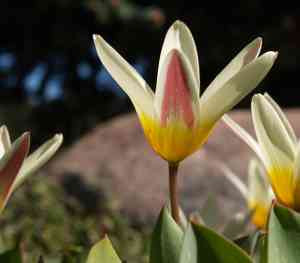
Water-lily tulip (Tulipa kaufmanniana)
Also known as: Tulip
The Kaufmanniana, or waterlily tulip, is celebrated as an early sign of spring. Its vivid, bowl-shaped flowers range from yellow to red, adding a splash of color to gardens. One of the first tulips to bloom, it has broad, gray-green leaves that can sometimes show a purplish tint. This hardy tulip flourishes in well-drained soil, with sunlight encouraging its petals to open fully into a star-like shape.
In This Article
Attributes of Water-lily tulip
Lifespan
Perennial
Plant Type
Herb
Plant Height
25 cm
Spread
15 cm
Leaf Color
Green
Flower Size
8 cm to 15 cm
Flower Color
White Yellow Red
Images of Water-lily tulip
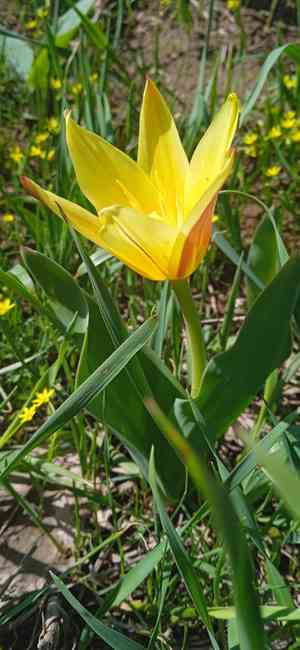
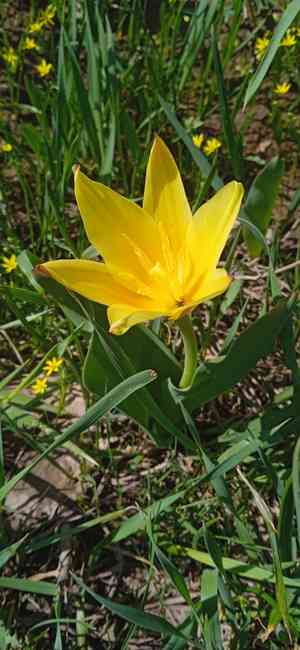
Quickly Identify Water-lily tulip
1
Large blooms with yellow 'eye' at base
2
Variegated floral patterns due to viral infections
3
Pointed tepals surrounding flowers
4
Short stems, less than 12 inches (30 cm) tall
5
Preference for cooler temperatures
Scientific Classification of Water-lily tulip
Phylum
Vascular plants
Class
Monocotyledons
Order
Liliales
Family
Lily
Genus
Tulips
Species
Water-lily tulip
Planting and Growing of Water-lily tulip
Care Difficulty
Moderate
Watering Schedule
Every 2 days
Sunlight Requirements
Full sun
Sunshine Duration
6-10 hours
Ideal Temperature
50-60℉
Soil Type
Potting Mix, Peat Mix
Soil pH
6.5-7.5
Fertilizer Type
Balanced
Pruning Season
Spring, Summer
Pruning Area
Branches, Leaves
Pruning Frequency
2 times a year
Repotting Season
Spring
Pot Type
Plastic, Ceramic
 How to Water Water-lily tulip?
When watering Tulipa kaufmanniana, aim for about 250 ml per plant, ensuring that the soil is moist but not waterlogged. It's crucial to allow the soil to dry out slightly between waterings to mimic their natural habitat and promote healthy growth.
What are the symptoms of an underwatered Water-lily tulip?
›
What should I do if my Water-lily tulip is not getting enough water?
›
What are the symptoms of an overwatered Water-lily tulip?
›
How to save an overwatered Water-lily tulip?
›
 What Are the Sunlight Requirements for Water-lily tulip?
For optimal health and flowering, provide Tulipa kaufmanniana with full or partial sun exposure. The right balance helps ensure robust growth, vivid blooms, and long-term vitality by maximizing photosynthesis opportunities.
What is the best light for Tulipa kaufmanniana?
›
How can I achieve optimal light conditions?
›
Why is ideal lighting important for Tulipa kaufmanniana?
›
 What Is the Ideal Temperature Range for Water-lily tulip?
The ideal temperature range for Tulipa kaufmanniana is between 50°F and 60°F. Within this range, the plants can thrive, ensuring optimal growth and health. These temperatures support efficient metabolic processes and help maintain healthy flowering periods. Any deviation from this range may affect blooming and overall vitality. Therefore, it's crucial to monitor and maintain the temperature to fall within the optimal range.
 What Soil is Best for Water-lily tulip?
Tulipa kaufmanniana thrives in well-drained soil, which helps prevent waterlogging and root rot. The optimal drainage allows roots to access oxygen easily, supporting healthy growth and vibrant blooms, essential for the plant's lifecycle. The plant benefits from nutrient-rich soil, which supplies essential minerals and elements needed for robust foliage and flowering. A fertile soil composition promotes lush greenery and extended blooming periods, improving the plant's visual appeal. Soil that retains moisture yet remains aerated is ideal for Tulipa kaufmanniana, as it ensures consistent water availability without suffocating roots. This balance aids in sustaining plant vigor and resilience against drought conditions.
 How to Fertilize Water-lily tulip?
Tulipa kaufmanniana requires a balanced approach to fertilization. During the growing season, using a 10-10-10 liquid fertilizer, apply approximately 1/4 cup diluted in a gallon of water per bulb. This ensures adequate nutrition without overfeeding.
 How to Prune Water-lily tulip?
Do not cut back the leaves too early, as they're crucial for photosynthesis. Removing them prematurely can inhibit the bulb's ability to store energy, affecting growth and blooms in the next season. Be careful not to damage the bulb when pruning. Injury to the bulb can lead to infections or rot, which may cause the plant's health to decline or prevent it from blooming.
More About Pruning Techniques→
 How to Propagate Water-lily tulip plant?
1
Collect seeds from mature Tulipa kaufmanniana plants after the flowering season. Allow the seed heads to dry out on the plant before harvesting to ensure viability.
2
In early spring, prepare to divide mature plants. Dig up the bulbs carefully, ensuring you do not damage the roots or the basal plate, which is crucial for new growth.
3
Plant seeds or divided bulbs in well-draining soil with appropriate spacing. Water immediately after planting to settle the soil around the bulbs or seeds.
 How to Repot Water-lily tulip plant?
1
Tulipa kaufmanniana bulbs usually signal it's time to repot when they outgrow their container or the flowering diminishes. Ideally, you should consider repotting them during spring or autumn when the plant is dormant. Look out for signs such as overcrowded bulbs or roots starting to protrude from the pot's drainage holes.
2
Select a pot that is about 2 inches larger in diameter than the current pot and ensures it has adequate drainage holes. This will help prevent waterlogging, which can cause bulb rot. A clay or terracotta pot is ideal as it allows air movement to the roots, promoting healthier growth.
3
Opt for a well-draining loamy mix that has been enriched with organic matter such as compost. This type of soil ensures that excess water drains away efficiently, minimizing the risk of bulb rot while providing essential nutrients that support healthy growth.
Toxicity
Ingestion
WARNING
The judgment on toxicity and danger is for reference only. We DO NOT GUARANTEE any accuracy of such judgment. Therefore, you SHALL NOT rely on such judgment. It is IMPORTANT TO SEEK PROFESSIONAL ADVICE in advance when necessary.



