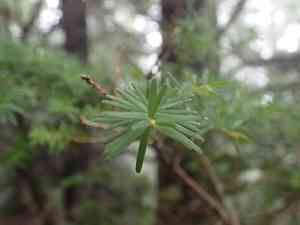
Carolina hemlock (Tsuga caroliniana)
Also known as: Carolina Hemlock
An evergreen coniferous tree can reach heights of up to 30 meters and have a trunk diameter of about 1.1 meters in forest environments. It features a dense, pyramid-shaped crown that can spread up to 8 meters wide. The bark is thick, reddish-brown, and develops fissures between its scaly ridges. The leaves are flat with a rounded or subtly notched tip.
In This Article
Attributes of Carolina hemlock
Lifespan
Perennial
Plant Type
Tree
Plant Height
9 m to 21 m
Spread
6 m to 8 m
Leaf Color
Green White
Flower Size
N/A - Conifers do not have traditional flowers
Flower Color
N/A
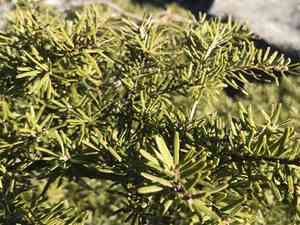
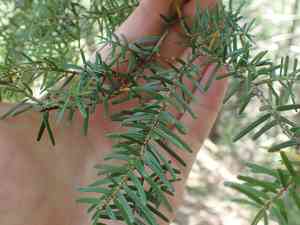
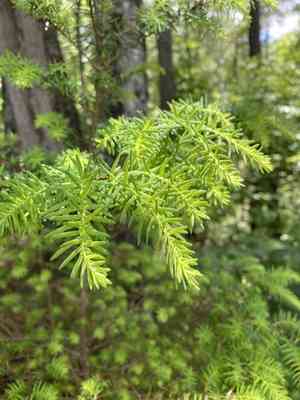
Images of Carolina hemlock
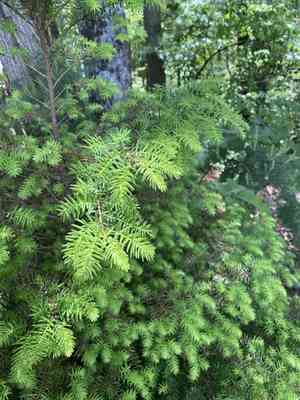
Quickly Identify Carolina hemlock
1
Needle-like leaves over 0.8 inches (2 cm) in length
2
Distinct tangerine-like aroma when leaves are crushed
3
Elongated, oblong cones measuring 1-1.5 inches (2.5-3.8 cm) with scales opening at maturity
4
Rugged reddish-brown bark with deep fissures and scaly ridges
5
Horizontally growing stems with red-brown to orange-brown coloration and fine hairs
Scientific Classification of Carolina hemlock
Phylum
Vascular plants
Class
Conifers
Order
Pinales
Family
Pine
Genus
Hemlocks
Species
Carolina hemlock
Planting and Growing of Carolina hemlock
Care Difficulty
Moderate
Watering Schedule
Every 4 days
Sunlight Requirements
Full sun
Sunshine Duration
6-10 hours
Ideal Temperature
60-70℉
Soil Type
Potting Mix, Peat Mix
Soil pH
6.5-7.5
Fertilizer Type
Balanced
Pruning Season
Spring, Summer
Pruning Area
Branches, Leaves
Pruning Frequency
2 times a year
Repotting Season
Spring
Pot Type
Plastic, Terracotta
 How to Water Carolina hemlock?
For Tsuga caroliniana, ensure the soil is evenly moist but not soggy. It's important to maintain consistent moisture, especially during dry spells. Water deeply, allowing the water to reach the root zone, and let excess drain away.
What are the symptoms of an underwatered Carolina hemlock?
›
What should I do if my Carolina hemlock is not getting enough water?
›
What are the symptoms of an overwatered Carolina hemlock?
›
How to save an overwatered Carolina hemlock?
›
 What Are the Sunlight Requirements for Carolina hemlock?
Tsuga caroliniana thrives best with full to partial sun, meaning daily sunlight exposure should be between 6 to 8 hours. This moderation allows the plant to photosynthesize effectively while maintaining its resistance to environmental stressors, ensuring lush, healthy growth.
More About Sunlight Requirements Techniques→
Optimal Sunlight Exposure
›
Positioning for Best Light
›
Benefits of Adequate Sunlight
›
 What Is the Ideal Temperature Range for Carolina hemlock?
Tsuga caroliniana thrives ideally within the temperature range of 60°F to 70°F. This range supports optimal growth and metabolic functions, ensuring the plant maintains its health and vigor. Temperatures consistently outside this range may lead to stress and developmental issues.
 What Soil is Best for Carolina hemlock?
The soil for Tsuga caroliniana should be well-draining to prevent root rot. This feature allows air to reach the roots, maintaining healthy growth with sufficient oxygen and preventing waterlogged conditions. While Tsuga caroliniana needs well-draining soil, it also prefers soil that retains moisture. This balance helps maintain a consistent water supply without pooling, encouraging vigorous growth. Soil rich in organic matter is crucial for Tsuga caroliniana. This nutrient abundance supports robust foliage and overall plant health by providing essential nutrients that the plant absorbs during its growth.
 How to Fertilize Carolina hemlock?
Carolina hemlock, Tsuga caroliniana, requires a moderate amount of fertilizer to flourish. Use a balanced fertilizer with an N-P-K ratio of 10-10-10 or similar. Apply liquid fertilizer at a rate of 1 tablespoon per gallon of water and use around 1 gallon per plant for young trees and adjust according to the size of the tree.
 How to Prune Carolina hemlock?
Start by removing any dead, dying, or diseased branches. Cut them back to healthy wood, ensuring you make clean cuts. This helps in directing the tree’s energy toward growth and away from maintaining unhealthy areas. Thinning the canopy can enhance air circulation, which reduces the risk of disease. Carefully select branches for removal to ensure that sunlight can penetrate through to the inner branches. After structural pruning, focus on shaping the crown by selectively trimming small branches. This helps maintain the aesthetic shape of the tree, which is crucial if you're using the Carolina Hemlock as an ornamental plant.
More About Pruning Techniques→
 How to Propagate Carolina hemlock plant?
1
Collect seeds from mature Tsuga caroliniana cones in the autumn. Ensure the seeds are fully developed and dry them properly before storage or planting.
2
Use a well-draining soil mix, preferably a mix with peat and perlite. Fill seed or cutting trays with this soil to provide a conducive environment for root development.
3
Select healthy, disease-free branches during early spring. Cut sections at least 5-10 cm long, making sure each cutting has several nodes to facilitate rooting.
 How to Repot Carolina hemlock plant?
1
Tsuga caroliniana should be repotted when you notice roots beginning to circle the pot or grow through the drainage holes. This usually occurs every 2 to 3 years, making spring and early autumn ideal repotting times when the plant is not under the stress of active summer growth or winter dormancy.
2
Select a pot that is one size larger than the current one, with ample drainage holes. A slightly larger pot will encourage the healthy growth of roots without overwhelming the plant, ensuring proper water drainage and preventing root rot which is common in overly large containers.
3
Opt for a well-draining acidic soil mix to mimic the plant's natural habitat. This allows for adequate air circulation around the roots while maintaining the slightly acidic environment Tsuga caroliniana prefers, preventing root diseases and promoting healthy growth.



