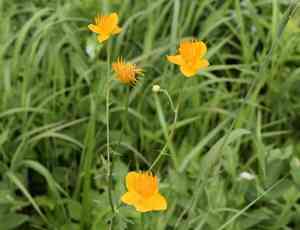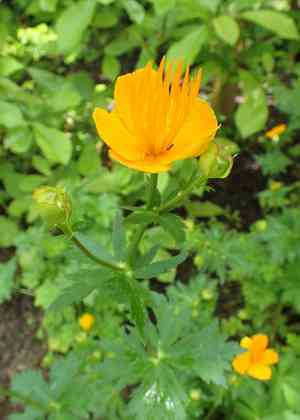
Chinese globeflower(Trollius chinensis)

Chinese globeflower (Trollius chinensis)

Also known as: Chinese Globeflower

The Chinese globeflower (Trollius chinensis) is a perennial known for its affinity for moist environments, making it a favorite for pond habitats. Its name reflects the globe-like shape of its flowers and its Chinese origin. Resembling double buttercups in appearance, this plant stands out for its unique charm. It has also been recognized with the Award of Garden Merit.

Attributes of Chinese globeflower

Lifespan
Perennial
Plant Type
Herb
Plant Height
90 cm
Spread
30 cm
Leaf Color
Green
Flower Size
5 cm to 8 cm
Flower Color
Orange Yellow

ForwardPlant - Identify plants with a snap

Identify and diagnose plants, get toxicity alerts, and explore safety guides for all types of fungi.

Try for Free

Images of Chinese globeflower

Chinese globeflower(Trollius chinensis)

Quickly Identify Chinese globeflower

1
To identify Trollius chinensis, look for its bright golden-yellow, globe-shaped flowers that have cupped petals. The plant also has deeply lobed, dark green leaves and a sturdy stem.

Scientific Classification of Chinese globeflower

Phylum
Vascular plants
Class
Dicotyledons
Order
Buttercups, poppies and allies
Family
Buttercup
Genus
Globe flowers
Species
Chinese globeflower

Planting and Growing of Chinese globeflower

Care Difficulty
Moderate
Watering Schedule
Every 4 days
Sunlight Requirements
Partial sun
Sunshine Duration
4-6 hours
Ideal Temperature
60-75℉
Soil Type
Potting Mix, Peat Mix
Soil pH
6.5-7.5
Fertilizer Type
Balanced
Pruning Season
Spring, Summer
Pruning Area
Branches, Leaves
Pruning Frequency
2 times a year
Repotting Season
Spring
Pot Type
Plastic, Terracotta

water icon How to Water Chinese globeflower?

When watering Trollius chinensis, aim for around 300 milliliters each time. This plant prefers consistently moist soil, so make sure to water enough to moisten the root zone without leaving the soil soggy. Aiming for even moisture ensures that the plant roots have a continuous supply of water without drowning them.
What are the symptoms of an underwatered Chinese globeflower?
What should I do if my Chinese globeflower is not getting enough water?
What are the symptoms of an overwatered Chinese globeflower?
How to save an overwatered Chinese globeflower?

sunlight icon What Are the Sunlight Requirements for Chinese globeflower?

Sunlight Requirements: Partial sun
Duration of light: 4-6 hours daily
Trollius chinensis thrives in a light range that includes both morning sun and afternoon shade. This balance helps the plant perform optimally, supporting robust growth and vibrant flowers.
What is the ideal amount of light for Trollius chinensis?
How can I ensure optimal sun exposure for Trollius chinensis?
What are the benefits of optimal light for Trollius chinensis?
More About Sunlight Requirements Techniques

temperature icon What Is the Ideal Temperature Range for Chinese globeflower?

Ideal Temperature: 60 ~ 75℉
The ideal temperature range for growing Trollius chinensis is between 60°F and 75°F. This range is conducive to optimal plant growth, promoting vibrant blooms and healthy foliage. Maintaining this range ensures that the plant's metabolic processes function efficiently.

soil icon What Soil is Best for Chinese globeflower?

Soil type: Loam, Sandy loam, Peat soil
Soil PH: 6.5 ~ 7.5
Trollius chinensis prefers soil that retains moisture well. Such soil can prevent the plant from drying out in warmer months, ensuring sustained hydration which is crucial for its vibrant blooms. While they like moisture, excellent drainage is critical to prevent waterlogging. This reduces the risk of root rot, allowing the plants to access nutrients efficiently without being submerged. A nutrient-dense soil is ideal as it supports healthier growth and more prolific flowering. Nutrients like nitrogen, phosphorus, and potassium in balanced amounts can boost the plant’s vigor.

fertilize icon How to Fertilize Chinese globeflower?

Fertilizer type: Balanced
Trollius chinensis prefers a balanced approach to fertilization. For liquid fertilizers, mix at half the strength recommended on the label, applying around 100 ml per plant each time. For slow-release fertilizers, use about 100 grams per square meter.

prune icon How to Prune Chinese globeflower?

Pruning Time: Spring, Summer
When pruning Trollius chinensis, aim to maintain an open center by removing inward-growing branches. This enhances light distribution and promotes vigorous growth. Deadhead the spent blooms regularly to encourage more flowers. Cut the stem just above the next set of leaves, taking care not to damage the surrounding growth. In spring, target the removal of any old, winter-damaged growth. In summer, focus on deadheading and controlling size as the plant reaches its peak growth. More About Pruning Techniques

propagate icon How to Propagate Chinese globeflower plant?

Propagate Time: Spring, Early spring, Late spring
1
Collect ripe seeds as soon as they mature in late summer. Ensure they are thoroughly dry before storage to prevent mold growth.
2
Prepare a well-draining potting mix rich in organic matter. This aids in seed germination and provides necessary nutrients for initial growth.
3
Plant seeds at a shallow depth, just enough to cover them lightly with soil to prevent washing away with watering.
More About Propagating Techniques

repot icon How to Repot Chinese globeflower plant?

Repotting frequency: Every 2-3 years
1
Trollius chinensis should be repotted when you notice the roots crowding around the pot's edges or protruding from the drainage holes. This indicates that the plant has outgrown its current home and needs more space to continue thriving. Spring or autumn are ideal times for this task, as the plant is not in its peak growing phase and can better recover from the repotting.
2
Select a pot that is one size larger than the current one, preferably made from a breathable material like terracotta. The pot should have adequate drainage holes to allow excess water to escape, preventing root rot. A larger pot offers the roots more room to expand while the material can help regulate soil moisture levels, promoting healthy growth.
3
Opt for a loamy, well-draining potting mix enriched with organic matter. This type of soil maintains moisture without becoming waterlogged, providing a balance that keeps the roots hydrated but not submerged. It also supports nutrient retention, vital for the continued health and development of Trollius chinensis.

ForwardPlant - Identify plants with a snap

Find the best spots for them to optimize their health, simply using your phone.

Try for Free

Toxicity of Chinese globeflower

Is Chinese globeflower toxic to humans?

Similar to many flowering plants within the Trollius genus, the Chinese globeflower exhibits mild toxicity when ingested or touched. Poisoning incidents predominantly occur among individuals who consume the plant, often under the misconception that it possesses healing properties for various ailments. The plant has a purgative effect, leading to symptoms primarily affecting the gastrointestinal system. Other species of Trollius tend to become less toxic after drying, and this may also apply to the Chinese globeflower. If you choose to cultivate Chinese globeflower, it is essential to keep these plants out of reach of children and pets, who are particularly vulnerable to poisoning. Always wear gloves while handling any plants from this genus.

Identify toxic plants for your safety

Learn which plants are harmful to you and your pets, and make informed choices for a safer home!

Try for Free
WARNING
The judgment on toxicity and danger is for reference only. We DO NOT GUARANTEE any accuracy of such judgment. Therefore, you SHALL NOT rely on such judgment. It is IMPORTANT TO SEEK PROFESSIONAL ADVICE in advance when necessary.
More About Toxic Techniques