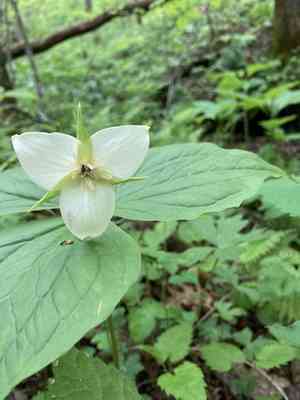
Jeweled wakerobin (Trillium simile)
Also known as: Confederate wakerobin, Jeweled wakerobin
Trillium simile thrives in moist, nutrient-rich soils commonly found in mature forests. It often grows near the edges of Rhododendron thickets and forest boundaries. The ideal elevation for its growth ranges from 500 to 700 meters.
In This Article
Attributes of Jeweled wakerobin
Lifespan
Perennial
Plant Type
Herb
Plant Height
30 cm
Spread
30 cm
Leaf Color
Green Red
Flower Size
2 - 4 inches (5 - 10 cm)
Flower Color
White Pink
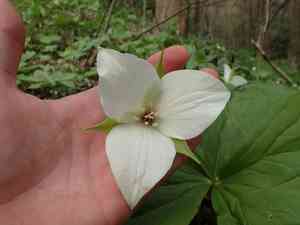
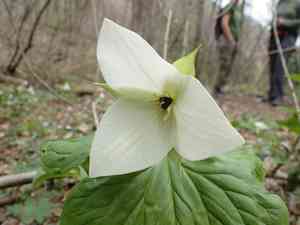
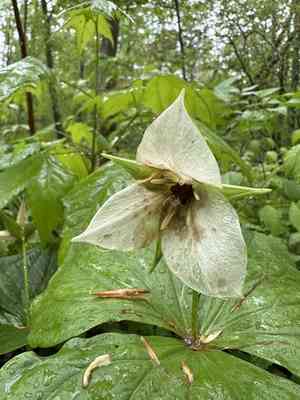
Images of Jeweled wakerobin
Quickly Identify Jeweled wakerobin
1
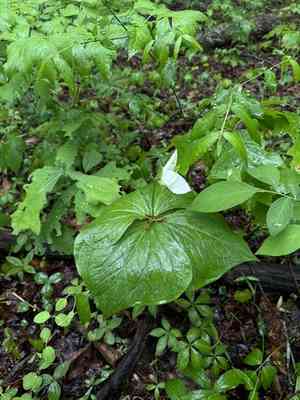
Pure white blooms with 3 symmetrical petals (3 inches / 7.6 cm long) on a 20-inch (50 cm) stem.
2
Distinctive dark green ovate leaves in a whorl, contrasting with bright white flowers.
3
Triangular white flowers with purple ovary, emitting apple-like fragrance (2 to 4 inches / 5 to 10 cm).
4
6-parted berry-like capsule fruit, deep purple-black when mature, stands out in foliage.
5
Smooth, unbranched stem transitioning from green to reddish-purple, around 0.25 inches (0.6 cm) in diameter.
Scientific Classification of Jeweled wakerobin
Phylum
Vascular plants
Class
Monocotyledons
Order
Liliales
Family
Bunchflower
Genus
Birthroots
Species
Jeweled wakerobin
Planting and Growing of Jeweled wakerobin
Care Difficulty
Moderate
Watering Schedule
Every 3 days
Sunlight Requirements
Full shade
Sunshine Duration
6-8 hours
Ideal Temperature
60-75℉
Soil Type
Potting Mix, Peat Mix
Soil pH
5.5-6.5
Fertilizer Type
Balanced
Pruning Season
Spring, Summer
Pruning Area
Branches, Leaves
Pruning Frequency
2 times a year
Repotting Season
Spring
Pot Type
Plastic, Ceramic
 How to Water Jeweled wakerobin?
Trillium simile requires watering that keeps the soil consistently moist but not waterlogged. Aim to provide approximately 250 milliliters per watering session, ensuring the moisture reaches the root level without saturating the soil. This approach encourages healthy growth and prevents root rot.
What are the symptoms of an underwatered Jeweled wakerobin?
›
What should I do if my Jeweled wakerobin is not getting enough water?
›
What are the symptoms of an overwatered Jeweled wakerobin?
›
How to save an overwatered Jeweled wakerobin?
›
 What Are the Sunlight Requirements for Jeweled wakerobin?
Partial to full shade environments offer Trillium simile its comfort zone, supporting lush leaf development and vibrant flowers, typical of its natural woodland residence.
Ideal Light Exposure
›
Solution for Ideal Exposure
›
Benefits of Ideal Light
›
 What Is the Ideal Temperature Range for Jeweled wakerobin?
The ideal temperature range for growing Trillium simile is between 60°F and 75°F. This range provides the right balance of warmth and coolness that mimics the plant’s natural habitat, allowing it to thrive and form healthy foliage and blooms.
 What Soil is Best for Jeweled wakerobin?
Trillium simile thrives in well-drained soil that prevents water from stagnating around its roots. This ensures that the plant does not suffer from root rot and facilitates the healthy uptake of nutrients. While drainage is crucial, the soil also needs to retain essential moisture. A balanced loam with enough organic matter helps the soil keep moisture, supporting the plant during dry spells. The plant benefits from soil enriched with organic matter, offering a buffet of nutrients essential for its growth and flowering. This nurtures robust foliage and vibrant blossoms.
 How to Fertilize Jeweled wakerobin?
Trillium simile is a delicate plant that does not require large quantities of fertilizer. Using about one-quarter of the recommended dose on the fertilizer label is often sufficient during the growing season, keeping in mind to avoid over-fertilizing.
 How to Prune Jeweled wakerobin?
Use sharp, sterilized scissors to trim away any dead or dying leaves and stems. Start from the base of the plant and work outward, ensuring you don’t damage the healthy parts. This method allows the plant to allocate resources more efficiently. Identify any stems that have turned yellow or show signs of rot. Cut these stems close to the base but avoid cutting into the crown of the plant. Proper stem pruning opens up the plant to light and air, stimulating new growth.
More About Pruning Techniques→
 How to Propagate Jeweled wakerobin plant?
1
Locate mature seeds on the Trillium simile plant in late spring. The seeds should be brown and dry, indicating they are ready for collection. Place them in a paper bag for further drying before storage or planting.
2
In early spring, dig around the Trillium simile plant carefully to extract the rhizomes. Wash off the soil to clearly see natural divisions or offsets to cut from the main rhizome.
3
Whether using seeds or divisions, plant them in part shade with rich, well-draining soil. Water thoroughly immediately after planting to establish contact between soil and root or seed.
 How to Repot Jeweled wakerobin plant?
1
Look for signs that your Trillium simile needs repotting. These include visible roots poking out of the drainage holes, slowed growth, or the plant becoming top-heavy. Typically, early spring or after blooming in autumn when the plant is dormant is ideal for repotting.
2
Choose a pot that is one size bigger than the current one. It should have ample drainage holes to prevent waterlogging, which can lead to root rot. Using the correct pot ensures your Trillium simile has enough space to grow and thrive while avoiding excess moisture.
3
Opt for a rich, well-drained soil mix designed for woodland plants for repotting Trillium simile. This type of soil mimics its natural habitat, providing adequate nutrients and good drainage, essential for healthy growth and preventing root diseases.
Learn More About Jeweled wakerobin Diseases
Anthracnose
Bacterial Leaf Spot
Bacterial Soft Rot
Crown Gall
Cyst Nematode
Damping-off
Downy Mildew
Drought Stress
Fusarium Wilt
Gray Mold
Leaf Spot
Mosaic
Nutrient Deficiency
Nutrient Toxicity
Powdery Mildew
Root Rot
Root-knot Nematode
Rusts
Sooty Mold
Spider Mites
Temperature Stress
Thrips Damage
White Mold



