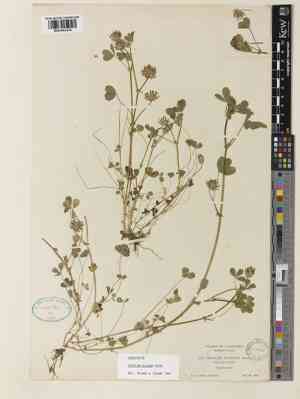
Pacific grove clover (Trifolium polyodon)
Also known as: None
The Pacific Grove clover (Trifolium polyodon) is a perennial herb characterized by its trifoliate leaf arrangement, commonly seen in meadows and grasslands. It grows in a low, rosette form, producing vibrant pink to purple, pompom-like flower clusters. These flowers attract pollinators, aiding in seed dispersal. Additionally, its nitrogen-fixing capability improves soil fertility, benefiting the surrounding plant community.
In This Article
Attributes of Pacific grove clover
Lifespan
Perennial
Plant Type
Herb
Plant Height
10-50 centimeters
Spread
Varies
Leaf Color
Green
Flower Size
0.5-1.5 centimeters
Flower Color
Pink to purple
Images of Pacific grove clover


Quickly Identify Pacific grove clover
1
To identify Trifolium polyodon, look for its compound leaves with three leaflets, and its densely flowered globular heads. The leaflets often have fine teeth along their margins and a characteristic pale mark on their surface.
Scientific Classification of Pacific grove clover
Phylum
Vascular plants
Class
Dicotyledons
Order
Fabales
Family
Legume
Genus
Clovers
Species
Pacific grove clover
Planting and Growing of Pacific grove clover
Care Difficulty
Moderate
Watering Schedule
Every 2 days
Sunlight Requirements
Partial sun
Sunshine Duration
6-10 hours
Ideal Temperature
60-75℉
Soil Type
Potting Mix, Peat Mix
Soil pH
6.5-7.5
Fertilizer Type
Balanced
Pruning Season
Spring, Summer
Pruning Area
Branches, Leaves
Pruning Frequency
2 times a year
Repotting Season
Spring
Pot Type
Plastic, Terracotta
 How to Water Pacific grove clover?
When watering Trifolium polyodon, ensure that the soil is evenly moist without becoming waterlogged. Use around 250 ml of water per watering. This amount ensures the roots receive adequate moisture while preventing oversaturation. The goal is to maintain a consistent level of humidity in the soil.
What are the symptoms of an underwatered Pacific grove clover?
›
What should I do if my Pacific grove clover is not getting enough water?
›
What are the symptoms of an overwatered Pacific grove clover?
›
How to save an overwatered Pacific grove clover?
›
 What Are the Sunlight Requirements for Pacific grove clover?
Partial sun exposure suits Trifolium polyodon perfectly, promoting healthy leaves and sustainable flowering. This light range encourages robustness and improved disease resistance.
Optimal Sun Exposure
›
Solutions to Achieve Ideal Light
›
Benefits of Ideal Lighting
›
 What Is the Ideal Temperature Range for Pacific grove clover?
The ideal temperature range for Trifolium polyodon is between 60°F and 75°F. This temperature range ensures optimal growth and development of the plant, facilitating healthy leaf production and vibrant blooms. Maintaining this temperature range helps the plant efficiently perform photosynthesis and other metabolic processes, improving its overall health and resilience.
 What Soil is Best for Pacific grove clover?
Trifolium polyodon thrives in nutrient-rich soils that provide essential minerals for growth. Ensuring the presence of organic matter not only supports healthy foliage but also facilitates effective nitrogen fixation, crucial for this legume family member. This plant prefers well-drained soils to prevent root rot and other moisture-related issues. Proper drainage helps maintain root health and supports the overall vitality and resilience of the plant. While drainage is essential, the soil should also retain enough moisture to support continuous growth without frequent irrigation, striking the right balance for healthy development.
 How to Fertilize Pacific grove clover?
For Trifolium polyodon, it is essential to apply fertilizers in moderation. When using liquid fertilizers, dilute them to half the recommended strength. Apply the liquid fertilizer at a rate of approximately 4 tablespoons per gallon of water. As for slow-release fertilizers, use about 1 pound per 100 square feet annually.
 How to Prune Pacific grove clover?
Begin with observing your Trifolium polyodon for any excessively long or crowded stems. Use clean, sharp shears to trim these back to maintain a balanced and tidy appearance. Focus on creating an even shape to encourage uniform growth throughout the plant. Prune away any dead or damaged leaves and stems. This helps to divert energy to healthier parts of the plant, promoting vigorous growth. Be mindful not to remove more than a third of the plant at any one time to avoid stress.
More About Pruning Techniques→
 How to Propagate Pacific grove clover plant?
1
Collect seeds from mature Trifolium polyodon plants. Ensure they are dried properly to prevent mold. Soaking seeds in water for 24 hours before planting may promote faster germination.
2
Choose healthy shoots with several leaves for cuttings. Cut just below a leaf node and remove the lower leaves to expose the stem. Dip the cut end in rooting hormone to encourage root growth.
3
To propagate by division, select an established plant and carefully separate a portion, ensuring some roots are attached. Replant the divided section in suitable soil and water thoroughly.
 How to Repot Pacific grove clover plant?
1
Trifolium polyodon signals that it's time to repot when its roots begin to outgrow the current pot, or water absorption becomes delayed. Ideally, repotting should coincide with its growth phase during spring or autumn for best results.
2
Choose a pot that is 1-2 inches larger in diameter than the current one. Ensure it has adequate drainage holes. The right pot allows roots to expand and prevents waterlogging, which is crucial for healthy growth.
3
Opt for a well-draining loamy soil, rich in organic matter. This provides Trifolium polyodon with the necessary nutrients while preventing water retention, minimizing the risk of root rot.
Learn More About Pacific grove clover Diseases
Anthracnose
Bacterial Leaf Spot
Bacterial Wilt
Cyst Nematode
Damping-off
Downy Mildew
Drought Stress
Fusarium Wilt
Gray Mold
Leaf Spot
Mosaic
Nutrient Deficiency
Nutrient Toxicity
Powdery Mildew
Root Rot
Root-knot Nematode
Rusts
Sooty Mold
Spider Mites
Temperature Stress
Thrips Damage
White Mold
Chemical Injury


