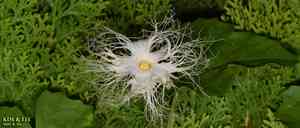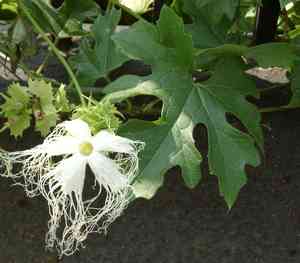
Chinese cucumber(Trichosanthes kirilowii)

Chinese cucumber (Trichosanthes kirilowii)

Also known as: Chinese Trichosanthes, Snakegourd, Kirilow's Trichosanthes

The Chinese cucumber, a perennial climbing plant, thrives in the wild across bushlands, fields, and forest edges primarily in China, Korea, and Japan. Its fruit is edible and commonly pickled, while its leaves and roots are also used in various culinary applications. Additionally, oil extracted from its seeds can be utilized for lighting purposes.

Attributes of Chinese cucumber

Lifespan
Perennial
Plant Type
Vine
Plant Height
6 m
Spread
N/A
Leaf Color
Green
Flower Size
5 cm to 8 cm
Flower Color
White

ForwardPlant - Identify plants with a snap

Identify and diagnose plants, get toxicity alerts, and explore safety guides for all types of fungi.

Try for Free

Images of Chinese cucumber

Chinese cucumber(Trichosanthes kirilowii)

Quickly Identify Chinese cucumber

1
Look for long, sprawling vines and large, lobed leaves. The flowers are white with delicate, feathery edges, and the fruit is oblong and turns red when ripe.

Scientific Classification of Chinese cucumber

Phylum
Vascular plants
Class
Dicotyledons
Order
Cucurbitales
Family
Gourd
Genus
Trichosanthes
Species
Chinese cucumber

Planting and Growing of Chinese cucumber

Care Difficulty
Easy
Watering Schedule
Every 4 days
Sunlight Requirements
Partial sun
Sunshine Duration
6-10 hours
Ideal Temperature
68-86℉
Soil Type
Potting Mix, Peat Mix
Soil pH
6-7.5
Fertilizer Type
Balanced
Pruning Season
Spring, Summer
Pruning Area
Branches, Leaves
Pruning Frequency
2 times a year
Repotting Season
Spring
Pot Type
Plastic, Ceramic

water icon How to Water Chinese cucumber?

When watering Trichosanthes kirilowii, aim to thoroughly soak the soil until water runs out of the drainage holes. This ensures that the roots receive adequate moisture but aren't sitting in excess water. Approximately 500 ml of water per session should be sufficient, but always adjust if the pot size varies.
What are the symptoms of an underwatered Chinese cucumber?
What should I do if my Chinese cucumber is not getting enough water?
What are the symptoms of an overwatered Chinese cucumber?
How to save an overwatered Chinese cucumber?

sunlight icon What Are the Sunlight Requirements for Chinese cucumber?

Sunlight Requirements: Partial sun
Duration of light: 3-6 hours
Trichosanthes kirilowii ideally requires partial sun exposure, thriving in morning sunlight and shaded afternoons. This configuration aids in optimal growth, ensuring the plant's dense foliage and comprehensive development while boosting its ornamental appeal.
How much light does it need?
What are the solutions to achieving ideal light?
What are the effects of getting ideal light?
More About Sunlight Requirements Techniques

temperature icon What Is the Ideal Temperature Range for Chinese cucumber?

Ideal Temperature: 68 ~ 86℉
For Trichosanthes kirilowii, maintaining an ideal temperature range is crucial for optimal growth and health. The best temperature range is between 68°F to 86°F. This range ensures that the plant's metabolic processes function efficiently, supporting robust growth, flowering, and fruiting phases. Within this temperature span, the plant can absorb nutrients effectively and utilize them for growth, while also optimizing water uptake and retention.

soil icon What Soil is Best for Chinese cucumber?

Soil type: Loam, Sandy loam
Soil PH: 6 ~ 7.5
Trichosanthes kirilowii prefers soils rich in nutrients which support its vigorous growth. Ensuring the soil is fertile enhances the plant's ability to produce healthy foliage and abundant fruits. It thrives in well-drained soils, which prevent root rot by allowing excess water to drain away easily. This helps to keep the roots healthy, ensuring optimum plant growth and development. While drainage is key, the soil should still retain sufficient moisture. Loamy soils are ideal because they hold moisture while allowing air exchange, essential for root health.

fertilize icon How to Fertilize Chinese cucumber?

Fertilizer type: Balanced
For Trichosanthes kirilowii, it is crucial to use a balanced fertilizer that contains equal parts nitrogen, phosphorus, and potassium. Apply liquid fertilizer at half the recommended strength to avoid overfeeding and harming the plant. Solid granular fertilizers should be used sparingly, with about a tablespoon per square foot.

prune icon How to Prune Chinese cucumber?

Pruning Time: Spring, Summer, Autumn, Winter
Begin by identifying and removing any dead or damaged stems from the plant. Use sharp pruning shears to make clean cuts just above a leaf node, which will promote new growth. If the vine has become unruly, trim back the excess growth to maintain the desired shape and size. Always ensure the cuts are done at a slight angle to prevent water accumulation on the cut surface, which can lead to rot. Avoid cutting more than one-third of the plant at any one time to avoid stressing it.

propagate icon How to Propagate Chinese cucumber plant?

Propagate Time: Spring, Early summer
1
Begin with selecting healthy and mature seeds, ensuring they are free from any discolorations or damages. Quality seeds have a higher germination rate.
2
Use well-draining soil mixed with compost to provide adequate nutrients. A balanced pH level is crucial for optimal germination and growth.
3
Plant seeds at a consistent depth, typically twice their size, and water gently. Maintain soil moisture without making it waterlogged, which helps in germination.
More About Propagating Techniques

repot icon How to Repot Chinese cucumber plant?

Repotting frequency: Every 2-3 years
1
Repot Trichosanthes kirilowii when you notice roots emerging from the pot's drainage holes or the plant's growth appears stunted. These signs indicate that the plant is outgrowing its current pot and requires more space to thrive.
2
Select a pot that is one size larger than the current one, with plenty of drainage holes. The right sized pot ensures the plant has room to grow while preventing issues related to waterlogged roots.
3
Opt for a well-draining loamy soil mix, which will help retain moisture adequately without causing excess water retention, ensuring that the plant's roots get the right balance of air and nutrients.

ForwardPlant - Identify plants with a snap

Find the best spots for them to optimize their health, simply using your phone.

Try for Free

Toxicity of Chinese cucumber

Is Chinese cucumber toxic to humans?

The Chinese cucumber has a relatively low toxicity level for humans, primarily due to the ingestion of its root. This root contains trichosanthin, a ribosome-activating protein that can disrupt cellular function. When consumed, this substance may trigger various symptoms, including gastrointestinal issues such as nausea, vomiting, and diarrhea. In certain instances, individuals may experience more serious reactions, including fever or chills, as the body reacts to the toxic compound. It is crucial for people to refrain from eating the root of the Chinese cucumber to avoid these detrimental health consequences. Although other plant parts may carry lower toxicity, the root poses a significant risk and should be handled carefully to avert accidental poisoning.

Identify toxic plants for your safety

Learn which plants are harmful to you and your pets, and make informed choices for a safer home!

Try for Free
WARNING
The judgment on toxicity and danger is for reference only. We DO NOT GUARANTEE any accuracy of such judgment. Therefore, you SHALL NOT rely on such judgment. It is IMPORTANT TO SEEK PROFESSIONAL ADVICE in advance when necessary.
More About Toxic Techniques