
Natal mahogany (Trichilia emetica)
Also known as: Ethiopian mahogany, Cape mahogany
Natal mahogany is a resilient evergreen tree recognized for its dense foliage and clusters of small, aromatic white flowers. Thriving in the well-drained soils of woodland regions, it produces round, velvety fruits that support local wildlife. The tree’s robust and long-lasting timber is particularly prized, making it an essential resource for local communities.
In This Article
Attributes of Natal mahogany
Lifespan
Perennial
Plant Type
Tree
Plant Height
10 to 20 meters
Spread
10 to 15 meters
Leaf Color
Glossy green
Flower Size
0.5 to 1 cm
Flower Color
White to pale yellow
Images of Natal mahogany


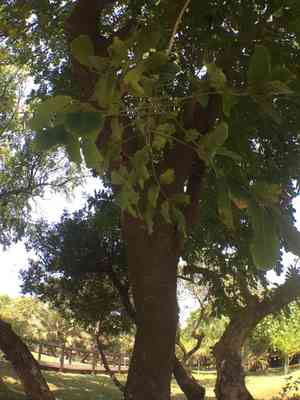

Quickly Identify Natal mahogany
1
Identify Trichilia emetica by its large, glossy leaves arranged in a pinnate fashion, small white to pale yellow flowers, and bright red, globular berries.
Scientific Classification of Natal mahogany
Phylum
Vascular plants
Class
Dicotyledons
Order
Sapindales
Family
Mahogany
Genus
Trichilia
Species
Natal mahogany
Planting and Growing of Natal mahogany
Care Difficulty
Moderate
Watering Schedule
Every 2 days
Sunlight Requirements
Partial sun
Sunshine Duration
6-10 hours
Ideal Temperature
65-85℉
Soil Type
Potting Mix, Peat Mix
Soil pH
6.5-7.5
Fertilizer Type
Balanced
Pruning Season
Spring, Summer
Pruning Area
Branches, Leaves
Pruning Frequency
2 times a year
Repotting Season
Spring
Pot Type
Plastic, Terracotta
 How to Water Natal mahogany?
When watering Trichilia emetica, aim to soak the soil thoroughly until water begins to seep out of the drainage holes at the bottom of the pot. This ensures the roots receive enough moisture without leaving them waterlogged. Avoid watering so much that the soil remains soggy for extended periods.
What are the symptoms of an underwatered Natal mahogany?
›
What should I do if my Natal mahogany is not getting enough water?
›
What are the symptoms of an overwatered Natal mahogany?
›
How to save an overwatered Natal mahogany?
›
 What Are the Sunlight Requirements for Natal mahogany?
Trichilia emetica flourishes with partial sun exposure, ideally between three to six hours daily. Adequate light promotes vibrant foliage and overall better plant health.
Question 1
›
Question 2
›
Question 3
›
 What Is the Ideal Temperature Range for Natal mahogany?
The ideal temperature range for Trichilia emetica is between 65°F and 85°F. This range ensures optimal growth as it mimics the plant's native tropical to subtropical environment. Maintaining this temperature range allows the plant to efficiently carry out photosynthesis and other metabolic processes, resulting in healthy foliage and robust growth.
 What Soil is Best for Natal mahogany?
Trichilia emetica thrives in well-drained soil, which ensures that the roots do not get waterlogged. This soil condition helps prevent root rot and supports healthy growth by allowing proper air circulation around the roots. The plant benefits from soil that retains moisture without becoming soggy. Such soil can maintain necessary hydration for the plant, especially during dry spells, promoting consistent growth and vitality. Trichilia emetica prefers nutrient-rich soil that can supply the necessary minerals for robust growth. A fertile soil rich in organic matter supports lush foliage and strong structural development.
 How to Fertilize Natal mahogany?
Trichilia emetica prefers a balanced fertilizer application. Use a 10-10-10 NPK fertilizer for young plants and reduce to 5-5-5 for more mature installations. Depending on the plant's growth stage, adjust the quantity, applying roughly 100 grams per year for a mature tree.
 How to Prune Natal mahogany?
Begin by identifying dead, diseased, or crossing branches. These should be your primary targets, as their removal will pave the way for healthier growth. The objective is to enhance air circulation within the foliage, improving the plant's overall light exposure. Use sharp pruning shears to make clean, angled cuts, ensuring the incision is just above a node. This technique prevents water from sitting on the cut surface, minimizing the risk of rot while promoting faster healing and healthy new growth.
 How to Propagate Natal mahogany plant?
1
Harvest seeds from mature Trichilia emetica fruits, ensuring they are clean and dry. Store them in a cool, dry place before sowing for optimal germination results.
2
Select healthy, non-flowering stems and cut them, preferably with at least 2-3 leaf nodes. Remove the lower leaves to expose nodes for root development.
3
Place seeds in a seed tray filled with well-draining soil or plant cuttings in a pot with a mixture of peat and perlite. Keep the medium moist and place in indirect sunlight.
 How to Repot Natal mahogany plant?
1
Trichilia emetica shows signs it needs repotting when its roots start emerging from the drainage holes or when growth seems stagnant. Repotting is best done during spring or autumn when the plant is not at its peak growth phase, allowing it to adjust to new soil conditions more effectively.
2
Select a pot slightly larger than the current one, ensuring it has adequate drainage holes. A well-sized pot provides the roots enough space to grow while preventing the soil from retaining too much water, which could lead to root rot. Terracotta or a breathable material is ideal as it allows moisture to evaporate, helping the roots breathe.
3
Opt for a well-draining potting mix that retains some moisture yet allows excess water to drain. A mixture comprising equal parts peat, perlite, and sand is beneficial. This combination ensures the roots are not waterlogged, promoting healthy growth and preventing fungal infections.
Toxicity
Ingestion
WARNING
The judgment on toxicity and danger is for reference only. We DO NOT GUARANTEE any accuracy of such judgment. Therefore, you SHALL NOT rely on such judgment. It is IMPORTANT TO SEEK PROFESSIONAL ADVICE in advance when necessary.
Learn More About Natal mahogany Diseases
Anthracnose
Bacterial Leaf Spot
Black Spot
Chemical Injury
Crown Gall
Cyst Nematode
Damping-off
Downy Mildew
Drought Stress
Fusarium Wilt
Gray Mold
Leaf Curl
Leaf Spot
Mosaic
Nutrient Deficiency
Nutrient Toxicity
Powdery Mildew
Root Rot
Root-knot Nematode
Rusts
Sooty Mold
Spider Mites
Temperature Stress
Thrips Damage
White Mold



