Chinese tallow(Triadica sebifera)

Chinese tallow (Triadica sebifera)

Also known as: Chicken tree, Candleberry tree

Chinese tallow is a weedy tree native to China and Japan. It has been introduced to areas such as Puerto Rico, Sudan, and the southeast United States. It is considered highly invasive in India, Taiwan, Australia, and the United States. It displaces native plants by absorbing their nutrients and forming a monoculture. Control of this weed's prolific spread causes significant economic strains in eastern Texas, Louisiana, Florida, and Mississippi. Chinese tallow is poisonous to humans and cattle and may cause contact dermatitis. Nevertheless, it has been used for ornamental and cosmetic purposes. The weed can be controlled via mechanical removal and powerful herbicides.
,
Chinese tallow is a fast-growing shade tree native to China. It can tolerate urban areas well and helps to provide shade in mostly concrete areas and home to small animals that may live in cities. The nectar of chinese tallow is used by beekeepers to produce high quality honey. And although the oils derived from the tree can be toxic, they do have commercial purposes.

Attributes of Chinese tallow

Lifespan
Perennial
Plant Type
Tree
Plant Height
15 m
Spread
4.5 m to 6 m
Leaf Color
Green Red
Flower Size
15 cm
Flower Color
Yellow Green

PlantJoy - Identify plants with a snap

Identify and diagnose plants, get toxicity alerts, and explore safety guides for all types of fungi.

Try for Free

Images of Chinese tallow

Chinese tallow(Triadica sebifera)

Quickly Identify Chinese tallow

1
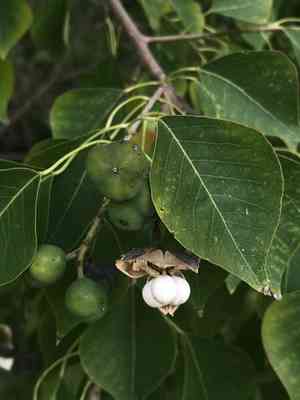
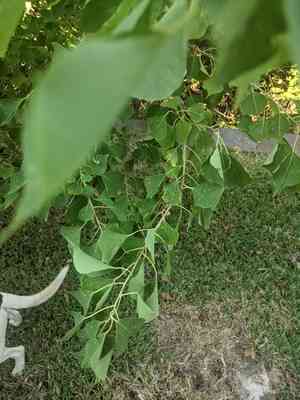
Deciduous foliage with broad, ovate leaves measuring 2-4 inches (5-10 cm) in length.
2
Yellowish flowers lacking petals on dangling catkin-like spikes up to 8 inches (20 cm) long.
3
Conspicuous 3-parted capsules maturing from green to brown, containing globose seeds with waxy coating.
4
Medium to dark green leaves with prominent yellow veins and tapering base, turning red to yellow in fall.
5
Distinctive gnarled trunk with thick, peeling bark in grays and browns, revealing intricate patterns.

Scientific Classification of Chinese tallow

Phylum
Vascular plants
Class
Dicotyledons
Order
Nances, spurges, willows and allies
Family
Spurge
Genus
Triadica
Species
Chinese tallow

Planting and Growing of Chinese tallow

Care Difficulty
Easy
Watering Schedule
Every 2 days
Sunlight Requirements
Full sun
Sunshine Duration
6-10 hours
Ideal Temperature
68-77℉
Soil Type
Potting Mix, Peat Mix
Soil pH
5.5-8
Fertilizer Type
Balanced
Pruning Season
Spring, Summer
Pruning Area
Branches, Leaves
Pruning Frequency
2 times a year
Repotting Season
Spring
Pot Type
Plastic, Ceramic

water icon How to Water Chinese tallow?

When watering Triadica sebifera, it is essential to ensure the soil is adequately saturated but not waterlogged. Aim for about 500 ml of water per session, allowing the moisture to penetrate deeply into the soil without creating standing water. Proper drainage is crucial to prevent root rot.
What are the symptoms of an underwatered Chinese tallow?
What should I do if my Chinese tallow is not getting enough water?
What are the symptoms of an overwatered Chinese tallow?
How to save an overwatered Chinese tallow?
More About Watering Techniques

sunlight icon What Are the Sunlight Requirements for Chinese tallow?

Sunlight Requirements: Full sun, Partial sun
Duration of light: 6 to 8 hours
Triadica sebifera thrives in a range from full sun to partial sun. Ideal lighting promotes better growth, structural integrity, and vibrant leaf coloration, preventing leggy growth and supporting overall plant health.
What type of light does Triadica sebifera prefer?
How can I provide the ideal lighting?
What are the benefits of ideal lighting for this plant?
More About Sunlight Requirements Techniques

temperature icon What Is the Ideal Temperature Range for Chinese tallow?

Ideal Temperature: 68 ~ 77℉
The ideal temperature range for Triadica sebifera is between 68°F and 77°F. Within this range, the plant can optimally carry out physiological processes necessary for robust growth and health. This temperature spectrum ensures adequate metabolic function, photosynthesis, and seed development, resulting in thriving vegetation.

soil icon What Soil is Best for Chinese tallow?

Soil type: Loam, Sandy loam, Clay soil
Soil PH: 5.5 ~ 8
Triadica sebifera needs well-draining soil to prevent root rot, providing an airy environment for root development. Good drainage ensures that water does not stagnate around the roots, leading to healthier growth and more vigorous foliage. The plant thrives in soil rich in organic matter, which provides essential nutrients. This nutrient richness promotes robust growth, increased resistance to pests and diseases, and more vibrant leaf coloration, enhancing its ornamental appeal. The soil should retain some moisture to keep the roots hydrated but not waterlogged. Adequate moisture levels support sustained growth, boosting the plant's ability to withstand dry spells and promoting its overall health. More About Soil

fertilize icon How to Fertilize Chinese tallow?

Fertilizer type: Balanced
Triadica sebifera prefers a balanced approach when it comes to fertilizer amounts. For liquid fertilizers, use a balanced 10-10-10 or 20-20-20 NPK formula at half-strength. This ensures that the plant receives essential nutrients without risking nutrient burn. Stick to 1 to 2 tablespoons per gallon of water. For slow-release granular fertilizers, consider a small handful (roughly 1/4 cup) spread evenly across the root zone. Always follow specific product instructions to avoid over-fertilization. More About Fertilizing Techniques

prune icon How to Prune Chinese tallow?

Pruning Time: Spring, Summer, Autumn
To prune Triadica sebifera, start by inspecting the tree and identifying which branches need to be cut, focusing on dead, diseased, or crossing branches. Use clean, sharp pruning shears to make clean cuts at a 45-degree angle, just above a node or joint. Aim for an open canopy to improve air circulation, cutting back branches that interfere with the tree’s natural shape. For more advanced pruning, consider using thinning cuts to gradually reduce the tree's overall volume without drastically altering its shape. Employ heading cuts to control height if necessary, but be cautious to preserve the tree's natural aesthetic. Always sanitize tools between cuts, especially when dealing with diseased branches. More About Pruning Techniques

propagate icon How to Propagate Chinese tallow plant?

Propagate Time: Spring, Early spring, Late spring
1
Begin by sowing the seeds in a seed tray filled with a well-draining potting mix. Lightly cover the seeds and water gently to avoid displacing them. Ensure the soil remains moist for proper germination.
2
Select healthy stems from the plant, cut a segment about 4-6 inches long using sharp pruning shears, and remove the leaves from the lower half to prevent rotting.
3
Once prepared, the cut end of the cuttings can be dipped in rooting hormone to encourage root growth, then placed in a pot with moist soil and covered with a plastic bag to create a humid environment.
More About Propagating Techniques

repot icon How to Repot Chinese tallow plant?

Repotting frequency: Every 3-4 years
1
Triadica sebifera needs repotting when it outgrows its current pot, roots are visible on the surface, or growth becomes stunted. Best done during Spring and Summer to minimize stress.
2
Choose a pot slightly larger than the current one with drainage holes. This prevents waterlogging and allows for root expansion, promoting better growth and health.
3
Use loamy, well-draining soil to prevent water retention while providing essential nutrients. This mimics the plant's natural habitat, ensuring optimal growth conditions.

PlantJoy - Identify plants with a snap

Find the best spots for them to optimize their health, simply using your phone.

Try for Free

Toxicity of Chinese tallow

Is Chinese tallow toxic to humans?

The Chinese tallow tree produces a milky sap, which is present mainly in its leaves, berries, and stems, and poses a moderate level of toxicity. While it is rarely consumed by humans, there are times when individuals may come into contact with this sap while working in proximity to the tree. Direct exposure to the sap can lead to skin irritation, resulting in redness and itching. Should ingestion occur, it could result in moderate to severe gastrointestinal distress, although such instances are exceedingly uncommon. In certain regions, Chinese tallows are cultivated for ornamental purposes, yet they are regarded as highly invasive species in other areas. Pruning or attempting to eliminate this tree can expose individuals to its toxic sap.

Is Chinese tallow toxic to cat?

Chinese tallow possesses a mild level of toxicity for cats. Felines are at risk of poisoning when they ingest large quantities of this plant. The leaves and sap represent the most hazardous components of the plant. Following consumption, symptoms such as gastrointestinal distress may manifest. It is essential for cat owners to observe their pets closely for any indications of illness and to immediately consult a veterinarian if there are concerns related to poisoning.

Is Chinese tallow toxic to dog?

Chinese tallow presents a low toxicity hazard to dogs. Canines can be at risk of poisoning from this plant if they consume it in excessive quantities. The particularly hazardous parts of the chinese tallow when ingested encompass the leaves and sap. Should a dog consume these portions, they may display symptoms like gastrointestinal distress or skin irritation. If a dog demonstrates any signs of poisoning from chinese tallow, it is crucial to obtain prompt veterinary assistance to safeguard their health and receive suitable treatment.

Identify toxic plants for your safety

Learn which plants are harmful to you and your pets, and make informed choices for a safer home!

Try for Free
WARNING
The judgment on toxicity and danger is for reference only. We DO NOT GUARANTEE any accuracy of such judgment. Therefore, you SHALL NOT rely on such judgment. It is IMPORTANT TO SEEK PROFESSIONAL ADVICE in advance when necessary.
More About Toxic Techniques