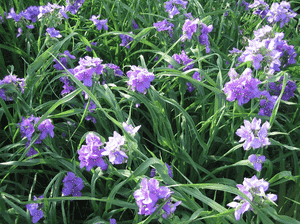
Ohio spiderwort(Tradescantia ohiensis)

Ohio spiderwort (Tradescantia ohiensis)

Also known as: Widow's tears

Tradescantia ohiensis, named in honor of John Tradescant (1608-1662), the gardener for King Charles I, is a vibrant blue-flowering plant often found along roadsides and in ditches. It stands out in gardens due to its distinctive blooming pattern: the flowers open in the morning and close by the afternoon.

Attributes of Ohio spiderwort

Lifespan
Perennial, Annual
Plant Type
Herb
Plant Height
15 cm to 1.2 m
Spread
30 cm to 60 cm
Leaf Color
Green Blue
Flower Size
2.5 cm
Flower Color
Blue Purple White Red

PlantJoy - Identify plants with a snap

Identify and diagnose plants, get toxicity alerts, and explore safety guides for all types of fungi.

Try for Free

Images of Ohio spiderwort

Ohio spiderwort(Tradescantia ohiensis)

Quickly Identify Ohio spiderwort

1
Trinity of regal purple to rose-blue petal flowers
2
Three-petaled structure with deep blue to rose-blue petals
3
Light green capsule fruit with 3 green bracts
4
Elongated dark blue-green leaves with lengthwise fold
5
Branched stem with distinctive purple tinge, 1/4 inch diameter

Scientific Classification of Ohio spiderwort

Phylum
Vascular plants
Class
Monocotyledons
Order
Commelinales
Family
Spiderwort
Genus
Spiderworts
Species
Ohio spiderwort

Planting and Growing of Ohio spiderwort

Care Difficulty
Easy
Watering Schedule
Every 3 days
Sunlight Requirements
Full sun
Sunshine Duration
6-10 hours
Ideal Temperature
65-75℉
Soil Type
Potting Mix, Peat Mix
Soil pH
6.5-7.5
Fertilizer Type
Balanced
Pruning Season
Spring, Summer
Pruning Area
Branches, Leaves
Pruning Frequency
2 times a year
Repotting Season
Spring
Pot Type
Ceramic, Plastic

water icon How to Water Ohio spiderwort?

For Tradescantia ohiensis, aim to provide roughly 200 ml of water per session. Ensure the soil is moist but not waterlogged; this plant prefers its soil to dry out slightly between waterings to prevent root rot. When watering, make sure the water penetrates deeply and reaches the root zone.
What are the symptoms of an underwatered Ohio spiderwort?
What should I do if my Ohio spiderwort is not getting enough water?
What are the symptoms of an overwatered Ohio spiderwort?
How to save an overwatered Ohio spiderwort?
More About Watering Techniques

sunlight icon What Are the Sunlight Requirements for Ohio spiderwort?

Sunlight Requirements: Full sun, Partial sun
Duration of light: 4-8 hours daily
Tradescantia ohiensis prefers full to partial sun conditions. When receiving the appropriate light range, this plant benefits from robust foliage growth, intensified coloration, and increased vigor.
What is the best lighting condition for Tradescantia ohiensis?
How can Tradescantia ohiensis achieve ideal sunlight exposure?
What benefits does Tradescantia ohiensis gain from ideal sun exposure?
More About Sunlight Requirements Techniques

temperature icon What Is the Ideal Temperature Range for Ohio spiderwort?

Ideal Temperature: 65 ~ 75℉
For optimal growth, Tradescantia ohiensis thrives in temperatures ranging from 65°F to 75°F. This range provides a comfortable environment that supports active growth, photosynthesis, and nutrient uptake, thus ensuring the plant develops healthy foliage and blooms effectively during its growing season.

soil icon What Soil is Best for Ohio spiderwort?

Soil type: Loam, Sandy loam, Sandy soil
Soil PH: 6.5 ~ 7.5
Tradescantia ohiensis thrives in well-drained soil to prevent root rot. This ensures that excess water doesn't pool around the roots, promoting healthy growth and reducing the risk of fungal infections. Adding moderate organic matter to the soil enriches it with nutrients, enhancing the plant's growth and vigor. This organic layer also helps retain soil moisture, providing a balanced environment for the roots. The ideal pH range from 6.5 to 7.5 supports optimal nutrient uptake in Tradescantia ohiensis. This balance maximizes nutrient absorption, promoting lush foliage and healthy stems. More About Soil

fertilize icon How to Fertilize Ohio spiderwort?

Fertilizer type: Balanced
For Tradescantia ohiensis, use a balanced liquid fertilizer, diluted to half strength, especially during the growing season. Typically, a 10-10-10 or 20-20-20 NPK fertilizer works well. For solid fertilizers, follow the manufacturer's guidelines, but generally, a single application of slow-release granules should be at a rate of 1 teaspoon per square foot of soil. More About Fertilizing Techniques

prune icon How to Prune Ohio spiderwort?

Pruning Time: Spring, Summer
Begin your pruning by cutting back the older growth, which can typically be identified by its length and lesser vibrancy compared to newer growth. This helps promote new, healthy shoots. When trimming, make cuts just above a leaf node as this is where new growth is likely to emerge. This encourages denser and fuller foliage. In addition to regular monthly pruning, consider pinching back the tips of each stem every week or two to promote bushiness and control aggressive growth. While pruning, step back occasionally to observe the plant's overall shape. Aim for a balanced, symmetrical appearance to enhance its aesthetic appeal. More About Pruning Techniques

propagate icon How to Propagate Ohio spiderwort plant?

Propagate Time: Spring,Early spring
1
To propagate Tradescantia ohiensis from seeds, begin by collecting mature seeds from the plant. Dry the seeds for a few days to ensure they are ready for planting. Use fresh potting mix and sow the seeds lightly, covering them with a thin layer of soil.
2
Select healthy, non-flowering stems and cut about 4-6 inches from the tip. Remove leaves from the bottom half, and dip the end in rooting hormone powder to promote root development. Place the cutting in moist potting mix or water for rooting.
3
In early spring, dig around the plant base to lift the clump. Gently separate root-bound sections with multiple stems and roots, ensuring each division has adequate roots. Replant divisions in prepared soil and water thoroughly to establish growth.
More About Propagating Techniques

repot icon How to Repot Ohio spiderwort plant?

Repotting frequency: Every 1-2 years
1
Tradescantia ohiensis should be repotted when the roots are visible through the drainage holes, the plant appears root-bound, or growth has noticeably slowed down. This usually happens every 1-2 years.
2
Select a pot that is one size larger than the current one, with good drainage holes. A pot that allows excess water to escape will help prevent root rot and keep your Tradescantia healthy.
3
Choose a well-draining potting mix, ideally a combination of peat, pine bark, and perlite. This mix ensures good aeration, retains sufficient moisture without waterlogging, and provides a balanced nutrient environment.

PlantJoy - Identify plants with a snap

Find the best spots for them to optimize their health, simply using your phone.

Try for Free

Toxicity of Ohio spiderwort

Is Ohio spiderwort toxic to cat?

Ohio spiderwort is recognized as toxic to felines. Cats can suffer from poisoning if they ingest any component of the plant, since every part is deemed harmful. Consumption of ohio spiderwort may result in varying signs of physical distress in cats, which could be mild or potentially severe. Prompt veterinary care is essential to alleviate symptoms and avert more grave health complications. Therefore, it is vital to keep cats away from ohio spiderwort to avoid accidental ingestion and the risk of poisoning.

Is Ohio spiderwort toxic to dog?

Ohio spiderwort is deemed poisonous to dogs. Canines may unintentionally consume various parts of this plant, resulting in toxic reactions. Every part of ohio spiderwort contains toxic compounds, and if a dog ingests any segment, it may show symptoms like vomiting, diarrhea, lethargy, or more serious indications depending on the quantity consumed. It is essential for dog owners to keep a vigilant watch over their pets and restrict access to ohio spiderwort. If a dog exhibits any signs of poisoning after interacting with ohio spiderwort, it is vital to seek prompt veterinary assistance for the animal's health and safety.

Identify toxic plants for your safety

Learn which plants are harmful to you and your pets, and make informed choices for a safer home!

Try for Free
WARNING
The judgment on toxicity and danger is for reference only. We DO NOT GUARANTEE any accuracy of such judgment. Therefore, you SHALL NOT rely on such judgment. It is IMPORTANT TO SEEK PROFESSIONAL ADVICE in advance when necessary.
More About Toxic Techniques

