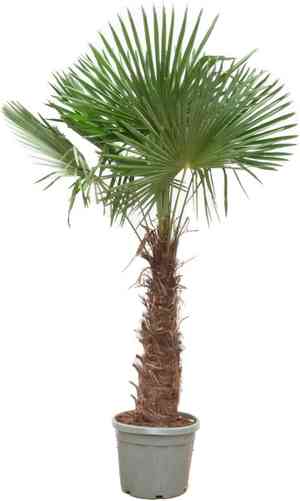
Windmill palm (Trachycarpus fortunei)
Also known as: Fortunes palm, Chusan palm
The windmill palm (Trachycarpus fortunei) hails from the mountainous regions of central and eastern China, where both tropical and temperate climates prevail. In its natural habitat, this palm can reach heights of 6 to 12 meters. However, when grown in cultivation, it typically attains a height of 2.5 to 3 meters. The palm is named for its distinctive, fan-shaped leaves that resemble a windmill.
In This Article
Attributes of Windmill palm
Lifespan
Perennial
Plant Type
Palm
Plant Height
12 m to 20 m
Spread
1.2 m to 1.8 m
Leaf Color
Green
Flower Size
18 cm
Flower Color
Yellow Green
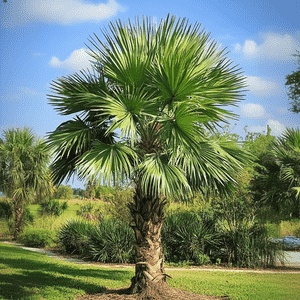
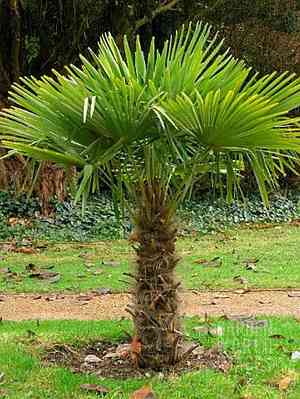
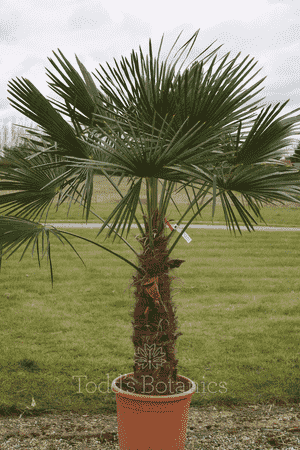
Images of Windmill palm

Quickly Identify Windmill palm
1
Trunk covered in fibrous, burlap-like material, unique among palms.
2
Leaf stalks armed with small teeth at the base for identification.
3
Flowers on drooping panicles, small fragrant yellow blooms.
4
Dark blue to almost black drupe fruit, fleshy with a single seed.
5
Stem clustered, densely covered with fibrous leaf bases, sharply dentate petioles.
Scientific Classification of Windmill palm
Phylum
Vascular plants
Class
Monocotyledons
Order
Palms, bullanocks, and allies
Family
Palm
Genus
Windmill palms
Species
Windmill palm
Planting and Growing of Windmill palm
Care Difficulty
Easy
Watering Schedule
Every 3 days
Sunlight Requirements
Full sun
Sunshine Duration
6-10 hours
Ideal Temperature
60-75℉
Soil Type
Potting Mix, Peat Mix
Soil pH
6.5-7.5
Fertilizer Type
Balanced
Pruning Season
Spring, Summer
Pruning Area
Branches, Leaves
Pruning Frequency
2 times a year
Repotting Season
Spring
Pot Type
Plastic, Ceramic
 How to Water Windmill palm?
Water your Trachycarpus fortunei with about 1000 ml of water per session. Ensure that the water seeps through the soil and drains out through the pot's drainage holes. This indicates that the entire root system is hydrated. You should avoid leaving the pot soaking in leftover water, as this can lead to root rot.
More About Watering Techniques→
What are the symptoms of an underwatered Windmill palm?
›
What should I do if my Windmill palm is not getting enough water?
›
What are the symptoms of an overwatered Windmill palm?
›
How to save an overwatered Windmill palm?
›
 What Are the Sunlight Requirements for Windmill palm?
Trachycarpus fortunei thrives in full to partial sun conditions. These light conditions ensure healthy, strong foliage and robust growth, maximizing its ornamental value.
More About Sunlight Requirements Techniques→
What are the ideal lighting conditions for Trachycarpus fortunei?
›
How to ensure Trachycarpus fortunei receives ideal sunlight exposure?
›
What benefits does Trachycarpus fortunei gain from ideal lighting?
›
 What Is the Ideal Temperature Range for Windmill palm?
Trachycarpus fortunei thrives best in environments where the temperature is between 60°F and 75°F. This range provides optimal conditions for photosynthesis and healthy growth. Within these temperatures, the plant can efficiently uptake nutrients and water, strengthening its structure.
 What Soil is Best for Windmill palm?
Trachycarpus fortunei prefers well-drained soil to prevent waterlogging, which promotes healthy root development and reduces the risk of root rot. This palm thrives in soils with moderate fertility; the presence of essential nutrients supports robust growth and prevents deficiencies. While it needs well-drained soil, Trachycarpus fortunei also benefits from moisture retention, which ensures adequate water supply without frequent irrigation.
More About Soil→
 How to Fertilize Windmill palm?
Trachycarpus fortunei, commonly known as the Windmill Palm, requires a balanced amount of nutrients. When using liquid fertilizer, dilute it to half the recommended strength to avoid root burn. For slow-release fertilizer, apply no more than 50 grams per application around the base of the plant.
More About Fertilizing Techniques→
 How to Prune Windmill palm?
Start by identifying and removing any dead or brown fronds, cutting them close to the trunk. Be cautious not to cut too close to the growing point at the top of the palm, as this is where new growth emerges. Use a clean, sharp pair of pruning shears or a pruning saw for larger fronds to prevent damage. If you prefer your Trachycarpus fortunei to focus its energy on leaf growth rather than seed production, you may choose to remove the flower stalks. This can be done by cutting them off at the base as they appear. Be sure to handle this process gently to avoid unintended damage to surrounding fronds.
More About Pruning Techniques→
 How to Propagate Windmill palm plant?
1
Collect seeds from ripe fruits of mature Trachycarpus fortunei plants. Ensure the seeds are fully matured for better germination rates. Clean the seeds to remove any pulp and check for viability before planting.
2
Sow the seeds in potting containers filled with the prepared soil mix. Plant the seeds about half an inch deep and cover lightly with soil. Water gently to avoid displacing the seeds.
3
Place the containers in a warm, humid environment to encourage germination. Consistent temperature and moisture levels are key, so consider using a plastic cover or humidity dome over the containers.
 How to Repot Windmill palm plant?
1
The best signals for repotting Trachycarpus fortunei include roots circling at the pot’s bottom or protruding from drainage holes. It's also a good time to repot if the soil becomes compacted, impacting water absorption, or if the plant becomes unstable and top-heavy.
2
Select a pot that is one to two inches larger in diameter than the current one. The larger pot provides additional space for roots to expand, promoting healthier growth, and prevents the plant from becoming root-bound too soon.
3
Opt for a well-draining, sandy loam soil to prevent waterlogging, which is detrimental to the palm. This type of soil ensures good aeration, mimicking the plant's native habitat and supporting healthy root development.



