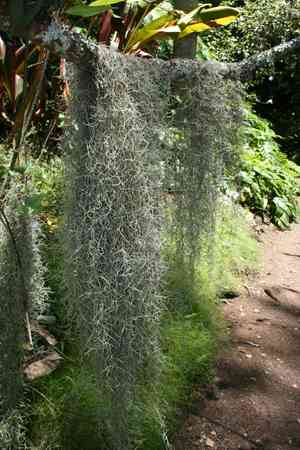
Spanish moss (Tillandsia usneoides)
Also known as: False Horsehair , Florida Moss, Old Man's Beard, Long Hair , Spanish Beard, Grandpas beard
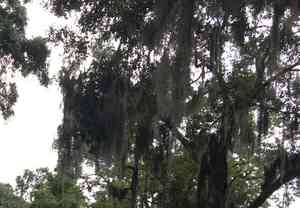
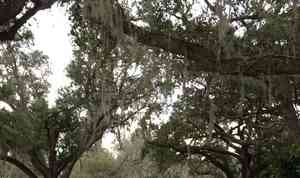
Spanish moss (*Tillandsia usneoides*) originates from the southeastern United States, Mexico, Central America, the Caribbean, and parts of South America. Also referred to as "grandpa's beard" in some regions, it typically grows on southern live oaks and bald-cypress trees. Commercially, Spanish moss is used for stuffing mattresses and furniture, as well as for insulation, packaging materials, mulch, and in arts and crafts.
In This Article
Attributes of Spanish moss
Lifespan
Perennial, Annual
Plant Type
Vine, Herb
Plant Height
10 cm to 2 m
Spread
45 cm to 60 cm
Leaf Color
Green Gray Silver
Flower Size
2.5 cm
Flower Color
Green Yellow Blue
Images of Spanish moss
Quickly Identify Spanish moss
1
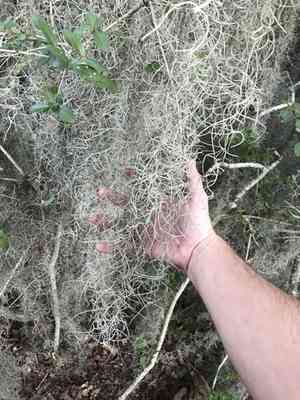
Silvery-gray, threadlike foliage up to 20 feet (6 meters) long, forming a delicate, weeping curtain.
2
Pale green or blue, night-fragrant flowers less than 0.5 inches (1.3 cm) long.
3
Capsules with filamentous pappus-bearing seeds for wind dispersal, blending with foliage.
4
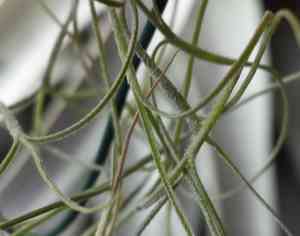
Terete, succulent leaves 1.5 to 3 inches (4 to 7.5 cm) long, covered with absorbent gray scales.
5
Wiry, flexuous stems up to 20 inches (50 cm) long with widely spaced internodes.
Scientific Classification of Spanish moss
Phylum
Vascular plants
Class
Monocotyledons
Order
Grasses, sedges and allies
Family
Bromeliad
Genus
Airplants
Species
Spanish moss
Planting and Growing of Spanish moss
Care Difficulty
Easy
Watering Schedule
Every 8 days
Sunlight Requirements
Partial sun
Sunshine Duration
6-10 hours
Ideal Temperature
60-80℉
Soil Type
Potting Mix, Peat Mix
Soil pH
4.5-6
Fertilizer Type
Balanced
Pruning Season
Spring, Summer
Pruning Area
Branches, Leaves
Pruning Frequency
2 times a year
Repotting Season
Spring
Pot Type
Plastic, Ceramic
 How to Water Spanish moss?
When watering Spanish moss, aim for a thorough misting that makes the entire plant moist but not dripping wet. The plant should feel damp to the touch, resembling the natural dew it often receives in native environments. This means approximately 15 ml per plant if you choose a spraying method.
What are the symptoms of an underwatered Spanish moss?
›
What should I do if my Spanish moss is not getting enough water?
›
What are the symptoms of an overwatered Spanish moss?
›
How to save an overwatered Spanish moss?
›
 What Are the Sunlight Requirements for Spanish moss?
Partial shade or filtered sunlight is best for Tillandsia usneoides, offering dappled light similar to its natural habitat. This range prevents sunburn while supporting healthy plant growth and vitality.
More About Sunlight Requirements Techniques→
What type of lighting does Tillandsia usneoides prefer?
›
How can one provide optimal lighting for Tillandsia usneoides?
›
Why is the right lighting important for Tillandsia usneoides?
›
 What Is the Ideal Temperature Range for Spanish moss?
Tillandsia usneoides, commonly known as Spanish moss, thrives best in temperatures between 60°F and 80°F. In these conditions, the plant's metabolic processes, including photosynthesis and respiration, can function optimally, promoting healthy and robust growth.
 What Soil is Best for Spanish moss?
Tillandsia usneoides, commonly known as Spanish Moss, is unique because it does not require soil to thrive. This epiphytic plant draws nutrients and moisture from the air. Since it doesn't use soil, clean air is crucial for its nourishment. Pollution and dust can impede its ability to photosynthesize and gather nutrients. While soil isn’t needed, ambient moisture is essential. Regular misting or high humidity environments help it maintain hydration and healthy growth.
More About Soil→
 How to Fertilize Spanish moss?
For Tillandsia usneoides, use a very dilute fertilizer solution. A balanced formula, such as 10-10-10 or 20-20-20, should be diluted to one-quarter strength. This ensures the delicate plant roots do not get overwhelmed by excess nutrients.
 How to Prune Spanish moss?
Begin by gently examining the plant to identify any tangled, brown, or dead strands. Using a pair of sharp scissors, carefully trim away these undesirable parts to promote healthy growth and retain a neat appearance. Take care not to cut the healthy green parts. Ensure that the plant retains an open structure after pruning. This facilitates proper air circulation, which is crucial for Tillandsia usneoides, as it absorbs nutrients and moisture from the air. Keep the strands naturally hanging and avoid compacting them.
More About Pruning Techniques→
 How to Propagate Spanish moss plant?
1
Start by identifying healthy sections of Tillandsia usneoides. Use sharp scissors to cut sections about 6-12 inches long. Make sure the cut is clean to prevent plant tissue damage.
2
If using seeds, wait for the pods to dry on the plant itself before gently harvesting them. Make sure to collect them promptly once dried to prevent loss of viable seeds.
3
For division propagation, gently separate a clump of Tillandsia usneoides using your hands. Ensure each new section has sufficient roots or stem base to promote growth.
 How to Repot Spanish moss plant?
1
Tillandsia usneoides, commonly known as Spanish moss, primarily signals the need for repotting when it becomes overly dense or unsightly. Observing these signs during the growth seasons of spring and autumn will yield the best outcomes.
2
Selecting the right 'pot' for Spanish moss involves more choosing the right support structure. Opt for a material that allows excellent air circulation like wire frames or driftwood, ensuring the plant stays secure and receives adequate humidity and airflow.
3
Spanish moss does not require soil to thrive. Instead, a good practice is to ensure regular misting or placing it in a high-humidity area. The benefits include allowing the moss to receive nutrients directly from the air, maintaining its health and vibrancy.



