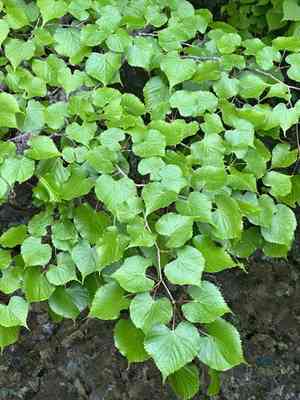
Amur lime (Tilia amurensis)
Also known as: Amur lime, Amur linden
The Amur lime tree (Tilia amurensis) is indigenous to the region along the Amur River in eastern Asia, with the river lending its name to the tree. Sometimes planted in urban settings, this linden tree is notable for its fragrant, attractive blossoms that draw in butterflies. Historically, its inner bark has even been utilized to craft shoes.
In This Article
Attributes of Amur lime
Lifespan
Perennial
Plant Type
Tree
Plant Height
20 m to 30 m
Spread
9 m to 15 m
Leaf Color
Green
Flower Size
3 cm to 5 cm
Flower Color
Yellow Green
Images of Amur lime
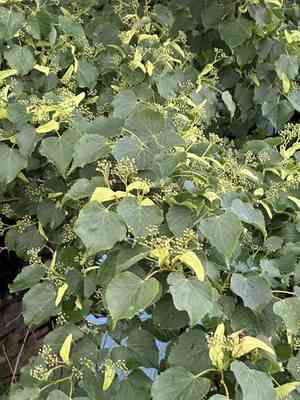
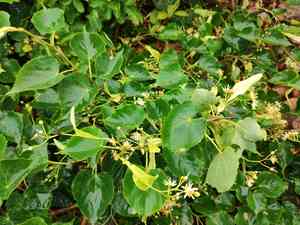
Quickly Identify Amur lime
1
Look for heart-shaped leaves with finely serrated edges, fragrant yellowish-white flowers, and a roughly fissured bark. The flowers are arranged in inflorescences called cymes.
Scientific Classification of Amur lime
Phylum
Vascular plants
Class
Dicotyledons
Order
Mallows, rock-roses, and allies
Family
Mallow
Genus
Lindens
Species
Amur lime
Planting and Growing of Amur lime
Care Difficulty
Easy
Watering Schedule
Every 2 days
Sunlight Requirements
Partial sun
Sunshine Duration
4-8 hours
Ideal Temperature
60-75℉
Soil Type
Potting Mix, Peat Mix
Soil pH
6.5-7.5
Fertilizer Type
Balanced
Pruning Season
Spring, Summer
Pruning Area
Branches, Leaves
Pruning Frequency
2 times a year
Repotting Season
Spring
Pot Type
Plastic, Ceramic
 How to Water Amur lime?
Tilia amurensis requires watering that deeply saturates the soil without causing waterlogging. On average, 500 ml per session is adequate, ensuring that the soil is moist but well-drained.
What are the symptoms of an underwatered Amur lime?
›
What should I do if my Amur lime is not getting enough water?
›
What are the symptoms of an overwatered Amur lime?
›
How to save an overwatered Amur lime?
›
 What Are the Sunlight Requirements for Amur lime?
Partial sun to full sun is ideal for Tilia amurensis. With these conditions, the plant benefits from balanced growth, robust health, and enhanced resistance to environmental stresses.
More About Sunlight Requirements Techniques→
What is the ideal lighting solution for Tilia amurensis?
›
How to ensure Tilia amurensis gets optimal light exposure?
›
Benefits of optimal lighting for Tilia amurensis?
›
 What Is the Ideal Temperature Range for Amur lime?
The ideal temperature range for Tilia amurensis is between 60°F and 75°F. This range provides optimal conditions for growth, ensuring that enzymatic and metabolic processes proceed without stress. Maintaining this range helps in achieving healthy foliage and maximal growth potential.
 What Soil is Best for Amur lime?
Tilia amurensis thrives in well-drained soil which prevents water logging, crucial for avoiding root rot and promoting healthy root growth. Good drainage improves nutrient availability and supports vigorous growth. Amur Linden desires soil rich in organic matter to supply essential nutrients, fostering strong and healthy foliage. Incorporating compost or well-rotted manure can greatly enhance its growth and resilience. This tree prefers soil that maintains moderate moisture without remaining soggy, ensuring that it neither dries out nor stays too wet, which can stress the plant. Regular watering can help maintain optimal moisture balance.
 How to Fertilize Amur lime?
For Tilia amurensis, it is recommended to apply liquid fertilizers at half the recommended strength. This means if the package suggests 10 ml per liter, use only 5 ml per liter. Over-fertilizing can harm the plant, while under-fertilizing can lead to slow growth.
 How to Prune Amur lime?
Begin pruning Tilia amurensis by selecting a suitable day during its dormancy in late winter or early spring. Use clean and sharp pruning shears to remove dead, diseased, or damaged branches first, cutting them back to healthy wood. Next, thin out the tree by removing branches that cross or rub against each other to improve air circulation and light penetration. Always prune branches at their base or above a bud facing outwards to guide new growth away from the tree's center. Finish by shaping the tree as desired but avoid removing more than a quarter of the crown in a single year to prevent stress.
More About Pruning Techniques→
 How to Propagate Amur lime plant?
1
Collect mature seeds from the Tilia amurensis tree in autumn. Remove any surrounding fruit or pulp, rinse them briefly, and dry them before storage or immediate planting to enhance their viability.
2
Select healthy and disease-free branches for cuttings in early spring. Cut sections that are about 15 cm long, ensuring at least two leaf nodes remain on each cutting. Remove any leaves from the lower part to prevent rot.
3
For seed propagation, plant seeds about 1-2 cm deep in a well-draining medium. For cuttings, insert the cut end into a potting mix, ensuring stability, and cover to create a humid mini-greenhouse effect.
 How to Repot Amur lime plant?
1
Look for signs like roots emerging from the drainage holes or soil becoming compacted. Early spring before new growth or autumn after leaf drop are ideal times to repot, as the plant is less stressed and can focus on root establishment.
2
Select a pot slightly larger than the current one, with good drainage holes, to allow proper water flow and root growth. The material should be durable and provide enough insulation against temperature changes, promoting healthier and more robust plant development.
3
Opt for a well-draining, loamy soil mix that retains necessary moisture but prevents waterlogging. A good soil mix will enhance root aeration, ensure healthy root development, and provide the essential nutrients required for vigorous growth.
Learn More About Amur lime Diseases
Anthracnose
Bacterial Leaf Spot
Black Spot
Chemical Injury
Crown Gall
Damping-off
Downy Mildew
Drought Stress
Fusarium Wilt
Gray Mold
Leaf Curl
Leaf Spot
Mosaic
Nutrient Deficiency
Nutrient Toxicity
Powdery Mildew
Root Rot
Root-knot Nematode
Rusts
Sooty Mold
Spider Mites
Temperature Stress
Thrips Damage
White Mold



