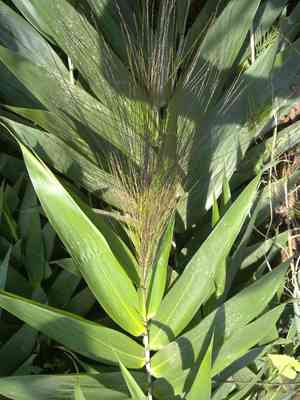
Tiger grass(Thysanolaena latifolia)

Tiger grass (Thysanolaena latifolia)

Also known as: Tiger Grass, Broom Grass

Reddish tiger grass (Thysanolaena latifolia) is a perennial plant notable for its distinct features:

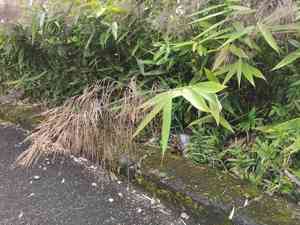
1. **Growth Form**: This plant can reach heights of 1.5 to 4 meters, with woody, durable culms that are branched near the top, giving it a shrubby appearance.
2. **Culms**: The stems are solid and sturdy, often used for practical purposes.
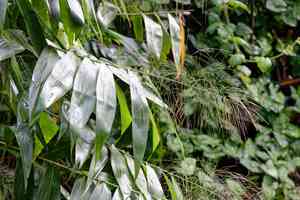
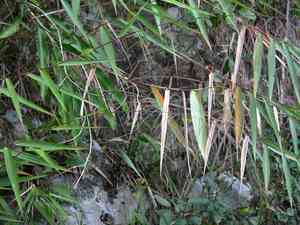
3. **Leaves**: The leaves are lance-shaped, somewhat leathery, and can grow up to 61 cm in length and 4 to 6 cm in width. They have a slightly heart-shaped base and a broad, flat structure.
4. **Texture**: Leaves are pseudo-petiolate, meaning they have a stalk-like appearance without being true petioles.
5. **Habitat**: Prefers tropical and subtropical environments, often thriving in moist, forested regions.

This plant is recognized for its ornamental beauty and practical applications, such as in the production of traditional brooms.

Attributes of Tiger grass

Lifespan
Perennial
Plant Type
Grass
Plant Height
1.8 m to 3 m
Spread
1.8 m to 3.5 m
Leaf Color
Green
Flower Size
1 mm to 2 mm
Flower Color
Brownish

PlantJoy - Identify plants with a snap

Identify and diagnose plants, get toxicity alerts, and explore safety guides for all types of fungi.

Try for Free

Images of Tiger grass

Tiger grass(Thysanolaena latifolia)

Quickly Identify Tiger grass

1
Tall clump-forming habit, reaching up to 10 feet (3 meters) in height and width.
2
Broad, lanceolate green leaves resembling bamboo, enveloping solid stems.
3
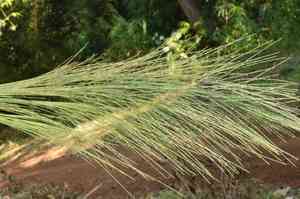
Green inflorescences turning brown, forming dense, plume-like clusters in late summer.
4
Inconspicuous whitish-green flowers with feathery appearance, blooming in late summer.
5
Thrives in varying light conditions, evergreen in mild climates, can die back below 27°F (-3°C).

Scientific Classification of Tiger grass

Phylum
Vascular plants
Class
Monocotyledons
Order
Poales
Family
Grass
Genus
Tiger grass
Species
Tiger grass

Planting and Growing of Tiger grass

Care Difficulty
Easy
Watering Schedule
Every 3 days
Sunlight Requirements
Partial sun
Sunshine Duration
4-8 hours
Ideal Temperature
65-77℉
Soil Type
Potting Mix, Peat Mix
Soil pH
5.5-7
Fertilizer Type
Balanced
Pruning Season
Spring, Summer
Pruning Area
Branches, Leaves
Pruning Frequency
2 times a year
Repotting Season
Spring
Pot Type
Plastic, Ceramic

water icon How to Water Tiger grass?

Thysanolaena latifolia prefers a moderate amount of water, ensuring that the soil is moist but not waterlogged. About 750 ml of water per watering is enough to sustain its health and growth. Make sure to water until the topsoil feels slightly damp but not soaking.
What are the symptoms of an underwatered Tiger grass?
What should I do if my Tiger grass is not getting enough water?
What are the symptoms of an overwatered Tiger grass?
How to save an overwatered Tiger grass?

sunlight icon What Are the Sunlight Requirements for Tiger grass?

Sunlight Requirements: Partial sun, Full shade
Duration of light: 2 to 6 hours
Thysanolaena latifolia flourishes under partial sun or full shade. This ensures the plant benefits from consistent, moderate sunlight exposure for vigorous foliage and avoids overexposure risks.
What is the ideal lighting condition?
How to achieve these ideal lighting conditions?
What are the benefits of ideal lighting?
More About Sunlight Requirements Techniques

temperature icon What Is the Ideal Temperature Range for Tiger grass?

Ideal Temperature: 65 ~ 77℉
The ideal temperature range for Thysanolaena latifolia is between 65°F and 77°F. This range supports optimal photosynthesis and growth while minimizing stress factors that can impair the plant's development. Maintaining this range encourages vibrant foliage and healthy root systems.

soil icon What Soil is Best for Tiger grass?

Soil type: Loam, Sandy loam
Soil PH: 5.5 ~ 7
Thysanolaena latifolia thrives in well-draining soil that prevents waterlogging and promotes healthy root growth, critical for optimal plant development. Enriched with organic matter, the soil provides essential nutrients that enhance the plant's vigor and resilience against environmental stressors. While drainage is vital, the soil should retain adequate moisture to prevent root desiccation, balancing hydration and aeration for thriving growth.

fertilize icon How to Fertilize Tiger grass?

Fertilizer type: Balanced
Thysanolaena latifolia requires a balanced approach to fertilization. Applying too little can stunt its growth, while too much can lead to nutrient burn. Use a balanced 10-10-10 NPK fertilizer at a rate of 1 tablespoon per gallon of water for liquid feeding.

prune icon How to Prune Tiger grass?

Pruning Time: Spring, Summer, Autumn
Start by gathering all necessary pruning tools, such as shears or scissors, ensuring they are clean and sharp. A clean tool reduces the risk of disease. Create a comfortable workspace with good lighting to avoid any accidents during pruning. Inspect Thysanolaena latifolia carefully and look for brown, yellowing, or damaged leaves and stems. Mark these areas mentally or physically, as they are prime targets for pruning to promote new growth and maintain plant vitality. Begin pruning by gently trimming the targeted areas. Make precise cuts close to the base of the damaged leaves or stems. This encourages quicker healing and reduces stress on the plant. Avoid over-pruning, which might hinder the plant's natural growth. More About Pruning Techniques

propagate icon How to Propagate Tiger grass plant?

Propagate Time: Early spring, Late spring, Early summer
1
Begin by filling the seed tray with a well-draining soil mix. Scatter the seeds evenly over the surface and cover them with a thin layer of soil. Water gently to keep the soil moist and place in a warm location.
2
Carefully dig around the base of an established plant to expose the roots. Use a sharp knife or spade to divide the root system into sections, ensuring each section has healthy roots and shoots. Replant these divisions in prepared soil.
3
For both seeds and divisions, place them where they receive indirect sunlight. Maintain consistent moisture in the soil without overwatering. Protect from harsh sunlight and heavy winds to encourage healthy growth.
More About Propagating Techniques

repot icon How to Repot Tiger grass plant?

Repotting frequency: Every 2-3 years
1
Thysanolaena latifolia should be repotted when you notice roots emerging from drainage holes or when the plant’s growth seems stunted. These are signs the plant has outgrown its current pot and needs more space. Repotting in early spring is ideal as it coincides with the plant's natural growth cycle, giving it the best chance to thrive in its new pot.
2
Select a pot that is about an inch larger in diameter than the current one. This allows room for root development while preventing excess soil that can lead to waterlogged conditions. Pots made of breathable materials like terracotta can also help with moisture management, ensuring your Thysanolaena latifolia has the perfect environment to grow vigorously.
3
Use a well-draining potting mix with organic matter such as peat or coconut coir. This type of soil offers a balance of moisture retention and drainage, critical for preventing root rot in Thysanolaena latifolia. A light soil mix helps the roots spread easily, supporting overall plant health and robust growth.

PlantJoy - Identify plants with a snap

Find the best spots for them to optimize their health, simply using your phone.

Try for Free