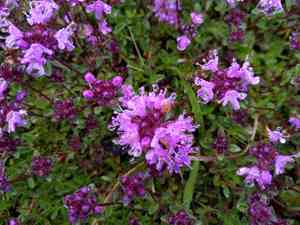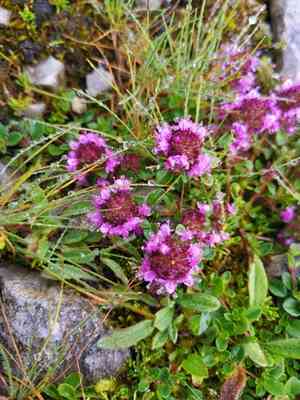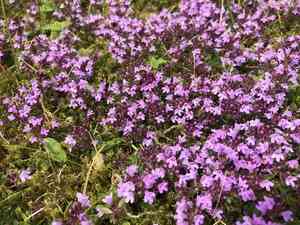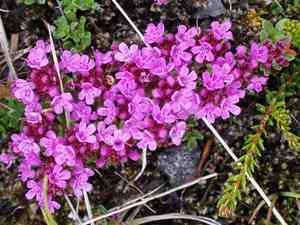
Mother of thyme(Thymus praecox)

Mother of thyme (Thymus praecox)

Also known as: Wild thyme, Woolly thyme

Mother of thyme (Thymus serpyllum), also known as Creeping Thyme, is an excellent lawn alternative with several notable qualities and uses:

### Characteristics:
1. **Edible**: Has a mild, mint-like flavor suitable for culinary use.
2. **Low-Growing**: Forms dense, carpet-like mats close to the ground.
3. **Hardy and Resilient**: Can withstand drought and light foot traffic.
4. **Deer Resistant**: Typically not favored by deer, making it a good choice for areas with wildlife.
5. **Easy to Grow**: Can be propagated by seeds or through division.

### Uses:
1. **Ornamental Ground Cover**: Ideal for covering bare spots in gardens or creating a lush, green carpet.
2. **Erosion Control**: Effective in stabilizing soil on slopes and preventing erosion.
3. **Low-Maintenance Lawn**: Reduces the need for regular mowing and watering.
4. **Aromatic and Aesthetic**: Adds fragrance and visual appeal with its small flowers.
5. **Culinary Ingredient**: Can be harvested for use in cooking, adding a fresh, minty flavor to dishes.

Attributes of Mother of thyme

Lifespan
Perennial
Plant Type
Herb, Shrub
Plant Height
10 cm
Spread
30 cm
Leaf Color
Green Blue
Flower Size
2.5 cm
Flower Color
Pink Purple Red

ForwardPlant - Identify plants with a snap

Identify and diagnose plants, get toxicity alerts, and explore safety guides for all types of fungi.

Try for Free

Images of Mother of thyme

Mother of thyme(Thymus praecox)

Quickly Identify Mother of thyme

1
Ovate, bluish-green leaves with a spicy fragrance and fine hairs.
2
Hairy stems that spread horizontally, rooting easily and forming a dense mat.
3
Clusters of tiny, tubular flowers in pinkish-purple to white hues, attracting pollinators.
4
Fruit is a schizocarp, splitting into small, brown, one-seeded segments for propagation.
5
Petals arranged in whorled pattern, creating fragrant clusters blooming June-September.

Scientific Classification of Mother of thyme

Phylum
Vascular plants
Class
Dicotyledons
Order
Lamiales
Family
Mint
Genus
Thymes
Species
Mother of thyme

Planting and Growing of Mother of thyme

Care Difficulty
Easy
Watering Schedule
Every 2 days
Sunlight Requirements
Full sun
Sunshine Duration
4-8 hours
Ideal Temperature
60-68℉
Soil Type
Potting Mix, Peat Mix
Soil pH
6.5-7.5
Fertilizer Type
Balanced
Pruning Season
Spring, Summer
Pruning Area
Branches, Leaves
Pruning Frequency
2 times a year
Repotting Season
Spring
Pot Type
Plastic, Ceramic

water icon How to Water Mother of thyme?

For Thymus praecox, ensure that each watering saturates the soil but doesn't waterlog it. Aim for approximately 200 ml of water, allowing the soil to dry out slightly between watering sessions to mimic its natural environment.
What are the symptoms of an underwatered Mother of thyme?
What should I do if my Mother of thyme is not getting enough water?
What are the symptoms of an overwatered Mother of thyme?
How to save an overwatered Mother of thyme?

sunlight icon What Are the Sunlight Requirements for Mother of thyme?

Sunlight Requirements: Full sun, Partial sun
Duration of light: 6 to 8 hours daily
Thymus praecox flourishes in full sun to partial sun, benefiting from sunlight exposure for at least six hours. This exposure fosters lush foliage and blooms, enhancing aromatic properties and maintaining its aesthetic appeal, crucial for ornamental landscapes and culinary uses.
What is the best lighting condition for Thymus praecox?
Where should I place my Thymus praecox for optimal growth?
How do I adjust lighting for Thymus praecox in varying seasons?
More About Sunlight Requirements Techniques

temperature icon What Is the Ideal Temperature Range for Mother of thyme?

Ideal Temperature: 60 ~ 68℉
The ideal temperature range for Thymus praecox is between 60°F and 68°F. This range provides the plant with the most favorable conditions to thrive, allowing for optimal growth and health. Within this temperature window, Thymus praecox can efficiently carry out photosynthesis, metabolism, and other vital physiological processes.

soil icon What Soil is Best for Mother of thyme?

Soil type: Sandy soil, Loam, Calcareous soil
Soil PH: 6.5 ~ 7.5
Thymus praecox thrives in well-draining soil that prevents water from accumulating around its roots, which reduces the risk of root rot. This condition allows for strong root development and optimal plant health. While Thymus praecox is not highly demanding in terms of nutrients, it does benefit from soil that has moderate fertility. This supports healthy foliage and vibrant flowering without encouraging excessive growth. Loose, airy soil helps oxygen to reach the roots of Thymus praecox, promoting root respiration and overall vigor. It enhances root expansion and contributes to a more resilient plant structure. More About Soil

fertilize icon How to Fertilize Mother of thyme?

Fertilizer type: Balanced
For Thymus praecox, a sparing approach to fertilization is preferable. When applying liquid fertilizer, dilute it to half the recommended strength and apply approximately 100ml per application. For slow-release granules, a tablespoon around the plant base is sufficient. More About Fertilizing Techniques

prune icon How to Prune Mother of thyme?

Pruning Time: Spring, Summer
Begin your pruning by removing spent flowers. Thymus praecox benefits from deadheading as it encourages more blooms. Snip off flower stems right above the foliage to maintain a tidy appearance. Careful shaping is essential to maintain an aesthetically pleasing form. Trim back any long, scraggly stems to regularize height and encourage lateral growth. This helps the plant adopt a fuller shape. Routine inspections during pruning should include checking for any dead or diseased parts. Cut these sections out completely to prevent disease spread and improve air circulation within the plant. More About Pruning Techniques

propagate icon How to Propagate Mother of thyme plant?

Propagate Time: Spring, Early spring, Late spring
1
Fill seed trays with a well-draining potting mix. Sow seeds of Thymus praecox on the surface and lightly cover with soil. Keep the soil consistently moist and place in a sunny area. Seeds typically germinate within 2-3 weeks.
2
Select a healthy, non-flowering stem for cutting, preferably around 3-4 inches long. Remove the bottom leaves and dip the cut end into rooting hormone before placing it in a prepared pot with moist potting soil.
3
Use a spade to dig up a mature Thymus praecox plant. Carefully divide the root clump into smaller sections, each with both roots and shoots. Replant immediately into prepared soil, keeping divisions at the same depth they were growing initially.
More About Propagating Techniques

repot icon How to Repot Mother of thyme plant?

Repotting frequency: Every 2-3 years
1
Thymus praecox shows signs of needing a repot when its growth becomes stunted, or roots begin emerging from the drainage holes. Repotting should ideally occur during spring or autumn when the plant is not in its full growth phase, minimizing stress.
2
Select a pot that is 1-2 inches larger in diameter than the current one. Ensure it has drainage holes to prevent waterlogging. A slightly larger pot allows room for growth, helping maintain root health and optimizing plant expansion.
3
Choose a well-draining, sandy soil mix to mimic the plant’s natural habitat. A mix with perlite or grit is ideal, as it promotes aeration and drainage, preventing root rot and other moisture-related issues.

ForwardPlant - Identify plants with a snap

Find the best spots for them to optimize their health, simply using your phone.

Try for Free