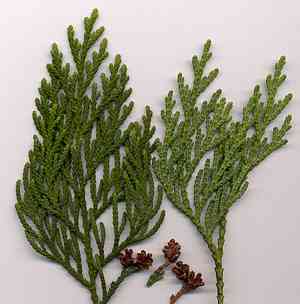
Arborvitaes (Thuja) (Thuja)
Also known as: Cedars
Arborvitaes (Thuja) were among the earliest North American trees introduced to Europe, thanks to French explorers who brought them to Paris. Their wood is traditionally used for canoes and lumber. Despite being commonly called "Red Cedar," arborvitaes are actually members of the cypress family, not true cedars.
In This Article
Attributes of Arborvitaes (Thuja)
Lifespan
Perennial
Plant Height
10-20 meters (33-66 feet) depending on the species
Spread
Up to 5 meters (16 feet)
Leaf Color
Green, sometimes with hints of yellow or blue-green
Flower Size
N/A – Thuja does not have noticeable flowers
Flower Color
N/A – Thuja does not have noticeable flowers
Images of Arborvitaes (Thuja)
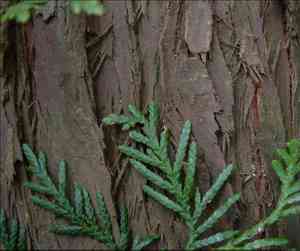
Quickly Identify Arborvitaes (Thuja)
1
Identify Thuja by its scale-like, flat leaves arranged in overlapping pairs, forming fan-shaped branchlets. The bark is fibrous and peels in narrow strips. Cones are small and woody.
Scientific Classification of Arborvitaes (Thuja)
Phylum
Coniferophyta
Class
Pinopsida
Order
Pinales
Family
Cupressaceae
Genus
Thuja
Planting and Growing of Arborvitaes (Thuja)
Care Difficulty
Easy
Watering Schedule
Every 4 days
Sunlight Requirements
Full sun
Sunshine Duration
6-12 hours
Ideal Temperature
50-80℉
Soil Type
Potting Mix, Peat Mix
Soil pH
6.5-7.5
Fertilizer Type
Balanced
Pruning Season
Spring, Summer
Pruning Area
Branches, Leaves
Pruning Frequency
2 times a year
Repotting Season
Spring
Pot Type
Plastic, Ceramic
 How to Water Arborvitaes (Thuja)?
When watering Thuja, aim for the soil to be moist but not waterlogged. It's important to water deeply until the water reaches the roots. This means applying about 500ml of water each session, allowing the water to soak into the ground slowly. This ensures that the roots have adequate access to water and helps the plant remain healthy and vibrant.
What are the symptoms of an underwatered Arborvitaes (Thuja)?
›
What should I do if my Arborvitaes (Thuja) is not getting enough water?
›
What are the symptoms of an overwatered Arborvitaes (Thuja)?
›
How to save an overwatered Arborvitaes (Thuja)?
›
 What Are the Sunlight Requirements for Arborvitaes (Thuja)?
Thujas flourish in full sun to partial shade. Ideal lighting encourages dense foliage and a strong growth habit, increasing the tree's landscape value.
What is the ideal amount of sunlight?
›
How can I achieve the ideal lighting conditions?
›
What are the benefits of ideal light for Thuja?
›
 What Is the Ideal Temperature Range for Arborvitaes (Thuja)?
The ideal temperature range for Thuja species is between 50°F and 80°F. This range ensures that the plant can photosynthesize effectively and maintain its metabolic processes. In these conditions, you can expect optimal growth with balanced foliage development.
 What Soil is Best for Arborvitaes (Thuja)?
Thuja requires well-drained soil to thrive as it prevents root rot. Proper drainage ensures the plant receives water without being overwhelmed, which supports its growth and resilience against diseases. Rich in organic matter, the soil needs to provide essential nutrients for Thuja's lush foliage. Nutrient-rich soil promotes healthy growth, vibrant color, and increased resistance to pests. Soils that retain adequate moisture but do not waterlog are ideal for Thuja. This balance helps maintain consistent hydration, essential for the plant's vigor and overall health.
 How to Fertilize Arborvitaes (Thuja)?
For Thujas, a moderate approach to fertilization is ideal. Use approximately one cup of a balanced 10-10-10 fertilizer per ten feet of the plant’s height. This helps ensure nutrients are supplied without overwhelming the plant's root system.
 How to Prune Arborvitaes (Thuja)?
Begin by removing any dead, diseased, or broken branches. This will help to prevent the spread of disease and allow the plant to focus its energy on healthy growth. Gently trim Thuja to maintain its shape, whether it's a hedge or a single plant. Begin by cutting back larger branches to encourage new growth and shape the plant. Be careful to cut slightly above a growth node. To promote upward and healthy growth, ensure that any crossing or competing branches are pruned. This helps light and air to reach the inner sections of the Thuja, promoting overall health.
 How to Propagate Arborvitaes (Thuja) plant?
1
Choose healthy, disease-free branches from the parent Thuja plant. The cuttings should be approximately 4 to 6 inches long to ensure they have sufficient material to develop roots.
2
Remove the leaves on the lower part of the cutting, leaving a few leaves at the top. This reduces water loss and directs the plant's energy toward root development.
3
Insert the cut end of the cutting into a well-draining propagation mix or sand. Ensure the cutting is planted deep enough to stand firmly upright.
 How to Repot Arborvitaes (Thuja) plant?
1
Thuja needs repotting when roots are poking out of drainage holes or its growth appears stunted. Often, you may notice reduced water absorption as soil becomes compact, indicating it's time for a fresh start.
2
Select a pot that's 2 inches larger in diameter than the current one. A slightly larger pot provides ample room for root expansion, aiding in healthy growth while preventing rootbound constraints.
3
Opt for well-draining soil, preferably a mix designed for conifers. This type of soil ensures optimal root health by preventing waterlogging, while still retaining enough moisture for the plant's needs.
Toxicity
Ingestion
WARNING
The judgment on toxicity and danger is for reference only. We DO NOT GUARANTEE any accuracy of such judgment. Therefore, you SHALL NOT rely on such judgment. It is IMPORTANT TO SEEK PROFESSIONAL ADVICE in advance when necessary.

