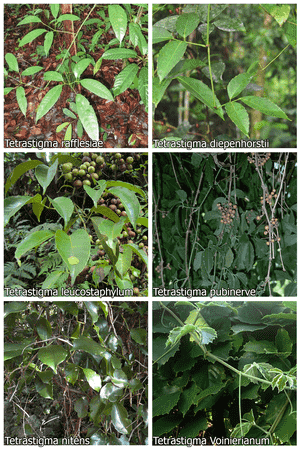
Tetrastigma (Tetrastigma)(Tetrastigma)

Tetrastigma (Tetrastigma) (Tetrastigma)

Also known as: Chestnut Vine, Wild Grape

Tetrastigma species are robust climbing vines known for their use of tendrils to ascend various supports. They feature characteristically compound leaves with three to five leaflets that are often shiny and robust. These plants inhabit tropical and subtropical areas, predominantly across Southeast Asia, extending from the Himalayas through southern China, and reaching regions such as Indonesia, Malaysia, and the Philippines. Some species are also found in tropical northern Australia and Pacific Islands.

The name Tetrastigma originates from Greek, meaning 'four stigmas', which refers to the distinctive four-lobed structure of their stigma. These vines are ecologically important, serving as hosts for the parasitic Rafflesia, which produces some of the largest flowers in the plant kingdom.

Attributes of Tetrastigma (Tetrastigma)

Lifespan
Perennial
Plant Height
Up to 15 meters (49 feet) when supported on a larger structure
Spread
Varies; can spread extensively when climbing
Leaf Color
Dark green
Flower Size
Small, around 0.5 centimeters
Flower Color
Greenish-yellow

ForwardPlant - Identify plants with a snap

Identify and diagnose plants, get toxicity alerts, and explore safety guides for all types of fungi.

Try for Free

Images of Tetrastigma (Tetrastigma)

Tetrastigma (Tetrastigma)(Tetrastigma)

Quickly Identify Tetrastigma (Tetrastigma)

1
Tetrastigma can be identified by its compound leaves, which are composed of multiple leaflets. The tendrils and the presence of small, inconspicuous flowers also aid in its identification.

Scientific Classification of Tetrastigma (Tetrastigma)

Phylum
Magnoliophyta
Class
Magnoliopsida
Order
Vitales
Family
Vitaceae
Genus
Tetrastigma

Planting and Growing of Tetrastigma (Tetrastigma)

Care Difficulty
Moderate
Watering Schedule
Every 2 days
Sunlight Requirements
Partial sun
Sunshine Duration
6-10 hours
Ideal Temperature
65-75℉
Soil Type
Potting Mix, Peat Mix
Soil pH
6.5-7.5
Fertilizer Type
Balanced
Pruning Season
Spring, Summer
Pruning Area
Branches, Leaves
Pruning Frequency
2 times a year
Repotting Season
Spring
Pot Type
Plastic, Ceramic

water icon How to Water Tetrastigma (Tetrastigma)?

The amount of water for Tetrastigma should be monitored closely. Watering should ensure that the soil is evenly moist without being waterlogged. A good rule of thumb is to water until it slightly drains from the bottom of the pot, indicating the roots have ample supply. This typically equates to about 250 ml in a medium-sized pot, ensuring consistent soil moisture without oversaturation.
What are the symptoms of an underwatered Tetrastigma (Tetrastigma)?
What should I do if my Tetrastigma (Tetrastigma) is not getting enough water?
What are the symptoms of an overwatered Tetrastigma (Tetrastigma)?
How to save an overwatered Tetrastigma (Tetrastigma)?

sunlight icon What Are the Sunlight Requirements for Tetrastigma (Tetrastigma)?

Sunlight Requirements: Partial sun, Full shade
Duration of light: Two to six hours
Partial sun is ideal for Tetrastigma. This range allows the plant to photosynthesize effectively while minimizing the risk of photodamage and burnout, promoting healthy, vibrant growth.
What type of light does Tetrastigma need?
How can I achieve ideal lighting for Tetrastigma?
What are the benefits of ideal light conditions?

temperature icon What Is the Ideal Temperature Range for Tetrastigma (Tetrastigma)?

Ideal Temperature: 65 ~ 75℉
For optimal growth, Tetrastigma thrives in temperatures ranging from 65°F to 75°F. This range supports vigorous growth and healthy foliage. Providing this consistent temperature range mimics the warm tropical environments where this plant naturally flourishes. Maintaining such temperatures also prevents stress that can lead to stunted growth or leaf drop.

soil icon What Soil is Best for Tetrastigma (Tetrastigma)?

Soil type: Loam, Sandy loam
Soil PH: 6.5 ~ 7.5
Tetrastigma thrives in well-drained soil as excess water can lead to root rot. Ensuring this condition helps the plant maintain healthy roots, promoting vigorous growth and overall plant health. While drainage is critical, the soil should still hold some moisture. This balance supports Tetrastigma's growth by providing enough hydration without waterlogging, ensuring steady nutrient uptake. A nutrient-rich loamy soil is ideal for Tetrastigma because it supports robust growth and healthy foliage. Incorporating organic matter like compost enhances the soil's nutrient profile and overall structure.

fertilize icon How to Fertilize Tetrastigma (Tetrastigma)?

Fertilizer type: Balanced
Tetrastigma plants generally respond well to moderate fertilization. Use a balanced liquid fertilizer diluted to half strength, about 1 teaspoon per gallon of water. For slow-release fertilizers, utilize approximately 2 to 3 tablespoons spread evenly over the soil surface according to label instructions.

prune icon How to Prune Tetrastigma (Tetrastigma)?

Pruning Time: Spring, Summer
The best time to prune Tetrastigma is during the active growing seasons of spring and early summer. Avoid heavy pruning during the dormancy of winter to prevent stressing the plant. Focus on trimming overgrown and tangled sections as well as removing dead or diseased branches. This helps distribute nutrients more effectively throughout the plant.

propagate icon How to Propagate Tetrastigma (Tetrastigma) plant?

Propagate Time: Spring, Early summer
1
Select healthy and non-flowering shoots from the parent plant. Cut sections that are about 4-6 inches in length. Remove any lower leaves to leave at least two nodes for rooting.
2
Dip the cut end into rooting hormone and plant it in a well-draining potting mix. Ensure that at least two nodes are buried below the soil surface.
3
Cover the cuttings with a plastic bag or place them in a propagator to maintain high humidity. This prevents the cuttings from drying out and facilitates rooting.

repot icon How to Repot Tetrastigma (Tetrastigma) plant?

Repotting frequency: Every 1-2 years
1
Tetrastigma signals its need for repotting when roots begin to emerge from the drainage holes, or when growth seems stunted. Choosing a warm season like spring or summer helps the plant recover rapidly.
2
Opt for a pot that's slightly larger than the current one, with good drainage. This will allow Tetrastigma to expand its roots without waterlogging, thus promoting healthier growth.
3
Choose a well-draining potting mix that retains some moisture but prevents root rot. This type of soil keeps the roots healthy, allowing for optimal growth and nutrient absorption.

ForwardPlant - Identify plants with a snap

Find the best spots for them to optimize their health, simply using your phone.

Try for Free
