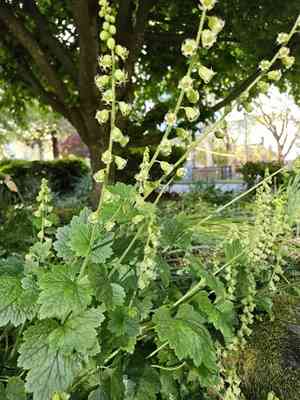
Bigflower Tellima (Tellima) (Tellima)
Also known as: Fringe Cups
The genus *Erythronium* consists of herbaceous perennial flowering plants native to western North America. Over time, they have been naturalized in Ireland and the United Kingdom. These plants are often called fawn lilies, trout lilies, or dogtooth violets. Interestingly, the name *Erythronium* is derived from the Greek word for red, though many species display a variety of colors. According to folklore, woodland creatures were believed to consume *Erythronium* bulbs to enhance their agility and strength.
In This Article
Attributes of Bigflower Tellima (Tellima)
Lifespan
Perennial
Plant Height
30-60 cm
Spread
30-45 cm
Leaf Color
Green, often with a purple or bronze tinge
Flower Size
Approximately 1 cm
Flower Color
Greenish-white to pinkish
Images of Bigflower Tellima (Tellima)
Quickly Identify Bigflower Tellima (Tellima)
1
Tellima can be identified by its heart-shaped leaves with serrated edges and its tall, upright flower spikes that bear numerous small, bell-shaped flowers. The flowers are typically greenish-white to pinkish in color.
Scientific Classification of Bigflower Tellima (Tellima)
Phylum
Tracheophyta
Class
Magnoliopsida
Order
Saxifragales
Family
Saxifragaceae
Genus
Tellima
Planting and Growing of Bigflower Tellima (Tellima)
Care Difficulty
Easy
Watering Schedule
Every 3 days
Sunlight Requirements
Partial sun
Sunshine Duration
4-6 hours
Ideal Temperature
50-68℉
Soil Type
Potting Mix, Peat Mix
Soil pH
6-7.5
Fertilizer Type
Balanced
Pruning Season
Spring, Summer
Pruning Area
Branches, Leaves
Pruning Frequency
2 times a year
Repotting Season
Spring
Pot Type
Plastic, Terracotta
 How to Water Bigflower Tellima (Tellima)?
Tellima prefers a consistent moisture level in the soil, which means watering adequately without waterlogging. It's best to ensure the soil feels damp about an inch deep, which indicates that around 250 ml of water per session is ideal. This amount allows the roots to access moisture without being suffocated.
What are the symptoms of an underwatered Bigflower Tellima (Tellima)?
›
What should I do if my Bigflower Tellima (Tellima) is not getting enough water?
›
What are the symptoms of an overwatered Bigflower Tellima (Tellima)?
›
How to save an overwatered Bigflower Tellima (Tellima)?
›
 What Are the Sunlight Requirements for Bigflower Tellima (Tellima)?
Partial sun provides the best balance for Tellima, where it enjoys 4-6 hours of indirect light. Ideal lighting conditions foster optimal growth and flowering, keeping the plant healthy and aesthetically pleasing while minimizing stress.
What is the best environment for Tellima?
›
How to ensure Tellima receives optimal lighting?
›
What are the benefits of ideal lighting for Tellima?
›
 What Is the Ideal Temperature Range for Bigflower Tellima (Tellima)?
Tellima thrives best in environments where temperatures are moderately cool, ideally between 50°F to 68°F. This range supports robust growth and healthy foliage by mimicking their natural habitat conditions. Ensuring this temperature can significantly improve the plant's overall health and vigor.
 What Soil is Best for Bigflower Tellima (Tellima)?
Tellima thrives best in moisture-retentive soil that remains consistently damp. This requirement helps prevent wilting and encourages healthy growth, as it keeps the roots sufficiently hydrated without being waterlogged. Well-draining soil is essential for Tellima to prevent root rot. This requirement ensures that excess water drains away efficiently, maintaining an optimal balance of moisture and preventing fungal issues. Enriched with organic matter, the soil supports Tellima by providing essential nutrients. This layer of organic richness enhances soil fertility and leads to vigorous and vibrant plant growth.
 How to Fertilize Bigflower Tellima (Tellima)?
When fertilizing Tellima, it's important to apply only a moderate amount of nutrients. About 1-2 tablespoons of liquid fertilizer diluted in a gallon of water will suffice. For slow-release fertilizers, use approximately half a cup per plant annually, ensuring even distribution around the root area.
 How to Prune Bigflower Tellima (Tellima)?
When pruning Tellima, use clean, sharp scissors or garden shears. Begin by removing any dead or discolored leaves at the base. Trim the spent flower stalks down to the first active leaf or bud to encourage further blooming. Be careful to cut just above a node, which is the point where leaves attach to the stem, to promote healthy regrowth and minimize the chance of disease entry.
 How to Propagate Bigflower Tellima (Tellima) plant?
1
Harvest seeds from mature Tellima plants in autumn, allowing them to dry slightly. Clean the seeds by removing any husks or pulp, ensuring they are ready for sowing.
2
Fill seed trays with a well-draining soil mix. Sow seeds on the surface and lightly cover them with a thin layer of soil. Maintain consistent moisture by misting regularly.
3
Using a Hori Hori knife, divide large clumps of Tellima in early spring. Ensure each division has sufficient roots and plant them in prepared soil to promote healthy growth.
 How to Repot Bigflower Tellima (Tellima) plant?
1
Tellima should be considered for repotting when you notice roots crowding out of the drainage holes or if water is no longer absorbed quickly. These are key indicators that the plant has outgrown its current home and is ready for a fresh start, ensuring healthy growth and vigor.
2
Select a pot that is only a few inches larger in diameter than the current one to prevent overwatering issues. A pot with drainage holes is crucial as it allows excess water to escape, reducing the risk of root rot and helping the roots breathe properly.
3
Opt for a well-draining loam mix to give Tellima the right balance of moisture and drainage. This type of soil helps in root development and prevents waterlogged conditions, which can otherwise lead to detrimental fungal issues or root rot.
Learn More About Bigflower Tellima (Tellima) Diseases
Anthracnose
Bacterial Leaf Spot
Bacterial Soft Rot
Damping-off
Downy Mildew
Drought Stress
Fusarium Wilt
Gray Mold
Leaf Curl
Leaf Spot
Mosaic
Nutrient Deficiency
Nutrient Toxicity
Powdery Mildew
Root Rot
Root-knot Nematode
Rusts
Sooty Mold
Spider Mites
Temperature Stress
Thrips Damage
White Mold
Chemical Injury

