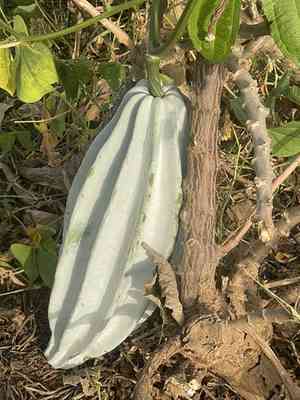
Telfairia occidentalis(Telfairia occidentalis)

Telfairia occidentalis (Telfairia occidentalis)

Also known as: Fluted pumpkin

Telfairia occidentalis, also known as fluted gourd, fluted pumpkin, ugu, Eweroko, okwukwo-wiri, ikong-ubong, and Akwukwor ri, is a tropical vine that is native to West Africa, particularly southern Nigeria. It is commonly cultivated for its edible seeds and leaves, which are used predominantly in soups and traditional medicines. As part of the Cucurbitaceae family, it thrives even in drought conditions and is usually grown on trellises. Though the gourd's fruit is not edible, its seeds are rich in protein and fat, contributing to a nutritious diet. It has cultural significance among various Nigerian ethnic groups, including the Efik, Ibibio, Ikwerre, Urhobo, and especially the Igbo, with an estimated 30 to 35 million people traditionally using the plant. The Igbo ethnic group, who frequently reference the gourd in folklore, believe it has healing properties and use it as a blood tonic for treating the weak or sick. Its role in the international food trade has boosted the gourd's importance among the Igbo people.

Attributes of Telfairia occidentalis

Lifespan
Telfairia occidentalis, also known as Ugwú or Fluted pumpkin, is a tropical vine and it typically takes around 4 to 5 months from planting to reach maturity.

ForwardPlant - Identify plants with a snap

Identify and diagnose plants, get toxicity alerts, and explore safety guides for all types of fungi.

Try for Free

Images of Telfairia occidentalis

Telfairia occidentalis(Telfairia occidentalis)

Quickly Identify Telfairia occidentalis

1
The plant is a vigorous climbing vine with lobed leaves and large, fluted fruit that contains numerous seeds. The seeds are rich in oils and protein.

Scientific Classification of Telfairia occidentalis

Phylum
Magnoliophyta
Class
Magnoliopsida
Order
Cucurbitales
Family
Cucurbitaceae
Genus
Telfairia
Species
T. occidentalis

Planting and Growing of Telfairia occidentalis

Watering Schedule
Every 4 days
Sunlight Requirements
Partial sun
Sunshine Duration
4-8 hours
Ideal Temperature
68-86℉
Soil Type
Potting Mix, Peat Mix
Soil pH
6.5-7.5
Fertilizer Type
Balanced
Pruning Season
Spring, Summer
Pruning Area
Branches, Leaves
Pruning Frequency
2 times a year
Repotting Season
Spring
Pot Type
Plastic, Terracotta

water icon How to Water Telfairia occidentalis?

For Telfairia occidentalis, it is essential to ensure the soil is consistently moist but not waterlogged. When watering, aim for about 500 ml of water per session, enough to saturate the soil without causing standing water at the base of the plant.
What are the symptoms of an underwatered Telfairia occidentalis?
What should I do if my Telfairia occidentalis is not getting enough water?
What are the symptoms of an overwatered Telfairia occidentalis?
How to save an overwatered Telfairia occidentalis?

sunlight icon What Are the Sunlight Requirements for Telfairia occidentalis?

Sunlight Requirements: Partial sun
Duration of light: 5-7 hours of sunlight
Partial sun, with 5-7 hours of sunlight daily, promotes healthy foliage and vigorous growth in Telfairia occidentalis. Ideal lighting ensures its photosynthesis is at peak efficiency, fostering vibrant leaf development.
What is the preferred natural habitat?
How can I replicate ideal lighting indoors?
What are the benefits of achieving ideal lighting?

temperature icon What Is the Ideal Temperature Range for Telfairia occidentalis?

Ideal Temperature: 68 ~ 86℉
The ideal temperature range for Telfairia occidentalis, commonly known as fluted pumpkin, is between 68°F to 86°F. These temperatures provide the optimal conditions for growth, allowing the plant to thrive and produce healthy foliage and fruit. Maintaining this temperature range will ensure that the plant's metabolic processes operate efficiently, supporting robust development.

soil icon What Soil is Best for Telfairia occidentalis?

Soil type: Loam, Sandy loam
Soil PH: 6.5 ~ 7.5
Telfairia occidentalis thrives in well-drained soil which prevents waterlogging that could lead to root rot. The ideal soil allows excess water to drain away, providing oxygen to the roots, and ensuring the plant's growth is healthy and robust. Although the soil should be well-drained, it must also retain enough moisture to keep the plant hydrated. Sandy loam is ideal as it balances drainage and moisture retention, which helps maintain consistent growth and prevents wilting. Rich organic matter in the soil provides essential nutrients that promote vigorous growth. This plant benefits from a nutritious soil environment, which can be achieved by incorporating well-rotted manure or compost to enhance the overall fertility.

fertilize icon How to Fertilize Telfairia occidentalis?

Fertilizer type: Balanced
When fertilizing Telfairia occidentalis, use one tablespoon of liquid fertilizer per gallon of water for monthly application. For slow-release fertilizer, apply half a cup every four months around the base of the plant.

prune icon How to Prune Telfairia occidentalis?

Pruning Time: Spring, Summer, Autumn
Start by identifying the main and lateral vines of Telfairia occidentalis. Focus on cutting back excessive side shoots and removing any tangled or dead sections. Make cuts at a 45-degree angle to prevent water from settling on cut surfaces, which can lead to rot or disease. This technique promotes optimal healing and growth.

propagate icon How to Propagate Telfairia occidentalis plant?

Propagate Time: Spring,Early summer
1
Soak Telfairia occidentalis seeds in water for 24 hours to soften the hard seed coat, which will accelerate germination. After soaking, plant the seeds about 1 inch deep in seed trays filled with a well-drained potting mix.
2
Use pruning shears to cut 6-8 inch long segments from healthy, mature stems. Remove any leaves from the lower half of the cutting to prepare it for planting. Make sure the cut is clean and at a slight angle to enhance rooting.
3
Place the prepared cuttings into a container with moist, well-draining soil, ensuring they are deep enough to remain upright. Keep the soil consistently moist but not waterlogged to promote root development.

repot icon How to Repot Telfairia occidentalis plant?

Repotting frequency: Every 1-2 years
1
Telfairia occidentalis shows signs of needing repotting when it is root-bound, exhibiting roots growing out of the drainage holes. Another time is when the plant's growth slows despite good care, indicating it's outgrowing its pot.
2
Choose a pot that is 2 inches larger in diameter than the current one. This allows the roots to expand without water retention issues, promoting healthier growth. Ensure the pot has adequate drainage holes to prevent waterlogging.
3
Opt for rich, well-draining soil. This should include a mix of loam, peat, and sand or perlite. Such a soil mix provides essential nutrients and proper drainage, preventing root rot and ensuring robust plant growth.

ForwardPlant - Identify plants with a snap

Find the best spots for them to optimize their health, simply using your phone.

Try for Free
