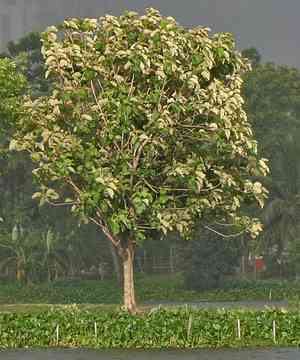
Teaks (Tectona) (Tectona)
Also known as: Teak
Teak trees adapt to seasonal changes by shedding their leaves during the dry season to conserve water and reduce transpiration. When the monsoon arrives, they regrow their foliage to take advantage of the increased moisture and sunlight for photosynthesis. These trees reproduce through seeds and can thrive for over a century in optimal conditions. Teak is often cultivated in managed plantations for its highly durable and aromatic wood, which is prized in furniture and construction.
In This Article
Attributes of Teaks (Tectona)
Lifespan
Perennial
Plant Height
Up to 40 meters
Spread
15 to 18 meters
Leaf Color
Green
Flower Size
0.5 to 1.5 centimeters
Flower Color
White
Images of Teaks (Tectona)
Quickly Identify Teaks (Tectona)
1
Tectona can be identified by its large, ovate leaves which are often hairy on the underside, and its tall, straight trunk. The tree produces small, fragrant white flowers and bears small, hard, nut-like fruits.
Scientific Classification of Teaks (Tectona)
Phylum
Magnoliophyta
Class
Magnoliopsida
Order
Lamiales
Family
Lamiaceae
Genus
Tectona
Planting and Growing of Teaks (Tectona)
Care Difficulty
Moderate
Watering Schedule
Every 2 days
Sunlight Requirements
Partial sun
Sunshine Duration
4-8 hours
Ideal Temperature
68-86℉
Soil Type
Potting Mix, Peat Mix
Soil pH
6.5-7.5
Fertilizer Type
Balanced
Pruning Season
Spring, Summer
Pruning Area
Branches, Leaves
Pruning Frequency
2 times a year
Repotting Season
Spring
Pot Type
Plastic, Ceramic
 How to Water Teaks (Tectona)?
Tectona, commonly known as teak, requires watering that ensures the soil remains moderately moist without being soggy. Water deeply but allow the topsoil to dry out between sessions, as sustained wetness can lead to root rot.
What are the symptoms of an underwatered Teaks (Tectona)?
›
What should I do if my Teaks (Tectona) is not getting enough water?
›
What are the symptoms of an overwatered Teaks (Tectona)?
›
How to save an overwatered Teaks (Tectona)?
›
 What Are the Sunlight Requirements for Teaks (Tectona)?
Tectona prefers partial to full sun, benefiting from extended daylight exposure, which supports its growth demands and ensures structural health and timber quality.
Optimal Sunlight Requirements
›
Solution for Ideal Sunlight
›
Benefits of Ideal Lighting
›
 What Is the Ideal Temperature Range for Teaks (Tectona)?
Tectona species thrive best in warm environments where temperatures consistently range between 68°F to 86°F. This range supports photosynthesis by enabling optimal enzyme activity, hence facilitating healthy growth and development. Maintaining this temperature level is crucial for preventing stress-related growth anomalies.
 What Soil is Best for Teaks (Tectona)?
Tectona thrives in well-drained soils to prevent root rot and ensure optimal nutrient uptake. Adequate drainage ensures that the plant's roots are not waterlogged, which would otherwise lead to poor growth or disease. Tectona demands nutrient-rich soils to support its large and robust growth. Fertile soil provides essential minerals and micronutrients, thereby enhancing its development and vigor. Maintaining appropriate moisture levels in the soil is crucial for Tectona to grow healthily. While it prefers well-drained soils, they should not dry out completely to support consistent growth and survival during drier periods.
 How to Fertilize Teaks (Tectona)?
For Tectona, the application of fertilizers should be balanced and judicious. Use approximately 0.5 kg of a balanced NPK (10-10-10) fertilizer per tree. This amount can vary based on soil condition and tree age, but in general, young trees might require less, while mature trees need this quantity to support robust growth.
 How to Prune Teaks (Tectona)?
To prune Tectona, start by sanitizing your pruning tools to prevent disease spread. Identify any dead or damaged wood, as well as branches that are rubbing against each other. Trim these back to healthy wood, making clean, angled cuts close to the trunk or main branches. This facilitates better healing and reduces the risk of pest infestations. When shaping the crown of Tectona, aim to maintain an open structure that allows light and air to penetrate the inner canopy. This can be done by selectively thinning out crowded areas, especially in the center. Keep the tree's natural form in mind to ensure a balanced aesthetic. Crown lifting, the removal of lower branches, can also help in developing a straight trunk and a tall, elegant appearance.
 How to Propagate Teaks (Tectona) plant?
1
Collect seeds from mature fruits of Tectona trees in the late summer when they are ripe. Clean and dry them thoroughly to prevent fungal infections before planting in trays or pots.
2
Select healthy branches and cut them into lengths of around 15-20 cm. Remove leaves from the lower half and dip the cut end in rooting hormone before planting.
3
Plant seeds or cuttings in well-draining soil and position them in a warm, shaded environment. Water lightly to maintain soil moisture without waterlogging.
 How to Repot Teaks (Tectona) plant?
1
Tectona plants should be repotted when they outgrow their current pots, often indicated by roots growing through drainage holes or slower growth. Early spring or autumn are ideal times, as these seasons provide the best conditions for root recovery and new growth.
2
Select a pot that’s about 2 inches larger in diameter than the current one. Ensure it has ample drainage holes to prevent water logging, which can lead to root rot. A slightly larger pot also allows room for healthy root expansion, supporting the plant’s growth.
3
Choose a well-draining loamy soil mix that retains enough moisture yet doesn’t remain soggy. A blend with organic matter, sand, and perlite is ideal, providing the right balance of nutrients and aeration for root health and robust growth.
Learn More About Teaks (Tectona) Diseases
Anthracnose
Bacterial Leaf Spot
Bacterial Soft Rot
Bacterial Wilt
Black Spot
Chemical Injury
Crown Gall
Damping-off
Drought Stress
Fusarium Wilt
Gray Mold
Leaf Curl
Leaf Spot
Mosaic
Nutrient Deficiency
Nutrient Toxicity
Powdery Mildew
Root Rot
Root-knot Nematode
Rusts
Sooty Mold
Spider Mites
Temperature Stress
Thrips Damage
White Mold

