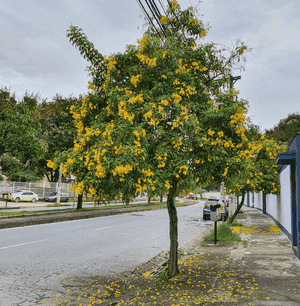
Yellow trumpetbush (Tecoma stans)
Also known as: Yellow elder, Ginger-thomas
The yellow trumpetbush, renowned for its striking and vibrant yellow flowers, is also recognized as an invasive species in various regions. This resilient plant is native to the southern United States, Mexico, the Caribbean, as well as parts of Central and South America, including Peru and Ecuador. It commonly grows along roadsides, near water bodies, in disturbed areas, and on wastelands. Despite its ornamental appeal, its invasive nature poses challenges to local ecosystems.
In This Article
Attributes of Yellow trumpetbush
Lifespan
Perennial
Plant Type
Tree, Shrub
Plant Height
6 m to 9 m
Spread
3 m to 6 m
Leaf Color
Green
Flower Size
3 cm to 5 cm
Flower Color
Yellow
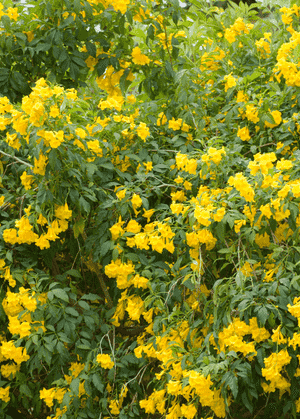
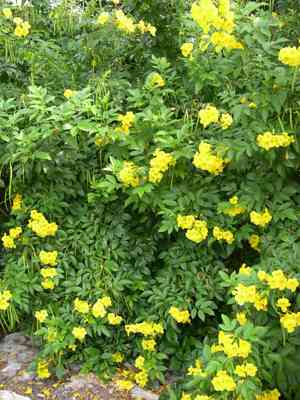
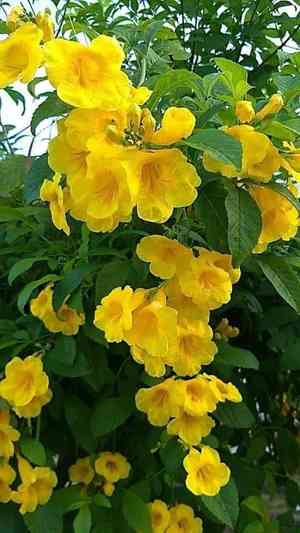
Images of Yellow trumpetbush
Quickly Identify Yellow trumpetbush
1
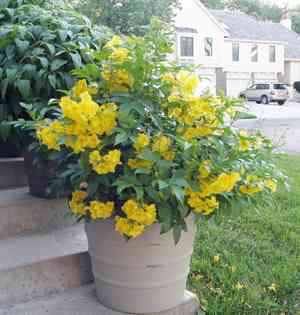
Bright yellow trumpet-shaped flowers with pale red veins inside, forming clusters.
2
Opposite pinnately compound leaves with 5-13 medium to olive green serrated leaflets.
3
Elongated fruit capsules transitioning from green to grayish-brown, splitting to release winged seeds.
4
Thin green twigs maturing into reddish-brown, drooping multi-trunked branches without thorns.
5
Trunk with light gray to brown bark, evolving texture with deep fissures and ridges.
Scientific Classification of Yellow trumpetbush
Phylum
Vascular plants
Class
Dicotyledons
Order
Lamiales
Family
Bignonia
Genus
Trumpetbushes
Species
Yellow trumpetbush
Planting and Growing of Yellow trumpetbush
Care Difficulty
Easy
Watering Schedule
Every 6 days
Sunlight Requirements
Full sun
Ideal Temperature
65-85℉
Soil pH
6.5-7.5
 How to Water Yellow trumpetbush?
Tecoma stans requires a balance when it comes to watering. Ideally, water should penetrate the soil to a depth of at least 6 inches, ensuring that the roots receive adequate hydration without becoming waterlogged. This translates to about 500 milliliters per watering session. The key is to ensure the soil is consistently moist but not saturated.
More About Watering Techniques→
What are the symptoms of an underwatered Yellow trumpetbush?
›
What should I do if my Yellow trumpetbush is not getting enough water?
›
What are the symptoms of an overwatered Yellow trumpetbush?
›
How to save an overwatered Yellow trumpetbush?
›
 What Are the Sunlight Requirements for Yellow trumpetbush?
Tecoma stans thrives in full sun, ideally receiving 6 to 8 hours of sunlight daily. Adequate lighting ensures vigorous flowering and lush green leaves, promoting overall plant health and resilience.
More About Sunlight Requirements Techniques→
How much sunlight does Tecoma stans need?
›
How to achieve ideal light conditions for Tecoma stans?
›
Benefits of ideal light exposure for Tecoma stans?
›
 What Is the Ideal Temperature Range for Yellow trumpetbush?
Tecoma stans thrives best in warm climates with temperatures ranging between 65°F and 85°F. This range ensures optimal growth and blooming. Providing these temperatures consistently helps maintain vibrant foliage and an enhanced flowering cycle.
 What Soil is Best for Yellow trumpetbush?
Tecoma stans thrives in well-draining soil, which prevents waterlogging and root rot, promoting vigorous growth and vibrant blooms. The plant does well in soil with moderate nutrient content, ensuring healthy root development without the risk of excessive vegetative growth. Incorporating organic matter such as compost into the soil enhances its fertility and structure, facilitating better water retention and nutrient absorption.
More About Soil→
 How to Fertilize Yellow trumpetbush?
When it comes to fertilizing Tecoma stans, it's essential to get the amount right. For liquid fertilizer, use a balanced water-soluble formula diluted to half strength to avoid root burn. Typically, about 1/4 to 1/2 gallon per plant should suffice, depending on the plant size and soil conditions. Over-fertilizing can harm the plant, so stick to recommended doses.
More About Fertilizing Techniques→
 How to Prune Yellow trumpetbush?
Identify branches that are overgrown or crossing each other. Use pruning shears to trim them back to a healthy bud, ensuring the plant maintains a balanced and open shape. To encourage a bushier growth pattern, trim the tips of young, flexible branches. This will stimulate lateral growth and result in a fuller, more vibrant plant. After flowering, remove spent blooms by cutting them back to the nearest leaf joint. This prevents seed formation and encourages further blooming.
More About Pruning Techniques→
 How to Propagate Yellow trumpetbush plant?
1
Collect seeds from mature Tecoma stans pods. Once extracted, sow seeds shallowly in a well-draining soil mix, covering them lightly. Maintain warmth and moisture for germination, which typically takes 2-3 weeks.
2
Cut 6-8 inch sections from healthy branches. Remove the leaves from the lower half of the cuttings, dip the cut end into rooting hormone, and place in a moist growing medium.
3
Once seedlings develop a strong root system and have several sets of leaves, transplant them to larger pots or directly into the garden. Ensure they are spaced well to encourage healthy growth.
 How to Repot Yellow trumpetbush plant?
1
Repot your Tecoma stans when you notice roots growing out of the drainage holes or becoming pot-bound. The plant often shows slow growth or wilting as a sign it needs more space to thrive.
2
Select a pot that's one size larger than the current one, ensuring it has adequate drainage holes. This prevents waterlogging, which can lead to root rot. A slightly bigger pot also provides room for root expansion.
3
A well-draining potting mix is crucial for Tecoma stans. This type of soil allows excess water to escape easily, preventing the roots from sitting in too much moisture which can lead to fungal diseases.
Toxicity
ingestion
WARNING
The judgment on toxicity and danger is for reference only. We DO NOT GUARANTEE any accuracy of such judgment. Therefore, you SHALL NOT rely on such judgment. It is IMPORTANT TO SEEK PROFESSIONAL ADVICE in advance when necessary.
Learn More About Yellow trumpetbush Diseases
Anthracnose
Bacterial Leaf Spot
Bacterial Wilt
Crown Gall
Damping-off
Downy Mildew
Drought Stress
Fusarium Wilt
Gray Mold
Leaf Spot
Mosaic
Nutrient Deficiency
Nutrient Toxicity
Powdery Mildew
Root Rot
Root-knot Nematode
Rusts
Sooty Mold
Spider Mites
Temperature Stress
Thrips Damage
White Mold
Chemical Injury



