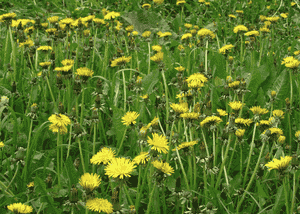
Taraxacum sect. Taraxacum (Taraxacum sect. Taraxacum)
Also known as: Common Dandelion, Lion's Tooth, Blowball
Taraxacum sect. Taraxacum, commonly known as dandelions, are flowering plants belonging to the Asteraceae family. These perennial herbs are known for their bright yellow flowers and distinctively toothed leaves.
In This Article
Attributes of Taraxacum sect. Taraxacum
Lifespan
Perennial
Plant Height
5-45 cm
Spread
5-10 cm
Leaf Color
Green
Flower Size
2-5 cm
Flower Color
Yellow
Images of Taraxacum sect. Taraxacum
Quickly Identify Taraxacum sect. Taraxacum
1
Dandelions can be identified by their bright yellow, composite flowers and rosette of deeply lobed leaves. They produce spherical seed heads known as 'clocks' which disperse seeds with the wind.
Scientific Classification of Taraxacum sect. Taraxacum
Phylum
Magnoliophyta
Class
Magnoliopsida
Order
Asterales
Family
Asteraceae
Genus
Taraxacum
Planting and Growing of Taraxacum sect. Taraxacum
Care Difficulty
Easy
Watering Schedule
Every 4 days
Sunlight Requirements
Full sun
Sunshine Duration
6-10 hours
Ideal Temperature
60-75℉
Soil Type
Potting Mix, Peat Mix
Soil pH
6.5-7.5
Fertilizer Type
Balanced
Pruning Season
Spring, Summer
Pruning Area
Branches, Leaves
Pruning Frequency
2 times a year
Repotting Season
Spring
Pot Type
Plastic, Ceramic
 How to Water Taraxacum sect. Taraxacum?
The Taraxacum sect. Taraxacum, commonly known as dandelions, require moderate watering. Ideally, water with 250 ml each session, ensuring the soil is evenly moist but not waterlogged. This plant thrives with the principle of letting the top inch of the soil dry out before the next watering session.
What are the symptoms of an underwatered Taraxacum sect. Taraxacum?
›
What should I do if my Taraxacum sect. Taraxacum is not getting enough water?
›
What are the symptoms of an overwatered Taraxacum sect. Taraxacum?
›
How to save an overwatered Taraxacum sect. Taraxacum?
›
 What Are the Sunlight Requirements for Taraxacum sect. Taraxacum?
Dandelions thrive in full sun, ideally receiving 6-8 hours of direct sunlight. This range supports healthy photosynthesis and growth, resulting in lush foliage and abundant flowering.
What lighting conditions does Taraxacum prefer?
›
How can one ensure ideal lighting for dandelions?
›
What are the benefits of optimal lighting for dandelions?
›
 What Is the Ideal Temperature Range for Taraxacum sect. Taraxacum?
The ideal temperature range for Taraxacum sect. Taraxacum is between 60°F to 75°F. This temperature range ensures optimal growth, promoting healthy photosynthesis and nutrient uptake, ultimately resulting in vibrant and robust foliage.
 What Soil is Best for Taraxacum sect. Taraxacum?
Dandelions prefer well-drained soils, which prevent waterlogging and root rot. This type of soil lets air circulate around the roots, promoting healthier plant growth and better nutrient absorption. Moderate soil fertility allows dandelions to thrive without excessive nutrients. This encourages strong root growth and helps prevent overgrowth of foliage, keeping the plant balanced and healthy. Dandelions thrive in sunny spots which ensure they receive ample sunlight. This is crucial for photosynthesis, resulting in robust growth and vibrant yellow flowers.
 How to Fertilize Taraxacum sect. Taraxacum?
When fertilizing Taraxacum sect. Taraxacum, use a balanced fertilizer with a nitrogen-phosphorus-potassium (N-P-K) ratio around 10-10-10. A small amount, such as a tablespoon per plant every two months for liquid fertilizers during the growing season, is generally sufficient. Avoid over-fertilizing as dandelions typically require minimal nutrients.
 How to Prune Taraxacum sect. Taraxacum?
Begin by inspecting the plant thoroughly. Identify any dead or diseased leaves and remove them carefully using sterilized scissors. 2. Next, trim any long stems back to a healthy node, ensuring you cut about half an inch above the node at a slight angle. 3. Remove spent flowers to encourage additional blooms. 4. Finally, assess the shape of the plant and trim any overgrown areas to maintain a well-balanced structure.
 How to Propagate Taraxacum sect. Taraxacum plant?
1
Start by loosening the soil in the nursery bed or pots with compost to ensure it is rich in nutrients and drains well. Remove weeds and rocks to create an ideal environment for root growth.
2
Scatter the dandelion seeds on the prepared soil surface, lightly covering them with a thin layer of soil. Ensure they are evenly distributed and lightly water to maintain moisture.
3
Dig up the parent plant and carefully split its root clump using a sharp knife or spade, ensuring each division has roots and shoots for successful replanting.
 How to Repot Taraxacum sect. Taraxacum plant?
1
Repotting Taraxacum sect. Taraxacum is best done when you notice the roots protruding from the drainage holes or when the plant appears cramped. Additionally, if the soil is retaining excess moisture or shows signs of nutrient depletion, it's a signal that repotting might be necessary. Ideal timings are spring and autumn when the plant is not in its active flowering phase, allowing it to recover swiftly.
2
Select a pot that is approximately 20% larger than the current one. Ensure that the pot has ample drainage holes to prevent waterlogging, which dandelions are particularly sensitive to. The material of the pot is less crucial, but terracotta offers breathability and aides in moisture regulation, which can be beneficial for dandelion health.
3
Opt for a well-draining rich soil mix, ideally containing a blend of loam, sand, and organic compost. This blend ensures sufficient nutrient supply and excellent drainage, minimizing the risk of root rot, which is particularly vital for this resilient yet moisture-sensitive plant.
Toxicity
None
WARNING
The judgment on toxicity and danger is for reference only. We DO NOT GUARANTEE any accuracy of such judgment. Therefore, you SHALL NOT rely on such judgment. It is IMPORTANT TO SEEK PROFESSIONAL ADVICE in advance when necessary.
Learn More About Taraxacum sect. Taraxacum Diseases
Anthracnose
Bacterial Leaf Spot
Bacterial Soft Rot
Bacterial Wilt
Chemical Injury
Cyst Nematode
Damping-off
Downy Mildew
Drought Stress
Fusarium Wilt
Gray Mold
Leaf Spot
Mosaic
Nutrient Deficiency
Nutrient Toxicity
Powdery Mildew
Root Rot
Root-knot Nematode
Rusts
Sooty Mold
Spider Mites
Temperature Stress
Thrips Damage
White Mold

