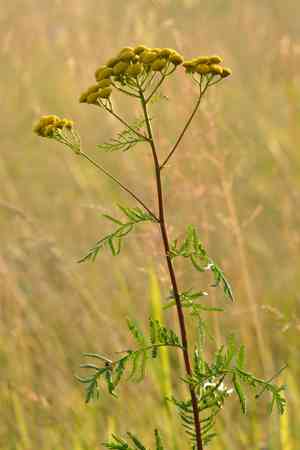
Common tansy(Tanacetum vulgare)

Common tansy (Tanacetum vulgare)

Also known as: Golden buttons, Cow bitter

**Tanacetum vulgare**, known as common tansy, is originally from Europe and Asia. In regions where it's been introduced, it is occasionally regarded as invasive. Additionally, common tansy can serve as an alternative to sage.

Attributes of Common tansy

Lifespan
Perennial
Plant Type
Herb
Plant Height
60 cm to 1.3 m
Spread
30 cm to 60 cm
Leaf Color
Green
Flower Size
1 cm
Flower Color
Yellow Gold

PlantJoy - Identify plants with a snap

Identify and diagnose plants, get toxicity alerts, and explore safety guides for all types of fungi.

Try for Free

Images of Common tansy

Common tansy(Tanacetum vulgare)

Quickly Identify Common tansy

1
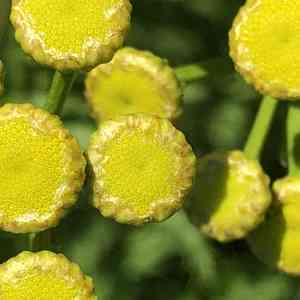
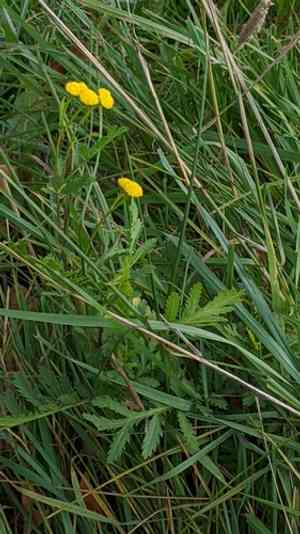
Golden yellow button-like flowers in clusters of 20-200, 1/4 to 1/2 inch wide (0.6 to 1.3 cm).
2
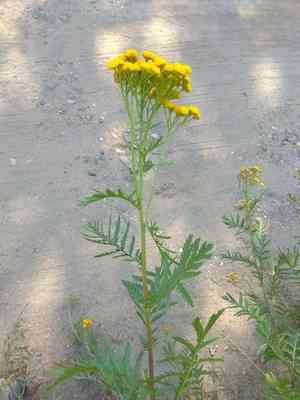
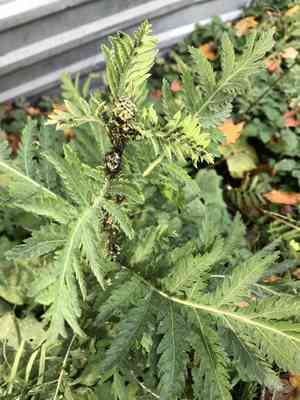
Feathery, deeply divided green leaves emit pungent scent when crushed, measuring 2-12 inches long (5-30 cm).
3
Angular brownish achenes with five distinct sides, small and inconspicuous, aiding in seed dispersal.
4
Erect, robust stem with reddish-brown color, reaching up to 3 feet in height (91 cm).
5
Distinctive branching pattern and rigidity of stems, providing sturdy support for plant's height.

Scientific Classification of Common tansy

Phylum
Vascular plants
Class
Dicotyledons
Order
Asters bellflowers fanflowers and allies
Family
Daisy
Genus
Tansies
Species
Common tansy

Planting and Growing of Common tansy

Care Difficulty
Easy
Watering Schedule
Every 2 days
Sunlight Requirements
Full sun
Sunshine Duration
6-10 hours
Ideal Temperature
60-75℉
Soil Type
Potting Mix, Peat Mix
Soil pH
6.5-7.5
Fertilizer Type
Balanced
Pruning Season
Spring, Summer
Pruning Area
Branches, Leaves
Pruning Frequency
2 times a year
Repotting Season
Spring
Pot Type
Ceramic, Plastic

water icon How to Water Common tansy?

When watering Tanacetum vulgare, aim to keep the soil consistently moist but not soggy. It's best to provide around 250 milliliters per watering session, ensuring the soil is evenly saturated but allowing the topsoil to dry slightly between watering events. Use your fingers to check the top inch of the soil for dryness before deciding to water again.
What are the symptoms of an underwatered Common tansy?
What should I do if my Common tansy is not getting enough water?
What are the symptoms of an overwatered Common tansy?
How to save an overwatered Common tansy?
More About Watering Techniques

sunlight icon What Are the Sunlight Requirements for Common tansy?

Sunlight Requirements: Full sun, Partial sun
Duration of light: 4 to 6 hours
Tanacetum vulgare's ideal light range is full sun to partial sun, providing at least 4 to 6 hours of direct sunlight. This range promotes optimal photosynthesis, supporting vibrant foliage and robust flowering.
How much sunlight should Tanacetum vulgare receive?
What are the alternatives during extreme heat?
What benefits does ideal sunlight offer to Tanacetum vulgare?
More About Sunlight Requirements Techniques

temperature icon What Is the Ideal Temperature Range for Common tansy?

Ideal Temperature: 60 ~ 75℉
For Tanacetum vulgare to thrive, it's crucial to maintain temperatures between 60°F and 75°F. These conditions provide the plant with an optimal environment for photosynthesis and healthy growth. In this range, the plant can maintain its metabolic functions, leading to vibrant foliage and robust development.

soil icon What Soil is Best for Common tansy?

Soil type: Loam, Sandy soil, Sandy loam
Soil PH: 6.5 ~ 7.5
Tanacetum vulgare thrives best in well-drained soil, which prevents water from stagnating around the roots. This condition reduces the risk of root rot and promotes healthy root development, ensuring a robust plant. This plant does not require highly fertile soil. Moderately fertile soil provides just enough nutrients for growth without promoting excessive foliage at the expense of flowers, maintaining a balanced plant structure. Tanacetum vulgare favors soil with a slightly alkaline pH. This pH range aids nutrient availability and uptake, fostering optimal plant growth and flowering. More About Soil

fertilize icon How to Fertilize Common tansy?

Fertilizer type: Balanced
For Tanacetum vulgare, the recommended amount of fertilizer is moderate, as this plant typically thrives in less nutrient-rich soils. Too much fertilizer can stunt growth or cause discoloration of the leaves. A general guideline is to apply a balanced liquid fertilizer at a quarter strength every two weeks during the growing season to avoid nutrient overload. More About Fertilizing Techniques

prune icon How to Prune Common tansy?

Pruning Time: Spring, Autumn
Start by inspecting your Tansy plant for any dead, damaged, or diseased stems and remove them to prevent any infections. Next, trim back the plant to shape it, focusing on cutting just above a leaf node to encourage new growth. You can cut back the tallest stems to maintain a more compact form. After pruning, remove any debris from around the base to prevent pests. More About Pruning Techniques

propagate icon How to Propagate Common tansy plant?

Propagate Time: Spring, Early Spring, Summer
1
Begin by filling seed trays with a fine, well-draining potting mix. Sow the seeds lightly on the surface and cover them with a thin layer of soil. Water gently and provide warmth to encourage germination. Keep the soil consistently moist until seedlings emerge.
2
In the spring, dig up well-established Tansy plants and gently separate the roots. Ensure each division has a healthy root system and shoots. Replant divisions at the same depth they were growing, and water them well to help them settle in.
3
In late spring or early summer, select healthy roots from a mature plant. Cut the roots into sections, each about 5cm long. Plant these cut sections into pots filled with a blend of sand and soil, ensuring the right end is up. Keep the cuttings moist until new growth appears.
More About Propagating Techniques

repot icon How to Repot Common tansy plant?

Repotting frequency: Every 2-3 years
1
Keep an eye out for several signs that indicate your Tanacetum vulgare needs repotting. If you notice roots crowding and growing out of the drainage holes, it's time. Additionally, if the plant seems to be wilting despite regular watering or the growth appears stunted, these are tell-tale signs. Late spring or early autumn offers milder temperatures, which are ideal times for the plant to recover from the stress of repotting.
2
Select a pot that is only slightly larger than the current one, typically about 1-2 inches wider. This prevents excess soil from retaining too much water and causing root rot. A pot with drainage holes is crucial as it allows excess water to escape, providing a healthier environment for the roots and ensuring adequate aeration.
3
Opt for a well-draining loamy soil with good fertility. This type of soil not only provides the necessary nutrients for healthy growth but also ensures proper drainage, preventing water from pooling and causing root issues. Loamy soil retains the right amount of moisture, supporting balanced plant hydration.

PlantJoy - Identify plants with a snap

Find the best spots for them to optimize their health, simply using your phone.

Try for Free

Toxicity of Common tansy

Is Common tansy toxic to humans?

The foliage of common tansy is extremely poisonous due to the presence of thujone. Historically, accidental poisoning was frequent, as the leaves were incorporated into cuisine and brewed into tea; however, this usage has become uncommon. Research indicates that prolonged ingestion may result in seizures and potentially fatal outcomes. Furthermore, the toxin in the leaves can be absorbed through the skin, making it advisable to completely avoid any form of contact.

Is Common tansy toxic to cat?

Common tansy poses a toxicity risk to felines. Cats can become poisoned if they accidentally consume the leaves of this plant. Following ingestion, cats might encounter various health problems that indicate physical discomfort or distress. It is crucial for cat owners to be aware of the dangers associated with common tansy and to ensure these plants are kept secure and out of their pets' reach. If a cat consumes any portion of common tansy, it is vital to respond quickly and obtain urgent veterinary care at a veterinary clinic.

Is Common tansy toxic to dog?

Common tansy is a plant that presents a toxicity risk for dogs. If dogs inadvertently ingest parts of this plant, especially the leaves, they can become poisoned. Consuming common tansy can result in various symptoms in dogs, which may encompass vomiting, diarrhea, abdominal discomfort, and other distress signals. It is essential for dog owners to vigilantly watch over their pets and restrict access to common tansy, as even minimal quantities might lead to poisoning. Should a dog be suspected of having consumed common tansy, it is vital to obtain prompt veterinary care to secure the best possible outcome for the animal.

Identify toxic plants for your safety

Learn which plants are harmful to you and your pets, and make informed choices for a safer home!

Try for Free
WARNING
The judgment on toxicity and danger is for reference only. We DO NOT GUARANTEE any accuracy of such judgment. Therefore, you SHALL NOT rely on such judgment. It is IMPORTANT TO SEEK PROFESSIONAL ADVICE in advance when necessary.
More About Toxic Techniques