Feverfew(Tanacetum parthenium)

Feverfew (Tanacetum parthenium)

Also known as: Featherfoil

Feverfew (Tanacetum parthenium) has a rich history in traditional and folk medicine, addressing various health concerns. Originating from Eurasia, it is also valued as an ornamental plant.

**Traditional Uses:**
1. **Migraine Relief**: Historically, feverfew has been used to lessen the occurrence and intensity of migraines.
2. **Anti-inflammatory**: It has been employed for its anti-inflammatory effects, particularly in treating arthritis and other inflammatory conditions.
3. **Fever Management**: True to its name, feverfew has been used to help reduce fevers.
4. **Menstrual Symptom Relief**: Known for alleviating menstrual cramps and related symptoms.

**Ornamental Uses:**
1. **Garden Aesthetics**: The plant is appreciated for its charming, daisy-like flowers and aromatic leaves, enhancing garden beauty.
2. **Insect Deterrent**: It serves as a companion plant, repelling pests and protecting other garden plants.
3. **Floral Arrangements**: Feverfew’s long-lasting blooms are perfect for fresh and dried floral arrangements, adding both visual and aromatic appeal.
4. **Wildlife Attraction**: Its flowers are known to attract butterflies, bees, and hummingbirds, contributing to a lively garden ecosystem.

These uses highlight feverfew's importance in both herbal practices and ornamental gardening.

Attributes of Feverfew

Lifespan
Perennial, Annual, Biennial
Plant Type
Herb
Plant Height
20 cm to 1 m
Spread
60 cm
Leaf Color
Green
Flower Size
3 cm to 4 cm
Flower Color
White Yellow

PlantJoy - Identify plants with a snap

Identify and diagnose plants, get toxicity alerts, and explore safety guides for all types of fungi.

Try for Free

Images of Feverfew

Feverfew(Tanacetum parthenium)

Quickly Identify Feverfew

1
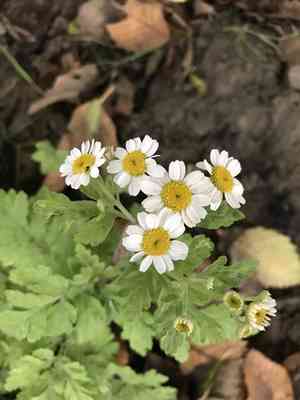
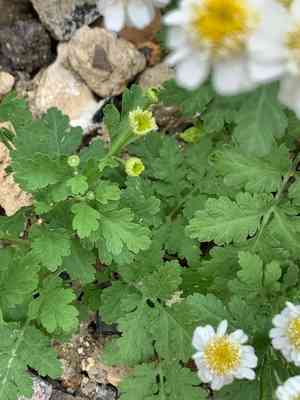
Feathery, fern-like green leaves with pinnately lobed structure and hairy undersides.
2
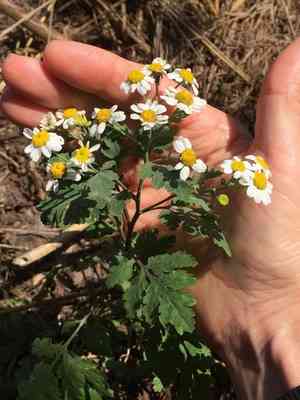
Clusters of white to creamy petals around a central yellow disc in daisy-like flowers.
3
Pubescent towards stem tips, glabrous at the base, reaching 1-3 feet (30-90 cm).
4
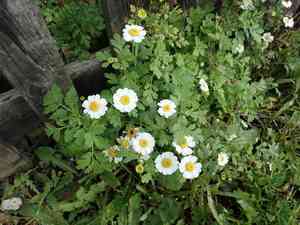
Small daisy-like flowers with 10-30 white petals and compact, charming appearance.
5
Head of small, ribbed seeds, self-seeding, 1-2 mm (0.04-0.08 inches) long.

Scientific Classification of Feverfew

Phylum
Vascular plants
Class
Dicotyledons
Order
Asterales
Family
Daisy
Genus
Tansies
Species
Feverfew

Planting and Growing of Feverfew

Care Difficulty
Easy
Watering Schedule
Every 3 days
Sunlight Requirements
Full sun
Sunshine Duration
6-10 hours
Ideal Temperature
60-70℉
Soil Type
Potting Mix, Peat Mix
Soil pH
6.5-7.5
Fertilizer Type
Balanced
Pruning Season
Spring, Summer
Pruning Area
Branches, Leaves
Pruning Frequency
2 times a year
Repotting Season
Spring
Pot Type
Plastic, Ceramic

water icon How to Water Feverfew?

For Tanacetum parthenium, ensure you water until the soil is evenly moist but not soggy. A good rule of thumb is about 200 ml per watering session, based on the size and health of the plant. Adjust accordingly during dry or humid weather to prevent over or under-watering.
What are the symptoms of an underwatered Feverfew?
What should I do if my Feverfew is not getting enough water?
What are the symptoms of an overwatered Feverfew?
How to save an overwatered Feverfew?
More About Watering Techniques

sunlight icon What Are the Sunlight Requirements for Feverfew?

Sunlight Requirements: Full sun, Partial sun
Duration of light: 6 to 8 hours
Full sun to partial sun provides this plant with energy for photosynthesis and ample flowering. Adequate light ensures dense foliage and a healthy, vibrant appearance.
What type of sunlight is ideal?
How to achieve ideal light conditions?
Benefits of ideal lighting conditions?
More About Sunlight Requirements Techniques

temperature icon What Is the Ideal Temperature Range for Feverfew?

Ideal Temperature: 60 ~ 70℉
The ideal temperature range for growing Tanacetum parthenium, also known as feverfew, is between 60°F and 70°F. This range provides optimal conditions for photosynthesis, growth, and flowering. Maintaining this temperature range helps in achieving lush foliage and abundant blooms, as it mimics the plant's natural habitat conditions. Ensuring consistent temperatures within this range can contribute to a healthy, thriving plant.

soil icon What Soil is Best for Feverfew?

Soil type: Loam, Sandy loam
Soil PH: 6.5 ~ 7.5
Feverfew (Tanacetum parthenium) thrives in nutrient-rich soil, which provides essential minerals and nutrients. This supports robust growth and abundant flowering, resulting in a healthy plant. Ensuring the soil is well-drained prevents root rot and waterlogging. A well-drained environment secures the plant's longevity and vigor by maintaining optimal moisture levels. Moderately moist soil maintains the plant's hydration without over-saturation. This balance is key for healthy root development and sustained plant vitality. More About Soil

fertilize icon How to Fertilize Feverfew?

Fertilizer type: Balanced
For Tanacetum parthenium, use a balanced water-soluble fertilizer diluted to half the recommended strength. Apply about 100 ml of this solution per plant during the growing season. This ensures that you provide essential nutrients without overwhelming the plant’s root system. More About Fertilizing Techniques

prune icon How to Prune Feverfew?

Pruning Time: Spring, Summer
Begin your pruning session by identifying any dead, damaged, or diseased stems. Remove these first to improve air circulation and encourage healthier growth. This will also allow the plant to focus its energy on producing more vibrant blooms. After clearing out unhealthy growth, focus on shaping the plant to maintain its compact form. Trim back overgrown sections while maintaining the natural rounded shape of Feverfew. This helps prevent the plant from becoming too leggy. To extend the blooming period of Feverfew, regularly deadhead the spent flowers. Snip off the faded blooms just above the first set of leaves. This practice encourages more blossoms in the following weeks and keeps the plant looking tidy. Once you’ve completed the pruning, take a step back and inspect the plant for any missed areas. Gather all trimmed materials and dispose of them to prevent the spread of pests or diseases. Provide a light watering to help settle the soil and support new growth. More About Pruning Techniques

propagate icon How to Propagate Feverfew plant?

Propagate Time: Spring, Early spring, Late spring
1
Sow Tanacetum parthenium seeds in seed trays filled with seed-starting mix. Lightly press them into the surface without covering them with soil, as light aids germination. Maintain a consistent moisture level and a temperature of about 18-24°C (64-75°F) for optimal germination.
2
Select healthy, non-flowering stems for cuttings, ideally in spring. Use pruning shears to cut 10-15 cm long sections just below a leaf node. Remove the lower leaves and dip the cut end in rooting hormone before planting in a mix of sand and perlite.
3
Divide established Tanacetum parthenium clumps in early spring. Gently dig up the plant and separate it into smaller sections, each with a healthy root system. Replant the divisions at the same depth as the original plant, watering thoroughly afterward.
More About Propagating Techniques

repot icon How to Repot Feverfew plant?

Repotting frequency: every 1-2 years
1
Tanacetum parthenium shows signs of needing repotting when its roots protrude from drainage holes or growth stagnates. The ideal time to repot is early spring or summer, allowing it to establish before dormant periods. Seasonal timing ensures faster recovery and robust growth.
2
Select a pot slightly larger than the current one, made of breathable material like terracotta. A larger pot prevents root crowding, promotes healthy expansion, and offers stability. Ensure it has ample drainage holes to avoid waterlogging, crucial for Tanacetum parthenium's health survival.
3
Opt for a well-draining potting mix with nutrient-rich components like peat and perlite. This blend offers excellent water retention while ensuring excess moisture drains away. Providing balanced nutrition encourages strong root development and vibrant foliage.

PlantJoy - Identify plants with a snap

Find the best spots for them to optimize their health, simply using your phone.

Try for Free

Toxicity of Feverfew

Is Feverfew toxic to cat?

Feverfew presents a slight toxicity risk for felines. Each component of the plant can lead to negative reactions. If cats consume excessive amounts of feverfew, they may become poisoned, though they generally need to eat a significant quantity to face toxic consequences. Pet owners should closely monitor for any signs of physical discomfort, sickness, or pain, as these could indicate that a cat has ingested feverfew. In such situations, it is vital to respond swiftly, and obtaining immediate veterinary care is important to safeguard a cat's health and welfare.

Is Feverfew toxic to dog?

Feverfew is identified as having a mild toxicity level for dogs. Poisoning generally occurs when a dog ingests a large quantity of the plant. Every part of feverfew—from leaves and stems to flowers and roots—is regarded as toxic, meaning that ingestion of any of these components can jeopardize a dog’s health. The symptoms of poisoning can differ but may include gastrointestinal issues such as vomiting and diarrhea, skin irritation from contact dermatitis, or other signs of distress in dogs. It is essential for dog owners to supervise their pets and restrict access to feverfew, particularly if the dog tends to nibble on plants. If a dog does happen to consume feverfew, seeking immediate veterinary attention is vital for adequate treatment and symptom management.

Identify toxic plants for your safety

Learn which plants are harmful to you and your pets, and make informed choices for a safer home!

Try for Free
WARNING
The judgment on toxicity and danger is for reference only. We DO NOT GUARANTEE any accuracy of such judgment. Therefore, you SHALL NOT rely on such judgment. It is IMPORTANT TO SEEK PROFESSIONAL ADVICE in advance when necessary.
More About Toxic Techniques