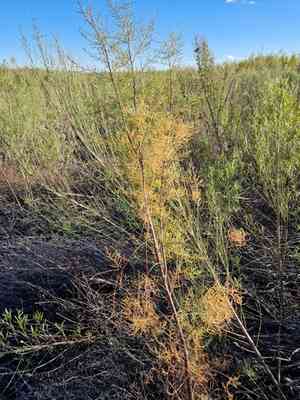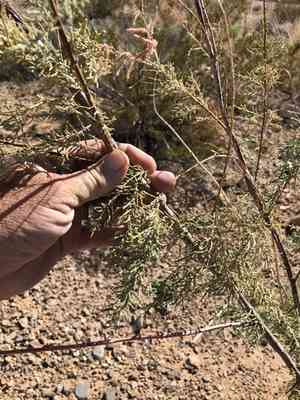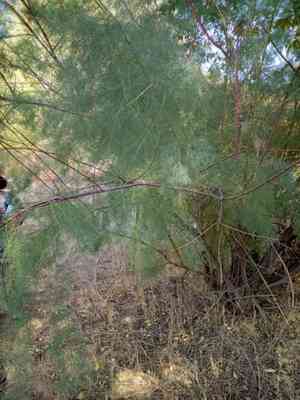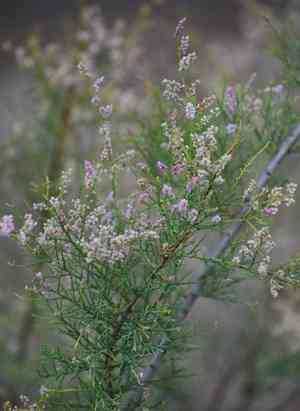
Five-stamen tamarisk(Tamarix chinensis)

Five-stamen tamarisk (Tamarix chinensis)

Also known as: Chinese tamarisk, Saltcedar

Japanese Spiraea (Spiraea japonica) is a deciduous shrub originally from China and Korea. In many parts of the United States, it is recognized as a highly invasive species. This shrub is known for its rapid growth and remarkable adaptability to different environments. It depletes soil moisture and nutrients, which negatively impacts native vegetation. From spring to fall, it produces clusters of pinkish-white flowers.

Attributes of Five-stamen tamarisk

Lifespan
Perennial
Plant Type
Tree
Plant Height
3 m to 6 m
Spread
2 to 4 meters (6 to 13 feet)
Leaf Color
Green Blue Gray Silver
Flower Size
4 mm
Flower Color
Pink White Purple

ForwardPlant - Identify plants with a snap

Identify and diagnose plants, get toxicity alerts, and explore safety guides for all types of fungi.

Try for Free

Images of Five-stamen tamarisk

Five-stamen tamarisk(Tamarix chinensis)

Quickly Identify Five-stamen tamarisk

1
Chinese tamarisk can be identified by its small, scale-like leaves that are arranged alternately along the branches. The leaves are bluish-green and give the plant a feathery appearance. During the flowering season, it produces abundant small pink or white flowers in dense, elongated clusters.

Scientific Classification of Five-stamen tamarisk

Phylum
Vascular plants
Class
Dicotyledons
Order
Pinks, cacti, and allies
Family
Tamarisk
Genus
Tamarisks
Species
Five-stamen tamarisk

Planting and Growing of Five-stamen tamarisk

Care Difficulty
Easy
Watering Schedule
Every 2 days
Sunlight Requirements
Full sun
Sunshine Duration
6-10 hours
Ideal Temperature
59-77℉
Soil Type
Potting Mix, Peat Mix
Soil pH
6.5-8.5
Fertilizer Type
Balanced
Pruning Season
Spring, Summer
Pruning Area
Branches, Leaves
Pruning Frequency
2 times a year
Repotting Season
Spring
Pot Type
Plastic, Ceramic

water icon How to Water Five-stamen tamarisk?

Tamarix chinensis thrives on consistent but moderate watering. It prefers the soil to be almost completely dry between waterings, ensuring the roots don't sit in water, as this can cause root rot. Water thoroughly until water runs out of the drainage holes to make sure the soil is evenly moist.
What are the symptoms of an underwatered Five-stamen tamarisk?
What should I do if my Five-stamen tamarisk is not getting enough water?
What are the symptoms of an overwatered Five-stamen tamarisk?
How to save an overwatered Five-stamen tamarisk?

sunlight icon What Are the Sunlight Requirements for Five-stamen tamarisk?

Sunlight Requirements: Full sun
Duration of light: 6-8 hours daily
Tamarix chinensis prefers full sun with 6-8 hours of sunlight daily. Ideal lighting leads to stronger growth, more blossoms, and heightened resistance to disease and environmental stress.
How much sunlight does Tamarix chinensis need?
What are the best solutions to provide this plant with optimal sunlight?
What benefits does optimal sunlight offer to Tamarix chinensis?
More About Sunlight Requirements Techniques

temperature icon What Is the Ideal Temperature Range for Five-stamen tamarisk?

Ideal Temperature: 59 ~ 77℉
Tamarix chinensis thrives best in mild temperatures ranging from 59°F to 77°F. This range supports optimal photosynthesis and growth. Temperatures within this range allow the plant to maintain its physiological processes without stress, ensuring robust growth and development.

soil icon What Soil is Best for Five-stamen tamarisk?

Soil type: Sandy soil, Loam, Sandy loam
Soil PH: 6.5 ~ 8.5
Tamarix chinensis thrives in well-drained soils that prevent waterlogging, which can lead to root rot. Good drainage ensures that roots receive adequate oxygen, supporting healthy growth. The plant prefers soils with moderate nutrient levels. Ensuring soil has enough nutrients supports lush foliage and blossom production, enhancing the ornamental value of the plant. Tamarix chinensis is moderately tolerant to saline soils, making it ideal for coastal areas. This adaptability allows it to mitigate soil salinity issues and maintain health even in challenging conditions.

fertilize icon How to Fertilize Five-stamen tamarisk?

Fertilizer type: Balanced
For Tamarix chinensis, it's crucial to use a balanced fertilizer with equal parts nitrogen, phosphorus, and potassium. During the growing season, ensure that the concentration of liquid fertilizer is about 1 tablespoon per gallon of water for correct dosage.

prune icon How to Prune Five-stamen tamarisk?

Pruning Time: Spring, Summer, Autumn
First, inspect the Tamarix chinensis for any dead or diseased branches. These should be removed as they can harbor pests and diseases. Dead wood is often discolored and brittle. Shape the plant by trimming branches that disrupt its natural form. This usually involves branches that grow inwards or cross over others. Thinning allows more light to penetrate the canopy and improves airflow within the plant. When making cuts, do so at a slight angle just above a leaf node or bud. This encourages new growth and ensures that water runs off the cut surface, helping to prevent decay. More About Pruning Techniques

propagate icon How to Propagate Five-stamen tamarisk plant?

Propagate Time: Spring, Early spring
1
Collect seeds from mature Tamarix chinensis plants in late summer when the seedpods are brown and dry. This ensures the seeds are fully ripened and viable for propagation.
2
Select healthy, semi-hardwood stems from the current year's growth. Cut sections that are 4-6 inches long, removing leaves from the lower half before dipping in rooting hormone.
3
Plant seeds or cuttings in a pre-moistened, sterilized medium. Ensure they are placed in a well-lit, humid environment, ideal for root development.
More About Propagating Techniques

repot icon How to Repot Five-stamen tamarisk plant?

Repotting frequency: Once every 2 years
1
Signs that your Tamarix chinensis needs repotting include roots emerging from the drainage holes, soil that dries out too quickly, or a noticeable reduction in growth. The best time to repot is early spring or autumn when the plant is less stressed by extreme temperatures.
2
Select a pot that is only slightly larger than the current one. This prevents overwatering and encourages the plant to form a robust root system. Ensure the pot has adequate drainage holes to prevent waterlogging, which can harm root health.
3
Opt for well-draining sandy soil, which closely mimics the plant's natural habitat. This type of soil allows excess water to escape, reducing the risk of root rot, while still retaining enough moisture for the plant's needs.

ForwardPlant - Identify plants with a snap

Find the best spots for them to optimize their health, simply using your phone.

Try for Free

Toxicity of Five-stamen tamarisk

Is Five-stamen tamarisk toxic to humans?

The five-stamen tamarisk exhibits a mild level of toxicity in humans, which may result in negative health effects if ingested. Every part of the plant, including its leaves, stems, and flowers, is deemed toxic. Consumption of five-stamen tamarisk can induce various symptoms, including gastrointestinal distress like nausea and vomiting, as well as possible irritation to the mouth and throat. It is crucial for individuals to exercise caution and prevent unintentional ingestion of any part of five-stamen tamarisk, as even minor quantities can lead to discomforting symptoms. Extra care should be taken to ensure that children and pets do not consume any parts of the plant, as their smaller body size may render them more vulnerable to its mild toxic effects.

Identify toxic plants for your safety

Learn which plants are harmful to you and your pets, and make informed choices for a safer home!

Try for Free
WARNING
The judgment on toxicity and danger is for reference only. We DO NOT GUARANTEE any accuracy of such judgment. Therefore, you SHALL NOT rely on such judgment. It is IMPORTANT TO SEEK PROFESSIONAL ADVICE in advance when necessary.
More About Toxic Techniques