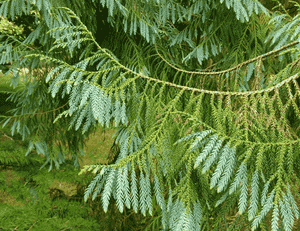
Chinese coffintree (Taiwania cryptomerioides)
Also known as: Taiwania, Taiwan cedar
The Chinese coffintree, a large conifer with needle-like leaves that mature into scales, is highly prized for its timber. This wood is extensively used in construction, furniture-making, boat building, and especially for crafting coffins, which is why the tree is commonly named the coffintree. In recent decades, the species has experienced significant decline, primarily due to illegal logging activities.
In This Article
Attributes of Chinese coffintree
Lifespan
Perennial
Plant Type
Tree
Plant Height
30 m to 55 m
Spread
9 m to 15 m
Leaf Color
Green Blue
Flower Size
2 mm to 3 mm
Flower Color
Yellow Brown
Images of Chinese coffintree
Quickly Identify Chinese coffintree
1
Dimorphic foliage: Juvenile leaves are prickly, blue-green needles, transitioning to scale-like mature leaves.
2
Small inconspicuous flowers: Light green to brown, clustered without distinct petals, about 0.2 inches (5 mm).
3
Cones with scales: Modest-sized cones, each holding 15 to 30 scales and up to 60 seeds.
4
Peeling bark: Thick, dark gray-brown bark that peels in strips, enhancing the tree's texture.
5
Towering height: Naturally reaches up to 180 feet (55 meters), cultivated specimens grow 30 to 40 feet (9 to 12 meters).
Scientific Classification of Chinese coffintree
Phylum
Vascular plants
Class
Conifers
Order
Pines and allies
Family
Cypress
Genus
Taiwania
Species
Chinese coffintree
Planting and Growing of Chinese coffintree
Care Difficulty
Hard
Watering Schedule
Every 4 days
Sunlight Requirements
Full sun
Sunshine Duration
4-6 hours
Ideal Temperature
50-68℉
Soil Type
Potting Mix, Peat Mix
Soil pH
5.5-7
Fertilizer Type
Balanced
Pruning Season
Spring, Summer
Pruning Area
Branches, Leaves
Pruning Frequency
2 times a year
Repotting Season
Spring
Pot Type
Plastic, Ceramic
 How to Water Chinese coffintree?
Taiwania cryptomerioides, commonly known as Taiwan Cedar, needs approximately 500 ml of water per watering. Ensure the soil feels moist but is not waterlogged. Watering should prevent the soil from drying out completely, but also avoid standing water.
What are the symptoms of an underwatered Chinese coffintree?
›
What should I do if my Chinese coffintree is not getting enough water?
›
What are the symptoms of an overwatered Chinese coffintree?
›
How to save an overwatered Chinese coffintree?
›
 What Are the Sunlight Requirements for Chinese coffintree?
The ideal light range for Taiwania cryptomerioides includes partial to full sun, thriving in environments offering 6-8 hours daily sunshine. Adequate lighting promotes lush foliage, hearty growth, and resilience against diseases and pest invasions.
More About Sunlight Requirements Techniques→
How much sunlight does Taiwania cryptomerioides need?
›
What are the best solutions for obtaining ideal sunlight?
›
What are the benefits when the plant receives ideal lighting?
›
 What Is the Ideal Temperature Range for Chinese coffintree?
Taiwania cryptomerioides thrives best within a temperature range of 50 to 68 degrees Fahrenheit. This range supports optimal metabolic activities, ensuring healthy growth and vigor. Maintaining this stable temperature helps prevent stress that could otherwise lead to poor development or increased susceptibility to pests and diseases.
 What Soil is Best for Chinese coffintree?
Benefits of well-draining soil are crucial for Taiwania cryptomerioides. It ensures that the roots have adequate access to water without becoming waterlogged, which can lead to root rot. This trait is especially important for young trees establishing their root systems. A soil rich in organic matter provides the necessary nutrients Taiwania cryptomerioides needs to thrive. This helps in robust growth and foliage health, giving the tree the resources to endure environmental stresses. Soil that can retain some moisture without becoming overly saturated supports steady root hydration. This balance is vital for Taiwania cryptomerioides, particularly in areas prone to dry spells.
 How to Fertilize Chinese coffintree?
When fertilizing Taiwania cryptomerioides, it's crucial to use moderate amounts to avoid overexposure. Use approximately 100 grams of granular fertilizer per tree and dissolve 10 milliliters of liquid fertilizer in one liter of water for application around the base of the plant.
 How to Prune Chinese coffintree?
To maintain the Taiwania cryptomerioides' majestic shape, prune to remove any dead or diseased branches in early spring. This promotes healthy growth and allows the tree to maintain its natural conical form. Make sure to use sharp tools to make clean cuts, which help the tree heal properly and reduce susceptibility to pests. Prune the tree lightly in early summer to encourage dense foliage. By cutting back some of the branch tips, you'll stimulate lateral growth, leading to a fuller appearance. Be mindful not to cut too much, as excessive pruning can lead to stress and reduce the tree's vigor.
More About Pruning Techniques→
 How to Propagate Chinese coffintree plant?
1
Gather seeds from mature cones. It's essential to choose healthy, mature cones to ensure the seeds inside are viable. After collecting, store seeds in a cool, dry place until ready to plant.
2
Use a well-draining potting mix enhanced with sand and peat moss. This mixture will provide the right balance of drainage and moisture retention for seedling development.
3
Select a healthy branch and cut a segment about 4 to 6 inches long. Dip the cut end in rooting hormone before planting in a peat-based potting mix. Keep the cutting humid and warm to facilitate root growth.
 How to Repot Chinese coffintree plant?
1
Taiwania cryptomerioides usually requires repotting when it shows signs of root bounding, such as roots emerging through drainage holes or stunted growth. Spring and early summer are ideal, as the plant is actively growing, allowing it to establish quickly in the new pot.
2
Choose a pot that is one size larger than the current one to allow room for growth. Ensure it has adequate drainage holes to prevent waterlogging. A heavier pot is beneficial, providing stability to the growing tree, especially in windy conditions.
3
Select a well-draining, sandy mix to mimic the plant’s natural habitat. This replicates the free-draining forest soils of Taiwan, ensuring the roots get enough oxygen and reducing the chances of root rot due to water retention.



