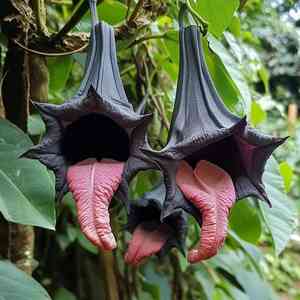
Black bat flower (Tacca chantrieri)
Also known as: Devil flower, Batflower
The evocatively named black bat flower (Tacca chantrieri) is notable for its unusual black flowers, which resemble the shape of a bat with wings outstretched. Native to Southeast Asia, the blossoms may appear at any time of year but are most commonly seen in autumn and winter.
In This Article
Attributes of Black bat flower
Lifespan
Perennial, Annual
Plant Type
Herb
Plant Height
61 cm to 1.2 m
Spread
90 cm to 1.2 m
Leaf Color
Green
Flower Size
15 cm to 30 cm
Flower Color
Brown Black White Green Purple
Images of Black bat flower

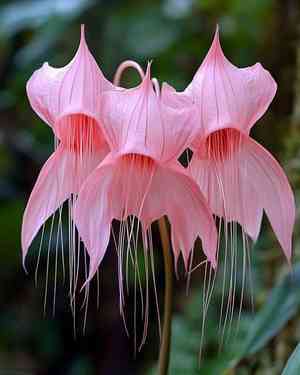
Quickly Identify Black bat flower
1
Tacca chantrieri can be identified by its large, dark green, glossy leaves and its distinctive black or dark purple flowers that have long bracts and whisker-like filaments.
Scientific Classification of Black bat flower
Phylum
Vascular plants
Class
Monocotyledons
Order
Dioscoreales
Family
Yam
Genus
Batflowers
Species
Black bat flower
Planting and Growing of Black bat flower
Care Difficulty
Hard
Watering Schedule
Every 2 days
Sunlight Requirements
Partial sun
Sunshine Duration
4-8 hours
Ideal Temperature
75-85℉
Soil Type
Potting Mix, Peat Mix
Soil pH
6.5-7.5
Fertilizer Type
Balanced
Pruning Season
Spring, Summer
Pruning Area
Branches, Leaves
Pruning Frequency
2 times a year
Repotting Season
Spring
Pot Type
Plastic, Ceramic
 How to Water Black bat flower?
The Bat Plant, Tacca chantrieri, needs a liberal soaking when watered. Ensure the water reaches the root zone without waterlogging the soil. A deep watering of around 250 ml each time is advisable, allowing excess water to drain away. This ensures that the plant's roots receive sufficient moisture without risking root rot.
What are the symptoms of an underwatered Black bat flower?
›
What should I do if my Black bat flower is not getting enough water?
›
What are the symptoms of an overwatered Black bat flower?
›
How to save an overwatered Black bat flower?
›
 What Are the Sunlight Requirements for Black bat flower?
Tacca chantrieri thrives in partial sun to full shade conditions, preferring 2 to 4 hours of indirect light daily. Ideal lighting supports lush foliage growth, keeps the plant lively, and promotes the emergence of its distinct, ornamental black flowers that captivate plant enthusiasts.
More About Sunlight Requirements Techniques→
What is the ideal lighting for Tacca chantrieri?
›
How can I provide optimal light for Tacca chantrieri?
›
What benefits does Tacca chantrieri gain from ideal lighting?
›
 What Is the Ideal Temperature Range for Black bat flower?
For optimal growth, Tacca chantrieri requires a temperature range between 75°F to 85°F. This warm and consistent environment mirrors their native tropical habitats, aiding in strong leaf development and healthy flowering.
 What Soil is Best for Black bat flower?
Tacca chantrieri prefers soil that retains moisture well but does not become waterlogged. This balance ensures the roots remain hydrated, promoting lush foliage and vibrant blooms. This plant thrives in nutrient-rich soil, which provides essential minerals for growth. An enriched soil profile encourages robust plant health and vibrant growth. While moisture is important, good drainage is crucial to prevent root rot. Soil that drains well helps maintain a healthy root system, supporting the overall vitality of the plant.
More About Soil→
 How to Fertilize Black bat flower?
For Tacca chantrieri, it's essential to use a balanced, water-soluble fertilizer with a 20-20-20 NPK ratio. When applying liquid fertilizer, dilute it to half the recommended strength. Use about 100-150 ml per plant, ensuring that the soil is moist before applying to avoid root burn.
More About Fertilizing Techniques→
 How to Prune Black bat flower?
Begin by identifying and removing any dead or yellowing leaves. These can be found at the base of the plant and should be cut close to the soil surface. Once the dramatic flowers have faded, cut back the flower stems. This not only tidies up the plant but also directs energy towards new growth.
More About Pruning Techniques→
 How to Propagate Black bat flower plant?
1
Collect ripe seeds from mature Tacca chantrieri flowers and clean them. If possible, soak the seeds overnight in lukewarm water to enhance germination rates by softening the seed coat.
2
Sow the seeds on the surface of the potting soil, lightly covering them with a thin layer of soil. Maintain even moisture but avoid waterlogging the seeds to prevent rot.
3
Carefully dig up the mature plant and gently separate the rhizomes. Each section should have healthy roots and at least one growing tip, which will support vigorous growth once planted.
 How to Repot Black bat flower plant?
1
Repotting Tacca chantrieri should be done when root-bound or when the plant shows signs of slow growth and yellowing leaves. Spring or summer is ideal as plants are actively growing, ensuring quicker recovery from repotting stress.
2
Select a pot slightly larger than the current one with drainage holes. This encourages healthy root growth and prevents waterlogging, which can lead to root rot. A ceramic or clay pot is ideal as it also helps in regulating moisture.
3
Use a well-draining, organic-rich mix. This type of soil provides necessary nutrients and prevents water accumulation. Adding perlite or coarse sand improves aeration, essential for Tacca chantrieri's delicate roots.
Toxicity
Ingestion
WARNING
The judgment on toxicity and danger is for reference only. We DO NOT GUARANTEE any accuracy of such judgment. Therefore, you SHALL NOT rely on such judgment. It is IMPORTANT TO SEEK PROFESSIONAL ADVICE in advance when necessary.
Learn More About Black bat flower Diseases
Anthracnose
Bacterial Leaf Spot
Bacterial Soft Rot
Bacterial Wilt
Chemical Injury
Damping-off
Downy Mildew
Drought Stress
Fusarium Wilt
Gray Mold
Leaf Spot
Mosaic
Nutrient Deficiency
Nutrient Toxicity
Powdery Mildew
Root Rot
Root-knot Nematode
Sooty Mold
Spider Mites
Temperature Stress
Thrips Damage
White Mold



