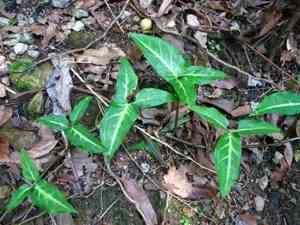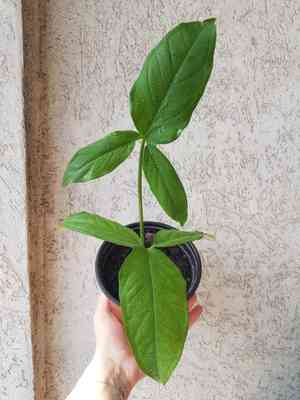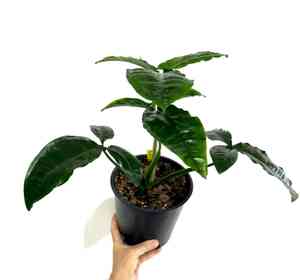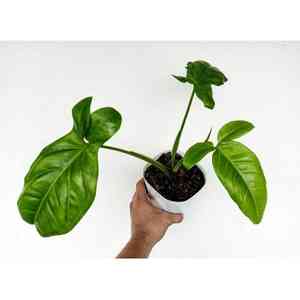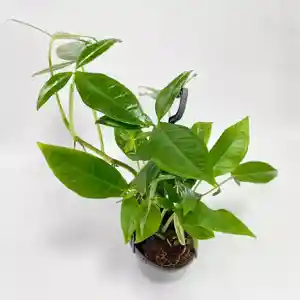
Arrowhead vine(Syngonium auritum)

Arrowhead vine (Syngonium auritum)

Also known as: Arrowhead Plant, Arrowhead Vine, Goosefoot Plant

Arrowhead vine (Syngonium auritum) is a tropical evergreen known for its distinctive arrowhead-shaped leaves. Here are the essentials for its care:

### Growing Conditions:
1. **Light**: Prefers bright, indirect sunlight. Avoid direct sunlight to prevent leaf burn. Tolerates lower light but may lose some variegation.
2. **Temperature**: Best grown in temperatures between 60-85°F (16-29°C). Protect from cold drafts.
3. **Humidity**: Thrives in high humidity but adapts to average indoor humidity levels.
4. **Soil**: Favors a well-draining potting mix, ideally slightly acidic. A mix of peat, perlite, and pine bark works well.

### Care Requirements:
1. **Watering**: Keep the soil consistently moist, letting the top inch dry out between waterings. Can tolerate brief dry spells.
2. **Fertilizing**: Use a balanced liquid fertilizer at half strength once a month during the growing season (spring and summer).
3. **Pruning**: Regularly prune to maintain shape and encourage bushiness. Remove dead or yellow leaves.
4. **Repotting**: Repot every 1-2 years in spring when the plant outgrows its container.
5. **Pests**: Monitor for common pests like spider mites, aphids, and mealybugs. Treat promptly if found.

### Additional Tips:
- **Support**: Provide a trellis or moss pole for climbing varieties.
- **Propagation**: Propagate easily through stem cuttings placed in water or soil.
- **Caution**: The sap can cause skin irritation, so handle with care.

By following these guidelines, your Arrowhead vine will flourish and bring lush greenery to your home.

Attributes of Arrowhead vine

Lifespan
Perennial
Plant Type
Vine
Plant Height
3.5 m to 4.5 m
Spread
1-2 feet
Leaf Color
Green, Variegated
Flower Size
4.5 cm to 8 cm
Flower Color
White

PlantJoy - Identify plants with a snap

Identify and diagnose plants, get toxicity alerts, and explore safety guides for all types of fungi.

Try for Free

Images of Arrowhead vine

Arrowhead vine(Syngonium auritum)

Quickly Identify Arrowhead vine

1
Identify Syngonium auritum by its arrowhead-shaped leaves, which can vary in color from green to variegated with white or yellow. The leaves often change shape as the plant matures. Look for a trailing or climbing growth habit.

Scientific Classification of Arrowhead vine

Phylum
Vascular plants
Class
Monocotyledons
Order
Alismatales
Family
Arum
Genus
Syngonium
Species
Arrowhead vine

Planting and Growing of Arrowhead vine

Care Difficulty
Easy
Watering Schedule
Every 3 days
Sunlight Requirements
Partial sun
Sunshine Duration
6-10 hours
Ideal Temperature
65-77℉
Soil Type
Potting Mix, Peat Mix
Soil pH
6.5-7.5
Fertilizer Type
Balanced
Pruning Season
Spring, Summer
Pruning Area
Branches, Leaves
Pruning Frequency
2 times a year
Repotting Season
Spring
Pot Type
Plastic, Ceramic

water icon How to Water Arrowhead vine?

Syngonium auritum thrives when the top inch of its soil is consistently kept moist, but not waterlogged. Watering with about 250 milliliters ensures that the soil remains adequately moist without turning soggy. Use this guideline to maintain a humid environment while preventing root rot. Always let the water drain thoroughly.
What are the symptoms of an underwatered Arrowhead vine?
What should I do if my Arrowhead vine is not getting enough water?
What are the symptoms of an overwatered Arrowhead vine?
How to save an overwatered Arrowhead vine?

sunlight icon What Are the Sunlight Requirements for Arrowhead vine?

Sunlight Requirements: Partial sun, Full shade
Duration of light: 3 to 6 hours
Syngonium auritum ideally flourishes under partial sun conditions, receiving filtered light throughout the day. Proper lighting helps maintain robust, healthy foliage and supports its native growing conditions.
What is the ideal lighting for Syngonium auritum?
How can I achieve ideal lighting indoors?
What benefits come from providing ideal lighting?
More About Sunlight Requirements Techniques

temperature icon What Is the Ideal Temperature Range for Arrowhead vine?

Ideal Temperature: 65 ~ 77℉
The ideal temperature range for Syngonium auritum is between 65°F and 77°F. This range perfectly supports the plant's growth by providing a warm and consistent environment similar to its native tropical habitat. Maintaining this temperature range ensures healthy foliage and reduces stress on the plant, promoting robust growth and lush leaves.

soil icon What Soil is Best for Arrowhead vine?

Soil type: Loam, Sandy loam
Soil PH: 6.5 ~ 7.5
Syngonium auritum thrives best in well-draining soil, ensuring that excess water can easily flow away. This characteristic helps prevent root rot, a common issue for this plant when the roots remain waterlogged. A well-draining substrate allows the roots to breathe, enhancing healthy growth. A nutrient-rich soil composition is essential for the lush foliage of Syngonium auritum. Incorporating organic matter or slow-release fertilizers into the loamy substrate provides sustainable nutrition. This supports vigorous growth and enhances the plant's natural vibrancy and resilience. Having a soil that retains moderate moisture is key for Syngonium auritum, balancing hydration without waterlogging. The soil should hold enough moisture to support the plant between watering intervals, promoting steady development and preventing dehydration stress on the foliage.

fertilize icon How to Fertilize Arrowhead vine?

Fertilizer type: Balanced
When fertilizing Syngonium auritum, use a balanced formula with an N-P-K ratio of 20-20-20, applying about half a teaspoon per gallon of water. Adjust based on plant size and growth conditions.

prune icon How to Prune Arrowhead vine?

Pruning Time: Spring, Summer, Autumn
To prune Syngonium auritum, start by sterilizing your pruning shears to prevent any infections. Identify the overgrown or unwanted stems and make clean cuts just above a node or leaf junction. This not only gives the plant renewed vigor but also encourages bushier growth. Remove any diseased or dead leaves immediately to redirect energy to healthier parts of the plant. If your Syngonium auritum has become too bushy or tangled, consider removing up to one-third of the plant. Focus on stems that disrupt its natural shape. This major pruning should be done during its active growing seasons of spring to autumn to allow for quick recovery and regrowth. More About Pruning Techniques

propagate icon How to Propagate Arrowhead vine plant?

Propagate Time: Spring, Early summer
1
Select healthy and strong stems from the Syngonium auritum plant, ideally those with several nodes. This ensures that the cuttings are robust and have a higher chance of rooting successfully. Make sure the selected stems are free from disease or pest infestation.
2
Using sterilized pruning shears, cut a stem just below a node, ensuring the cutting is roughly 4 to 6 inches long. Remove the leaves from the lower part of the cutting, leaving at least a few leaves on the top to sustain photosynthesis while roots develop.
3
Dip the cut end of the stem in rooting hormone and plant it in a pot filled with a well-draining potting mix. Ensure the bottom nodes are covered by the soil to encourage root formation. Water lightly to settle the soil around the cutting.
More About Propagating Techniques

repot icon How to Repot Arrowhead vine plant?

Repotting frequency: Every 2-3 years
1
Syngonium auritum shows signs it needs repotting when roots start protruding from the drainage holes or its growth seems stunted. Additionally, if the plant appears to dry out faster than usual, these are indications it's time to repot.
2
Select a pot that is one to two inches larger in diameter than the current one. This gives the roots space to grow while preventing excessive water accumulation. A pot with drainage holes is vital to ensure the excess water can escape, preventing root rot.
3
Choose a well-draining soil blend that consists of peat, pine bark, and perlite. This combination aids in preventing waterlogging while allowing air to circulate around the roots, which is crucial for healthy growth.

PlantJoy - Identify plants with a snap

Find the best spots for them to optimize their health, simply using your phone.

Try for Free

Toxicity of Arrowhead vine

Is Arrowhead vine toxic to humans?

The arrowhead vine presents a mild toxicity risk to humans when ingested. This entire plant contains calcium oxalate, which is the main contributor to its toxic characteristics. Upon ingestion of any part of the arrowhead vine, the calcium oxalate can trigger a variety of symptoms. Affected individuals might experience severe burning sensations and irritation in the mouth, lips, and tongue. This may also be accompanied by challenges in swallowing, excessive salivation, and vomiting. In some instances, the swelling of oral tissues can result in difficulty breathing. It is crucial for individuals, particularly those with children or pets, to recognize these dangers and take preventative measures against the accidental ingestion of arrowhead vine.

Is Arrowhead vine toxic to cat?

The Arrowhead vine possesses mild toxic properties for cats. Should a cat consume any portion of this plant, it may result in poisoning, as the plant encompasses toxic compounds throughout. Inadvertent ingestion commonly happens and may lead to symptoms such as oral irritation, trouble swallowing, and vomiting, attributed to the presence of calcium oxalate. It is crucial for cat guardians to remain alert and, in cases of ingestion, swiftly obtain medical attention at a veterinary clinic to manage any discomfort or health issues the cat might be facing.

Is Arrowhead vine toxic to dog?

Arrowhead vine is recognized for possessing a mild toxicity level for dogs. When dogs consume any part of the arrowhead vine, they may be at risk for poisoning, usually as a result of unintentional ingestion. The entire plant is toxic, meaning that any ingested portion can result in adverse health consequences. Poisoning symptoms in dogs may include oral irritation, excessive drooling, vomiting, and difficulty swallowing. These symptoms are attributed to the presence of calcium oxalate crystals within the plant's tissues, which can inflict mechanical injury and irritation to the mouth and gastrointestinal system upon ingestion. If a dog is suspected of having eaten arrowhead vine, it is crucial for pet owners to seek prompt veterinary assistance to ensure appropriate treatment and management of the poisoning.

Identify toxic plants for your safety

Learn which plants are harmful to you and your pets, and make informed choices for a safer home!

Try for Free
WARNING
The judgment on toxicity and danger is for reference only. We DO NOT GUARANTEE any accuracy of such judgment. Therefore, you SHALL NOT rely on such judgment. It is IMPORTANT TO SEEK PROFESSIONAL ADVICE in advance when necessary.
More About Toxic Techniques