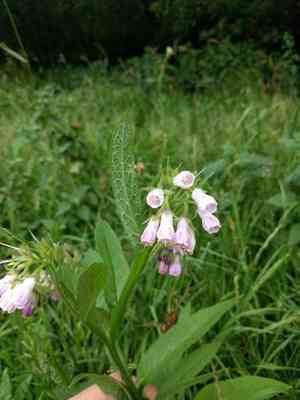
Common comfrey(Symphytum officinale)

Common comfrey (Symphytum officinale)

Also known as: Cultivated Comfrey , Comfrey, Blue-Flowered Common Comfrey, Bruisewort, Knitbone

Common comfrey (Symphytum officinale) is a perennial flowering plant indigenous to Europe. Predominantly seen in Ireland and Britain, it thrives in diverse conditions, ranging from wet soils to drought-prone areas. Notably, it can regenerate from just a small root fragment left in the ground. However, it is important to note that common comfrey is toxic if consumed.

Attributes of Common comfrey

Lifespan
Perennial
Plant Type
Herb
Plant Height
30 cm to 90 cm
Spread
25 cm to 75 cm
Leaf Color
Green
Flower Size
1.3 cm
Flower Color
Pink Purple White Cream Blue Violet

PlantJoy - Identify plants with a snap

Identify and diagnose plants, get toxicity alerts, and explore safety guides for all types of fungi.

Try for Free

Images of Common comfrey

Common comfrey(Symphytum officinale)

Quickly Identify Common comfrey

1
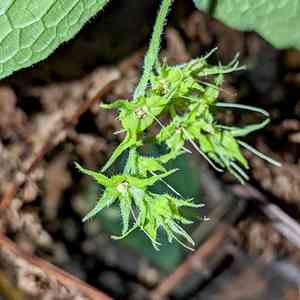
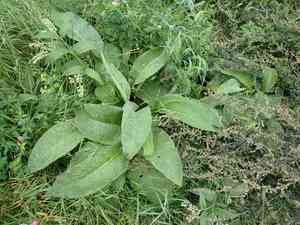
Large, hairy leaves up to 12 inches (30 cm) long.
2
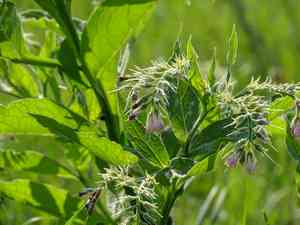
Bell-shaped, purple or pink flowers in clusters.
3
Distinctive fused petal design creating bell-like appearance.
4
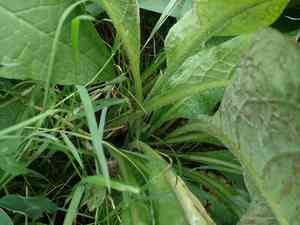
Winged stems with rough, hairy texture, up to 0.4 inches (10 mm) thick.
5
Deep green leaves with visible veins and clasping form.

Scientific Classification of Common comfrey

Phylum
Vascular plants
Class
Dicotyledons
Order
Boraginales
Family
Borage
Genus
Comfrey
Species
Common comfrey

Planting and Growing of Common comfrey

Care Difficulty
Easy
Watering Schedule
Every 4 days
Sunlight Requirements
Partial sun
Sunshine Duration
6-10 hours
Ideal Temperature
60-70℉
Soil Type
Potting Mix, Peat Mix
Soil pH
6.5-7.5
Fertilizer Type
Balanced
Pruning Season
Spring, Summer
Pruning Area
Branches, Leaves
Pruning Frequency
2 times a year
Repotting Season
Spring
Pot Type
Plastic, Ceramic

water icon How to Water Common comfrey?

Water Symphytum officinale thoroughly, allowing the soil to become evenly moist but not waterlogged. Aim for about 250 milliliters of water, ensuring excess water can drain away to prevent root rot.
What are the symptoms of an underwatered Common comfrey?
What should I do if my Common comfrey is not getting enough water?
What are the symptoms of an overwatered Common comfrey?
How to save an overwatered Common comfrey?
More About Watering Techniques

sunlight icon What Are the Sunlight Requirements for Common comfrey?

Sunlight Requirements: Partial sun, Full shade
Duration of light: 3 to 6 hours
Symphytum officinale ideally grows under partial sun to full shade conditions. This light range helps maintain its vibrant green leaves and supports flowering. Adequate light ensures vigorous plant growth and prevents etiolation.
What is the best location for Symphytum officinale?
How can I achieve ideal lighting conditions indoors?
What are the benefits of ideal lighting for this plant?
More About Sunlight Requirements Techniques

temperature icon What Is the Ideal Temperature Range for Common comfrey?

Ideal Temperature: 60 ~ 70℉
The ideal temperature range for growing Symphytum officinale, also known as comfrey, is between 60°F and 70°F. This temperature range ensures optimal growth and development. Within this range, the plant can efficiently undergo photosynthesis and maintain other physiological processes essential for growth. Proper air circulation and moderate temperatures help prevent fungal infections and other temperature-related stress.

soil icon What Soil is Best for Common comfrey?

Soil type: Loam, Sandy loam
Soil PH: 6.5 ~ 7.5
Comfrey thrives in nutrient-rich soils that ensure robust growth. It benefits from the natural accumulation of nutrients, which supports its rapid and sustained growth cycle. While retaining moisture is vital, excessive water can spell trouble. A well-drained soil ensures that water does not become stagnant, reducing the risk of root rot. Incorporating substantial organic matter into the soil can significantly enhance its fertility. This not only boosts nutrient availability but also supports beneficial soil microorganisms. More About Soil

fertilize icon How to Fertilize Common comfrey?

Fertilizer type: Balanced
For Symphytum officinale, use a balanced 10-10-10 liquid fertilizer diluted to half strength for liquid applications. For slow-release fertilizers, a small palm-sized amount around the base is sufficient, ensuring the plant has access to nutrients without overwhelming it. More About Fertilizing Techniques

prune icon How to Prune Common comfrey?

Pruning Time: Spring, Summer
Begin by sterilizing your pruning shears to avoid transmitting diseases. Selectively remove any dead or damaged stems to promote healthy growth. Trim the outer stems to shape the plant and control its size, cutting just above a leaf node for optimal results. To encourage new blooms and prolong the flowering season, regularly deadhead wilted flowers. Cut them off just below where the flower meets the stem, and be careful not to damage nearby buds, ensuring continuous and more plentiful flowering. More About Pruning Techniques

propagate icon How to Propagate Common comfrey plant?

Propagate Time: Spring, Early Summer, Late Summer
1
Begin by soaking comfrey seeds in warm water for 12 hours to soften the hard outer shell. Plant the seeds in a seed tray filled with moist, sterile potting mix and place under grow lights or a sunny window.
2
Take root cuttings from established plants in early spring or late summer. Cut sections of root about 2-3 inches long, place them horizontally in a pot, and cover with soil.
3
Dig up a mature comfrey plant and use a knife to divide the root ball into sections, ensuring each section has roots and shoots. Replant each section in a prepared site in the garden.
More About Propagating Techniques

repot icon How to Repot Common comfrey plant?

Repotting frequency: Every 2-3 years
1
Watch for signs that your Symphytum officinale is too large for its current pot, such as roots growing out of drainage holes or the soil drying out rapidly after watering. The best time for repotting is in the Spring or Summer when the plant is actively growing, ensuring it can recover swiftly from any root disturbances.
2
Opt for a pot that is just a couple of inches larger in diameter than the current one. This allows enough space for root growth without excessive soil that can hold too much moisture and lead to root rot. Make sure the pot has good drainage holes to prevent waterlogging.
3
Select a rich, well-drained soil mix that retains moisture but also allows excess water to escape. This balance is crucial, as it provides your Symphytum officinale with the nutrients it needs while preventing the roots from sitting in water, reducing the risk of fungal infections or root rot.

PlantJoy - Identify plants with a snap

Find the best spots for them to optimize their health, simply using your phone.

Try for Free

Toxicity of Common comfrey

Is Common comfrey toxic to humans?

Common comfrey poses risks to individuals in two distinct manners. Firstly, its foliage and stems are coated with bothersome hairs that can lead to minor skin rashes, functioning similarly to invisible or semi-visible splinters. Consuming the plant can also irritate the mouth in the same manner, potentially leading to swelling within the mouth and throat. Secondly, this plant contains a high concentration of toxic alkaloids that specifically target the liver. Initial symptoms may manifest as inflammation and pain, progressing to jaundice and ultimately resulting in partial or total liver failure. It is advisable to plant your comfrey in an area inaccessible to children.

Is Common comfrey toxic to cat?

Common comfrey poses a toxic threat to cats, and ingestion of any portion of the plant—such as leaves, roots, flowers, fruits, seeds, stems, bark, or sap—can lead to poisoning. Signs of distress may present as physical discomfort or illness, necessitating prompt medical intervention from a veterinary clinic. Given the potentially serious consequences of common comfrey poisoning, cat owners must vigilantly supervise their pets and restrict their access to this plant.

Is Common comfrey toxic to dog?

Common comfrey is recognized as a toxic plant species for dogs. Dogs can experience poisoning from common comfrey when they ingest any part of the plant, which includes leaves, roots, flowers, fruits, seeds, stems, bark, or sap/juice. Consuming these plant parts may result in a range of symptoms that signal poisoning. Dog owners should remain alert for indications such as gastrointestinal distress, lethargy, or more severe health issues, which may vary according to the quantity consumed and the size of the dog. If there is any suspicion that a dog has ingested common comfrey, it is essential to seek immediate veterinary assistance to ensure rapid treatment and reduce potential health hazards.

Identify toxic plants for your safety

Learn which plants are harmful to you and your pets, and make informed choices for a safer home!

Try for Free
WARNING
The judgment on toxicity and danger is for reference only. We DO NOT GUARANTEE any accuracy of such judgment. Therefore, you SHALL NOT rely on such judgment. It is IMPORTANT TO SEEK PROFESSIONAL ADVICE in advance when necessary.
More About Toxic Techniques