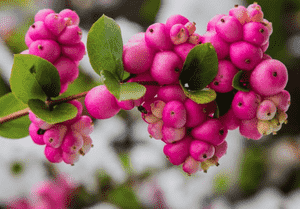
Coralberry(Symphoricarpos orbiculatus)

Coralberry (Symphoricarpos orbiculatus)

Also known as: Indian currant

Coralberry (Symphoricarpos orbiculatus) is a flowering shrub in the honeysuckle family. It is also known by other names such as buckbrush and Indian currant. This plant is native to regions including the eastern and central United States, Canada, and Mexico.

Attributes of Coralberry

Lifespan
Perennial
Plant Type
Shrub
Plant Height
90 cm to 1.8 m
Spread
1.2 m to 2.5 m
Leaf Color
Green Blue
Flower Size
2.5 cm
Flower Color
White Pink

PlantJoy - Identify plants with a snap

Identify and diagnose plants, get toxicity alerts, and explore safety guides for all types of fungi.

Try for Free

Images of Coralberry

Coralberry(Symphoricarpos orbiculatus)

Quickly Identify Coralberry

1
Bell-shaped flowers with tubular corolla and five distinct lobes.
2
Vibrantly hued, red-purple drupes in petite spherical clusters.
3
Oval leaves with rolled margins, whitish undersurface, and pinnate venation.
4
Brown to red-purple stem branchlets covered in short hairs.
5
Slender trunk with multi-stemmed clump, exfoliating dark brown bark on mature stems.

Scientific Classification of Coralberry

Phylum
Vascular plants
Class
Dicotyledons
Order
Dipsacales
Family
Honeysuckle
Genus
Snowberry
Species
Coralberry

Planting and Growing of Coralberry

Care Difficulty
Easy
Watering Schedule
Every 3 days
Sunlight Requirements
Full sun
Sunshine Duration
6-10 hours
Ideal Temperature
50-77℉
Soil Type
Potting Mix, Peat Mix
Soil pH
6.5-7.5
Fertilizer Type
Balanced
Pruning Season
Spring, Summer
Pruning Area
Branches, Leaves
Pruning Frequency
2 times a year
Repotting Season
Spring
Pot Type
Plastic, Terracotta

water icon How to Water Coralberry?

Symphoricarpos orbiculatus prefers consistent moisture, but the soil should not be waterlogged. Ensure that each watering saturates the root zone, providing about 500 ml of water, which may vary slightly depending on local humidity and soil drainage capacity.
What are the symptoms of an underwatered Coralberry?
What should I do if my Coralberry is not getting enough water?
What are the symptoms of an overwatered Coralberry?
How to save an overwatered Coralberry?
More About Watering Techniques

sunlight icon What Are the Sunlight Requirements for Coralberry?

Sunlight Requirements: Full sun, Partial sun
Duration of light: 4 to 6 hours
Symphoricarpos orbiculatus ideally flourishes under full to partial sunlight. Optimal exposure boosts its growth, enhances flowering and fruiting, and supports strong natural defenses against environmental stresses.
What is the ideal lighting condition?
What solutions help achieve these conditions?
What are the benefits of receiving ideal light?
More About Sunlight Requirements Techniques

temperature icon What Is the Ideal Temperature Range for Coralberry?

Ideal Temperature: 50 ~ 77℉
The ideal temperature range for Symphoricarpos orbiculatus is between 50°F to 77°F. This range ensures optimal photosynthesis and nutrient absorption, leading to healthy growth. Maintaining this temperature ensures the plants thrive without any stress from extreme temperatures.

soil icon What Soil is Best for Coralberry?

Soil type: Loam, Sandy loam
Soil PH: 6.5 ~ 7.5
Symphoricarpos orbiculatus thrives in well-drained soil, which prevents waterlogging that can lead to root rot. The plant prefers loose, crumbly soil that allows excess moisture to escape, ensuring healthy root development and vigorous growth. Although it can tolerate drought, Symphoricarpos orbiculatus benefits from soil that retains a moderate amount of moisture, especially during dry spells. This helps maintain a consistent growth rate and prevents wilting. This species grows best in nutrient-rich soil that provides essential minerals and nutrients. Incorporating organic matter like compost enriches the soil, supporting blooming and fruiting processes effectively. More About Soil

fertilize icon How to Fertilize Coralberry?

Fertilizer type: Balanced
Symphoricarpos orbiculatus, commonly known as coralberry, benefits from a balanced fertilization approach. Use a dilute liquid fertilizer at a strength of 1/4 to 1/2 of the recommended dose to avoid over-fertilization. For slow-release granular fertilizers, apply about 1/4 pound per plant per year. This amount provides essential nutrients without overwhelming the plant's root system. More About Fertilizing Techniques

prune icon How to Prune Coralberry?

Pruning Time: Spring, Summer
Begin with sterilized pruning shears to cut back any dead or diseased branches. Trim the oldest stems back to the base to promote new growth. Aim to create an open shape by removing stems that cross or rub against each other, which can cause damage or disease. Be sure to keep your cuts clean and at an angle to prevent water from sitting on the cut surface. The ideal time to prune Symphoricarpos orbiculatus is early spring when the plant is still dormant. This timing minimizes stress and encourages vigorous growth in the active growing season. Late summer can also be a suitable time if additional shaping is required. More About Pruning Techniques

propagate icon How to Propagate Coralberry plant?

Propagate Time: Early spring, Late spring, Early summer
1
Collect seeds from the mature berries of the plant. Clean them thoroughly to remove any fruit pulp, which can inhibit germination. Dry the seeds completely before storing or planting.
2
Select a healthy stem and cut a 4-6 inch long piece just below a node. Remove the leaves from the lower half and dip the cut end in rooting hormone to encourage root development.
3
Gently dig up the plant and shake off excess soil. Use a sharp knife or spade to separate the root ball into smaller sections, ensuring each section has roots attached. Replant immediately to prevent the roots from drying out.
More About Propagating Techniques

repot icon How to Repot Coralberry plant?

Repotting frequency: Every 2-3 years
1
Symphoricarpos orbiculatus should be repotted when it becomes root-bound or the soil no longer drains well. Signs include roots growing out of the drainage holes, slow growth, or the plant's frequent wilting despite regular watering. These indicate that the plant has outgrown its current container or the soil has depleted, making repotting necessary to ensure healthy growth.
2
Opt for a pot that is 1-2 inches larger in diameter than the current one. This allows the plant's roots to expand slightly without overwhelming them with space, which helps avoid waterlogging. A pot with drainage holes is essential to prevent root rot, as it allows excess water to escape, ensuring the roots don't sit in overly moist conditions.
3
Select a well-draining loamy soil mix that retains enough moisture while allowing excess to drain away. This type of soil provides aeration and necessary nutrients, preventing problems like root rot and promoting healthy plant development. A mix incorporating a bit of sand or perlite can enhance drainage efficiency further.

PlantJoy - Identify plants with a snap

Find the best spots for them to optimize their health, simply using your phone.

Try for Free

Toxicity of Coralberry

Is Coralberry toxic to cat?

Coralberry presents a slight toxicity hazard to cats, especially if the fruits are consumed in large amounts. Although the exact toxic compounds in coralberry have not been identified, cat proprietors should remain cautious, as eating the fruit may result in several symptoms of physical distress or sickness. If a cat consumes coralberry, it is crucial to obtain prompt veterinary assistance to safeguard the pet's health and well-being.

Is Coralberry toxic to dog?

Coralberry presents a mild toxicity hazard for dogs, especially if they consume large quantities of its fruits. Dogs that ingest excessive amounts of these berries may show symptoms characteristic of poisoning. Although the specific toxic agents are not detailed, pet owners should be cautious and keep their dogs away from locations where coralberry is present. If a dog eats the fruits and exhibits signs of distress, including gastrointestinal issues or unusual behavior, it is crucial to promptly obtain veterinary assistance to safeguard their health.

Identify toxic plants for your safety

Learn which plants are harmful to you and your pets, and make informed choices for a safer home!

Try for Free
WARNING
The judgment on toxicity and danger is for reference only. We DO NOT GUARANTEE any accuracy of such judgment. Therefore, you SHALL NOT rely on such judgment. It is IMPORTANT TO SEEK PROFESSIONAL ADVICE in advance when necessary.
More About Toxic Techniques

