Japanese Snowbell (Styrax japonicus)
Also known as: Japanese Snowbell, Egonoki
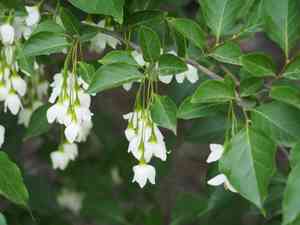
The Japanese Snowbell (Styrax japonicus) is a deciduous flowering tree indigenous to Japan, China, and Korea. This compact tree is prized for its ornamental beauty, featuring mildly fragrant white bell-shaped flowers that appear from spring through summer. In autumn, its foliage transitions to shades of yellow and orange before falling.
In This Article
Attributes of Japanese Snowbell
Lifespan
Perennial
Plant Type
Tree, Shrub
Plant Height
12 m
Spread
8 m
Leaf Color
Green Yellow Orange
Flower Size
2 cm to 3 cm
Flower Color
White
Images of Japanese Snowbell
Quickly Identify Japanese Snowbell
1
White campanulate flowers with yellow stamens less than 1 inch (2.5 cm) in size.
2
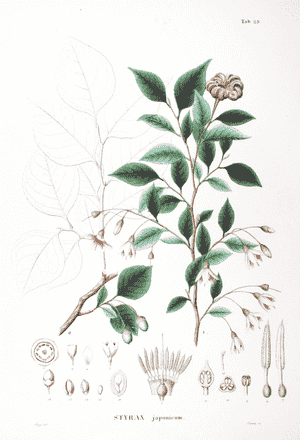
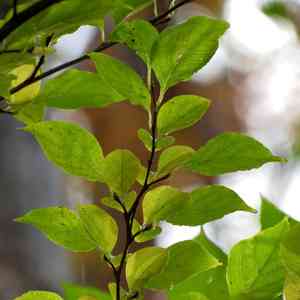
Broad-elliptic leaves measuring 1-3 inches (2.5-7.5 cm) with shiny dark green surfaces.
3
Distinctive zigzag-patterned light brown stems, 0.5 to 1 inch (1.2 to 2.5 cm) in diameter.
4
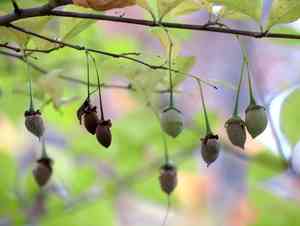
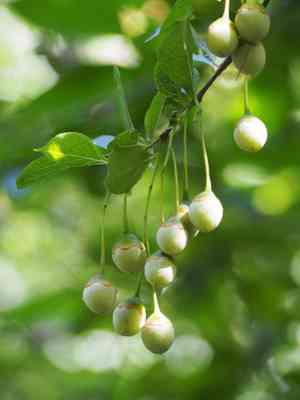
Ovoid gray-white dry drupe fruit with a single seed, hanging pendulously from branches.
5
Textured gray-brown bark with orange fissures forming intricate patterns on the trunk.
Scientific Classification of Japanese Snowbell
Phylum
Vascular plants
Class
Dicotyledons
Order
Heathers and allies
Family
Storax
Genus
storaxes
Species
Japanese Snowbell
Planting and Growing of Japanese Snowbell
Care Difficulty
Easy
Watering Schedule
Every 6 days
Sunlight Requirements
Full sun
Sunshine Duration
6-10 hours
Ideal Temperature
60-75℉
Soil Type
Potting Mix, Peat Mix
Soil pH
6.5-7.5
Fertilizer Type
Balanced
Pruning Season
Spring, Summer
Pruning Area
Branches, Leaves
Pruning Frequency
2 times a year
Repotting Season
Spring
Pot Type
Ceramic, Plastic
 How to Water Japanese Snowbell?
When watering Styrax japonicus, aim for 500 ml of water per session. This amount ensures the soil is adequately moist but not waterlogged, promoting healthy root growth. Make sure the top 2 inches of soil are dry before the next watering session.
What are the symptoms of an underwatered Japanese Snowbell?
›
What should I do if my Japanese Snowbell is not getting enough water?
›
What are the symptoms of an overwatered Japanese Snowbell?
›
How to save an overwatered Japanese Snowbell?
›
 What Are the Sunlight Requirements for Japanese Snowbell?
Partial sun to full sun is the ideal light range for Styrax japonicus, promoting dense foliage and abundant flowering. Indirect morning light offers optimal health benefits.
More About Sunlight Requirements Techniques→
What type of sunlight does Styrax japonicus prefer?
›
How can you achieve ideal lighting for Styrax japonicus?
›
What are the benefits of providing ideal lighting conditions?
›
 What Is the Ideal Temperature Range for Japanese Snowbell?
The ideal temperature range for growing Styrax japonicus is between 60°F and 75°F. This range ensures that the plant receives the optimum warmth required to thrive. Temperatures within this range facilitate proper photosynthesis and nutrient uptake, leading to lush foliage and healthy growth. Outside of this range, growth may be stunted or slowed, and there is an increased risk of temperature-related stress.
 What Soil is Best for Japanese Snowbell?
Styrax japonicus thrives best in loamy soil, which provides the ideal balance of moisture retention and drainage. This soil type supports healthy root development, allowing the plant to thrive with lush foliage and abundant blooms. Good drainage is crucial for Styrax japonicus as waterlogged conditions can lead to root rot. Ensuring the soil drains well keeps the roots oxygenated and healthy, enhancing the plant's overall vitality and blooming capacity. This plant prefers moderately acidic soil, with a pH range of 6.5 to 7.5. Such conditions aid in nutrient absorption, promoting robust growth and vibrant flower production.
More About Soil→
 How to Fertilize Japanese Snowbell?
Styrax japonicus, commonly known as Japanese snowbell, requires moderate fertilization. For liquid fertilizers, use a balanced 10-10-10 or 20-20-20 formula diluted to half strength. Apply approximately 1 liter (about 1 quart) per plant. Solid fertilizers, like slow-release pellets, should be used sparingly, around 2-3 tablespoons per square meter.
More About Fertilizing Techniques→
 How to Prune Japanese Snowbell?
Before you start pruning, take a moment to study the tree's natural shape. This helps you make cuts that maintain the tree's aesthetics and balance. Begin by removing any dead, damaged, or diseased branches to improve air circulation and light penetration, which are crucial for the tree's health. Identify areas where branches are overlapping or becoming too dense. Thinning these areas helps to improve light penetration and overall tree health. Trim back young shoots to shape the tree and control size. Try to preserve the natural shape, cutting back to buds that face away from the center of the tree to promote outward growth.
More About Pruning Techniques→
 How to Propagate Japanese Snowbell plant?
1
For seed propagation, collect mature Styrax japonicus seeds in the fall. Stratify the seeds by storing them in a refrigerator for a few months. Sow the seeds in spring in well-draining soil, ensuring they are not planted too deep.
2
Select healthy, semi-hardwood branches in early summer. Cut at an angle to increase surface area for rooting. Dip the cutting in rooting hormone, then place it in a moist, well-draining potting mix.
3
Layering can be effectively done in spring. Choose a low branch, create a slight wound on it, and cover it with soil. Ensure the buried part stays moist, and roots should develop in a few months.
 How to Repot Japanese Snowbell plant?
1
Watch for slow growth or root-bound conditions; these signal a need for repotting. This plant appreciates ample root space and thriving conditions, so opt for repotting in spring or summer to reduce stress.
2
Select a pot slightly larger than the current one with good drainage holes. This allows for root expansion without excess soil that might retain unwanted moisture, promoting healthy root aeration and growth.
3
Opt for a well-draining acidic potting mix rich in organic matter. This type of soil provides the necessary nutrients and structure for Styrax japonicus, ensuring adequate drainage and root health.



