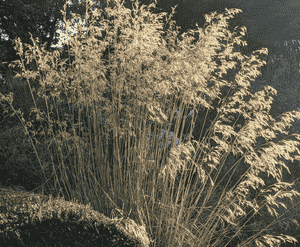
Golden oats (Stipa gigantea)
Also known as: Spanish oats, Giant needle grass
In late spring, Stipa gigantea produces flower spikes that begin as silver-lavender and gradually shift to a striking golden hue as summer progresses, eventually turning tan by winter. The plant features narrow, gray-green leaf blades and forms a bunchgrass foliage mass approximately 61 to 91 cm wide. It can be evergreen or semi-evergreen, depending on the climate.
In This Article
Attributes of Golden oats
Lifespan
Perennial
Plant Type
Grass
Plant Height
1.8 m to 2.5 m
Spread
60 cm to 90 cm
Leaf Color
Green
Flower Size
2.5 cm
Flower Color
Purple Gold Yellow
Images of Golden oats
Quickly Identify Golden oats
1
Densely mounding evergreen form
2
Arching gray-green leaves
3
Erect flower spikes up to 4 feet (1.2 meters) tall
4
Striking 10-inch (25 cm) long panicles
5
Initially purplish flowers transition to rich wheat color
Scientific Classification of Golden oats
Phylum
Vascular plants
Class
Monocotyledons
Order
Poales
Family
Grass
Genus
Needle grass
Species
Golden oats
Planting and Growing of Golden oats
Care Difficulty
Easy
Watering Schedule
Every 2 days
Sunlight Requirements
Full sun
Sunshine Duration
4-8 hours
Ideal Temperature
60-75℉
Soil Type
Potting Mix, Peat Mix
Soil pH
6.5-7.5
Fertilizer Type
Balanced
Pruning Season
Spring, Summer
Pruning Area
Branches, Leaves
Pruning Frequency
2 times a year
Repotting Season
Spring
Pot Type
Plastic, Terracotta
 How to Water Golden oats?
When watering Stipa gigantea, aim for about 500 ml each time. Ensure that the soil is consistently moist but not waterlogged. The key is to maintain a balance where the soil dries out a bit between waterings, simulating its native, well-drained environments.
What are the symptoms of an underwatered Golden oats?
›
What should I do if my Golden oats is not getting enough water?
›
What are the symptoms of an overwatered Golden oats?
›
How to save an overwatered Golden oats?
›
 What Are the Sunlight Requirements for Golden oats?
Stipa gigantea thrives best in full sun conditions, benefiting from about 6 to 8 hours of direct sunlight daily. This light range ensures the plant develops its full ornamental appeal, with dense, golden flower spikes and robust foliage.
More About Sunlight Requirements Techniques→
What is the best location for Stipa gigantea?
›
How can I ensure Stipa gigantea gets enough light indoors?
›
What benefits does ideal sunlight provide to Stipa gigantea?
›
 What Is the Ideal Temperature Range for Golden oats?
Stipa gigantea thrives best in moderate climates. The ideal temperature range for growth is between 60°F and 75°F. This range supports optimal photosynthesis and nutrient uptake for the plant, ensuring robust growth and healthy flowering. When temperatures stay within this range, Stipa gigantea exhibits vigorous growth and increased drought resistance.
 What Soil is Best for Golden oats?
Stipa gigantea flourishes in well-draining soil that prevents waterlogging, which can cause root rot. This characteristic allows the roots to breathe and absorb nutrients, ensuring steady growth and health. Slightly alkaline soils, with a pH around or above 7.0, nurture the ideal growth environment for Stipa gigantea. The availability of calcium and magnesium in such soils enhances nutrient absorption, promoting robust foliage. Though relatively undemanding, Stipa gigantea benefits from nutrient-rich conditions that support vigorous stem and foliage development. Well-composted soil can provide these essential nutrients and optimize plant vitality.
 How to Fertilize Golden oats?
For Stipa gigantea, moderate fertilization is key. Use a diluted liquid fertilizer, 1 part fertilizer to 2 parts water, during the growing season. For granular fertilizers, apply approximately 1 to 1.5 pounds per 100 square feet of soil area. Excessive fertilization can be detrimental, so it's important to follow these guidelines.
 How to Prune Golden oats?
Start by carefully removing old and dead foliage by cutting it down to the base of the plant. This not only tidies up its appearance but also increases air circulation, reducing the risk of pest infestations or fungal diseases. After the flowering period, cut back the flowering stems to prevent excessive seeding, which can lead to unwanted spreading. This will also help maintain the plant's shape and vigor for the next cycle. Once the dead foliage and blooms are removed, gently tidy the plant to encourage robust new growth. This practice ensures that energy is directed to the healthier, emerging shoots, resulting in a full, vibrant display.
More About Pruning Techniques→
 How to Propagate Golden oats plant?
1
Start by collecting seeds in late summer to autumn when they are ripe. Clean and dry the seeds adequately before storing them in a cool, dry place until spring.
2
In early spring, sow the seeds in seed trays with a light covering of soil. Ensure the trays are in a warm location with indirect sunlight to aid germination.
3
In early spring, dig up mature Stipa gigantea plants. Using a sharp spade, carefully divide the root clumps, ensuring each division has both roots and shoots for successful replanting.
 How to Repot Golden oats plant?
1
Stipa gigantea typically requires repotting when roots start emerging from the drainage holes or the plant experiences stunted growth. These are clear indicators that the plant has outgrown its current container and needs more space to thrive.
2
Choose a pot that is one size larger with adequate drainage holes. The new pot should provide ample room for root expansion and sufficient drainage to prevent waterlogged conditions, which can lead to root rot.
3
Opt for well-draining sandy loam to mimic the plant's natural habitat. This soil type ensures effective water drainage while retaining sufficient moisture, promoting healthy root development and vigorous growth.



