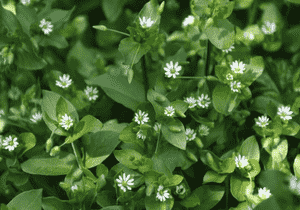
Common chickweed (Stellaria media)
Also known as: Winterweed, Craches
Chickweed, often deemed a pesky weed, is named because chickens are particularly fond of it. Despite its reputation, this plant is edible and can be used in much the same way as spinach, whether raw or cooked. While it contains saponins, which are mildly toxic, they pose no significant risk unless consumed in very large amounts.
In This Article
Attributes of Common chickweed
Lifespan
Annual, Biennial, Perennial
Plant Type
Herb
Plant Height
10 cm to 30 cm
Spread
10 cm to 30 cm
Leaf Color
Green
Flower Size
2 mm to 5 mm
Flower Color
White
Images of Common chickweed
Quickly Identify Common chickweed
1
Tiny white flowers with split petals resembling ten, held on hairy stems up to 16 inches (40 cm) high.
2
Oval-shaped green leaves with pointed tips, growing opposite each other on the stem, up to 1.2 inches (3 cm) long.
3
Sprawling, mat-forming growth habit creating dense patches on the ground.
4
White delicate flowers with five bifid petals, five lanceolate sepals, and hairy exteriors.
5
Cylindrical light brown seed capsule with 6 petite teeth, housing reddish-brown seeds, finely bumpy texture.
Scientific Classification of Common chickweed
Phylum
Vascular plants
Class
Dicotyledons
Order
Caryophyllales
Family
Pink
Genus
Chickweeds
Species
Common chickweed
Planting and Growing of Common chickweed
Care Difficulty
Easy
Watering Schedule
Every 3 days
Sunlight Requirements
Partial sun
Sunshine Duration
6-8 hours
Ideal Temperature
50-77℉
Soil Type
Potting Mix, Peat Mix
Soil pH
6.5-7.5
Fertilizer Type
Balanced
Pruning Season
Spring, Summer
Pruning Area
Branches, Leaves
Pruning Frequency
2 times a year
Repotting Season
Spring
Pot Type
Plastic, Ceramic
 How to Water Common chickweed?
When watering Stellaria media, aim for a volume that moistens the soil evenly but doesn't leave standing water. Approximately 250 milliliters per session is usually sufficient for a small to medium-sized pot, ensuring the soil is moist but not soggy. Too much water can lead to root rot, while too little will cause the plant to wilt.
What are the symptoms of an underwatered Common chickweed?
›
What should I do if my Common chickweed is not getting enough water?
›
What are the symptoms of an overwatered Common chickweed?
›
How to save an overwatered Common chickweed?
›
 What Are the Sunlight Requirements for Common chickweed?
Stellaria media ideally grows in partial sun to full shade environments. The right light conditions are crucial for its photosynthesis, supporting lush growth and robust plant health.
What is the ideal light condition for Stellaria media?
›
How can I ensure Stellaria media gets its ideal amount of light?
›
What are the benefits of providing Stellaria media with its ideal light?
›
 What Is the Ideal Temperature Range for Common chickweed?
The ideal temperature range for the growth of Stellaria media is between 50°F and 77°F. Within this range, the plant experiences optimal growth and nutrient absorption, ensuring healthy development. It is essential to maintain these conditions to encourage robust foliar expansion and flowering.
 What Soil is Best for Common chickweed?
Stellaria media thrives in well-drained soil, which prevents waterlogging and root rot. This requirement ensures that the plant's roots receive adequate oxygen, promoting healthy growth and resilience. The soil should contain a moderate level of nutrients, which supports the plant's lush growth and flowering. Stellaria media benefits from balanced nutrient availability, enhancing its vigor and ability to spread. While avoiding waterlogged conditions, the soil should retain some moisture to support continuous growth. Adequate moisture is essential for maintaining the plant's lush leaves and overall vitality.
 How to Fertilize Common chickweed?
Stellaria media, commonly known as chickweed, requires a delicate balance when it comes to fertilization. Given its natural habitat and growth patterns, a modest amount of fertilizer suffices. Use a diluted liquid fertilizer at half the recommended strength to avoid over-fertilization, which can damage the plant. This ensures the plant receives necessary nutrients without overwhelming its system.
 How to Prune Common chickweed?
Start by locating the growth nodes on the Stellaria media. These are small joints or leaf intersections where new growth appears. Cutting back to just above a growth node will encourage new and bushier growth, thereby enhancing the plant's overall appearance. Focus first on removing any wilted or dead stems and leaves. This not only improves aesthetics but also promotes airflow and sunlight penetration. Trim long, lanky stems back to maintain desired shape and density, ensuring the plant remains lush and vigorous.
 How to Propagate Common chickweed plant?
1
Use a well-draining soil mix to fill seed trays or pots. Stellaria media prefers a light, sandy loam. Ensure the soil is moist but not waterlogged before sowing seeds or planting cuttings.
2
Scatter Stellaria media seeds thinly over the surface of the soil. Lightly cover the seeds with a thin layer of soil, as they require light to germinate. Maintain soil moisture by misting regularly.
3
Select healthy stems of Stellaria media and use clean pruning shears to cut 4- to 6-inch sections. Remove any lower leaves and dip the cut end in rooting hormone to enhance root development.
 How to Repot Common chickweed plant?
1
Stellaria media, or common chickweed, signals it's time for repotting when the roots begin to circle the pot edges. If you notice slowed growth or if water drains too quickly, these are also key indicators. Ideally, repot during spring or autumn for optimum root establishment in mild conditions.
2
Select a pot that is 2-3 inches larger in diameter than the current one. Clay pots work well due to their porosity, allowing moisture to evaporate and prevent over-watering. Ensure it has ample drainage holes to avert waterlogging which could lead to root rot.
3
Opt for a light, well-draining soil mix to support Stellaria media's growth. A blend of potting soil, perlite, and a bit of sand can provide an ideal environment. This mixture aids in avoiding compaction, encourages healthy root development, and prevents water from pooling at the root zone.



