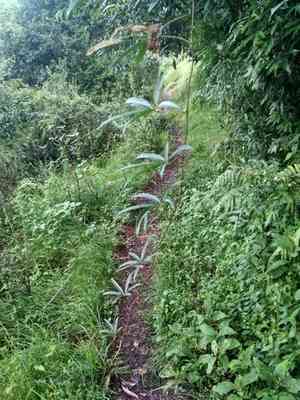
Stauntonia latifolia (Stauntonia latifolia)
Also known as: Broad-leaved Sausage Vine
Akebia is a genus of flowering plants within the Lardizabalaceae family.
In This Article
Attributes of Stauntonia latifolia
Lifespan
Perennial
Plant Height
5-10 meters
Spread
Variable, based on support structure
Leaf Color
Dark green
Flower Size
1-2 cm
Flower Color
White to pale purple
Images of Stauntonia latifolia
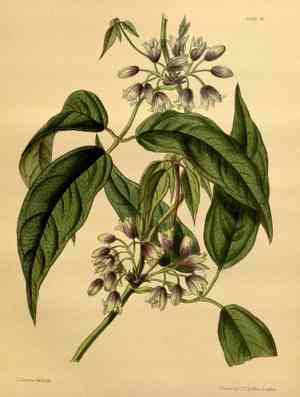
Quickly Identify Stauntonia latifolia
1
Identify Stauntonia latifolia by its broad, oval-shaped leaves with a leathery texture and glossy surface. The plant produces small, fragrant flowers followed by elongated, sausage-shaped fruits.
Scientific Classification of Stauntonia latifolia
Phylum
Vascular plants
Class
Dicotyledons
Order
Buttercups, poppies and allies
Family
Lardizabala
Genus
Stauntonia
Species
Stauntonia latifolia
Planting and Growing of Stauntonia latifolia
Care Difficulty
Moderate
Watering Schedule
Every 4 days
Sunlight Requirements
Partial sun
Sunshine Duration
6-12 hours
Ideal Temperature
59-77℉
Soil Type
Potting Mix, Peat Mix
Soil pH
6.5-7.5
Fertilizer Type
Balanced
Pruning Season
Spring, Summer
Pruning Area
Branches, Leaves
Pruning Frequency
Once a year
Repotting Season
Spring
Pot Type
Plastic, Terracotta
 How to Water Stauntonia latifolia?
Stauntonia latifolia requires a balanced approach to watering. Ensure that the soil is moistened evenly but not soaked, aiming for about 500 ml each time. This quantity provides enough moisture to penetrate through the soil layers without leaving it waterlogged, allowing the roots to breathe.
What are the symptoms of an underwatered Stauntonia latifolia?
›
What should I do if my Stauntonia latifolia is not getting enough water?
›
What are the symptoms of an overwatered Stauntonia latifolia?
›
How to save an overwatered Stauntonia latifolia?
›
 What Are the Sunlight Requirements for Stauntonia latifolia?
The plant ideally requires partial sun exposure, meaning moderate sun for a part of the day. This ensures balanced growth, reduces stress, and enhances flowering.
Ideal Sunlight Requirement
›
Solutions to Achieve Ideal Lighting
›
Benefits of Ideal Lighting
›
 What Is the Ideal Temperature Range for Stauntonia latifolia?
Stauntonia latifolia thrives best in temperatures that range between 59°F to 77°F. This range supports its growth and ensures optimal conditions for photosynthesis and other biological processes. Maintaining a stable environment within this temperature bracket helps the plant to produce vibrant foliage and healthy blooms.
 What Soil is Best for Stauntonia latifolia?
Stauntonia latifolia thrives best in well-drained soil, as it helps prevent root rot by allowing excess water to escape. This ensures the roots have adequate oxygen, promoting healthy growth and reducing the risk of fungal diseases. This plant prefers soil with good moisture retention to keep the roots hydrated during dry spells. Such soil allows for consistent and steady moisture supply, which is vital for the plant's robust growth and fruit production. Soil enriched with organic matter is ideal, as it provides essential nutrients, improves soil structure, and enhances microbial activity. This supports the plant's nutritional needs and contributes to vigorous growth.
 How to Fertilize Stauntonia latifolia?
For optimal growth of Stauntonia latifolia, apply liquid fertilizer at a concentration that provides balanced nutrients, typically guided by the product instructions. For granulated or slow-release fertilizers, follow label directions carefully, spreading approximately 100-150 grams per square meter around the plant for rooting and development.
 How to Prune Stauntonia latifolia?
Begin by examining the plant in early spring. Remove any dead or diseased stems, cutting them back to healthy growth. Trim back any overly long or unruly shoots to maintain a tidy appearance. Aim to allow light into the center of the plant by removing excess growth that might be shading inner leaves. Always make clean cuts just above a healthy bud or side branch. To maintain its desired form, regularly check for and prune off any wayward branches that disrupt the symmetrical shape. If necessary, tie new growth to supports or trellises to guide the direction of the plant’s spread. This is especially useful for climbing forms.
More About Pruning Techniques→
 How to Propagate Stauntonia latifolia plant?
1
Carefully collect ripe seeds from Stauntonia latifolia fruits. Rinse and dry them properly before planting to ensure high germination rates.
2
Choose healthy, disease-free stems and cut sections at a length of around 15 cm. Dip the cut end in rooting hormone to enhance rooting.
3
Select a low-hanging branch, partially bury it in the soil while still attached to the parent plant, and secure it with pegs. This will encourage root development.
 How to Repot Stauntonia latifolia plant?
1
Stauntonia latifolia should be repotted when you notice roots protruding from the drainage holes or if the plant appears to be stunted in growth. Additionally, spring or autumn are the best seasons for repotting, as the plant can recover quickly during these periods with ample time to establish itself before extreme summer heat or winter cold.
2
Select a pot that is slightly larger than the current one, allowing for gradual growth while preventing excess soil from retaining water and causing root rot. A pot with ample drainage holes is crucial to ensure proper water flow and prevent waterlogging. This helps mimic the plant’s natural habitat and promotes healthy root development.
3
A well-draining potting mix is essential for Stauntonia latifolia, as it provides the necessary aeration and prevents water from accumulating around the roots. The ideal soil should contain a mix of organic material, perlite, and compost to provide nourishment and proper structure. This mix ensures that the roots receive enough oxygen and nutrients while staying dry enough to prevent fungal issues.
Learn More About Stauntonia latifolia Diseases
Anthracnose
Bacterial Leaf Spot
Crown Gall
Cyst Nematode
Damping-off
Downy Mildew
Drought Stress
Fusarium Wilt
Gray Mold
Leaf Curl
Leaf Spot
Mosaic
Nutrient Deficiency
Nutrient Toxicity
Powdery Mildew
Root Rot
Root-knot Nematode
Rusts
Sooty Mold
Spider Mites
Temperature Stress
Thrips Damage
White Mold



