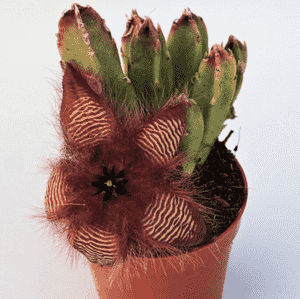
Stapelia hirsuta (Stapelia hirsuta)
Also known as: Starfish Flower, Carrion Star
Belonging to the Apocynaceae family, Stapelia hirsuta is a species of flowering plant which is frequently referred to as either the starfish flower or the carrion plant.
In This Article
Attributes of Stapelia hirsuta
Lifespan
Stapelia hirsuta is a perennial plant
Plant Height
10-15 cm
Spread
Varies
Leaf Color
Green
Flower Size
4-10 cm
Flower Color
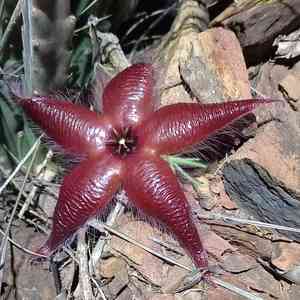
Brown with white mottling
Images of Stapelia hirsuta
Quickly Identify Stapelia hirsuta
1
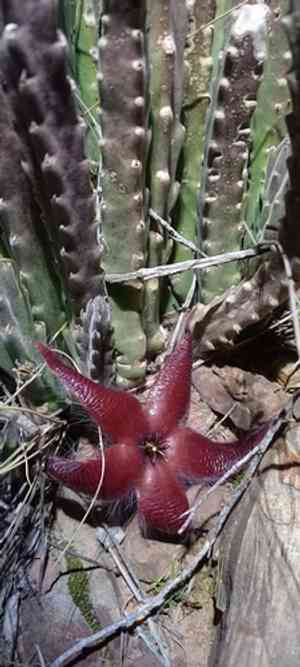
Stapelia hirsuta can be identified by its fleshy, toothed stems that are covered in tiny hairs. The flowers are large, star-shaped, and often exhibit a reddish-brown coloration with a velvety texture.
Scientific Classification of Stapelia hirsuta
Phylum
Magnoliophyta
Class
Magnoliopsida
Order
Gentianales
Family
Apocynaceae
Genus
Stapelia
Species
S. hirsuta
Planting and Growing of Stapelia hirsuta
Care Difficulty
Moderate
Watering Schedule
Every 2 days
Sunlight Requirements
Partial sun
Sunshine Duration
6-10 hours
Ideal Temperature
65-75℉
Soil Type
Potting Mix, Peat Mix
Soil pH
6.5-7.5
Fertilizer Type
Balanced
Pruning Season
Spring, Summer
Pruning Area
Branches, Leaves
Pruning Frequency
2 times a year
Repotting Season
Spring
Pot Type
Plastic, Ceramic
 How to Water Stapelia hirsuta?
Stapelia hirsuta is native to arid regions, so it doesn’t need much water. Ensure the soil is dry before each watering and aim to soak the soil thoroughly rather than frequently. Water deeply until a little drains out of the bottom, but make sure no water stagnates.
What are the symptoms of an underwatered Stapelia hirsuta?
›
What should I do if my Stapelia hirsuta is not getting enough water?
›
What are the symptoms of an overwatered Stapelia hirsuta?
›
How to save an overwatered Stapelia hirsuta?
›
 What Are the Sunlight Requirements for Stapelia hirsuta?
Stapelia hirsuta benefits from partial sun, with an optimal light range that includes morning direct sunlight and afternoon shade. This light exposure enhances photosynthesis, stimulates flowering, and supports robust growth, mimicking its natural surroundings.
Optimal Sunlight Exposure
›
Avoiding Light Stress
›
Adaptation to Indoor Lighting
›
 What Is the Ideal Temperature Range for Stapelia hirsuta?
The ideal temperature for Stapelia hirsuta lies between 65°F and 75°F. This range allows the plant to photosynthesize efficiently, ensuring robust growth and vibrant blooms. Maintaining consistent temperatures within this range mimics the natural habitat of this succulent, promoting healthy metabolism and cellular processes necessary for its development.
 What Soil is Best for Stapelia hirsuta?
Stapelia hirsuta thrives in well-draining soil which prevents waterlogging and root rot, thus ensuring the plant’s roots receive adequate oxygen. A nutrient-rich soil ensures that Stapelia hirsuta receives essential nutrients for growing strong stems and vibrant flowers, improving overall health and vigor. Soil with a loose, aerated texture allows roots to expand and strengthens their structure, contributing to the plant's robust growth and stability.
 How to Fertilize Stapelia hirsuta?
Stapelia hirsuta is a succulent that doesn't require much fertilization. Using a balanced 20-20-20 NPK fertilizer at half its recommended strength works well. During active growth periods, apply about 1/4 teaspoon per gallon of water for liquid fertilizers. It ensures the plant gets necessary nutrients without risking salt buildup.
 How to Prune Stapelia hirsuta?
Use clean, sharp scissors or pruning shears to prune your Stapelia hirsuta. Sterilize the tools with rubbing alcohol to prevent the spread of disease between plants. Look for stems that are discolored, wilted, or have become soft and mushy. These indicate potential rot. Trim these sections back to healthy tissue to maintain the plant's vitality. Cut back any overgrown or leggy branches to maintain the plant's compact shape. This also helps in controlling the size if the plant is kept in containers.
 How to Propagate Stapelia hirsuta plant?
1
Begin by selecting a healthy parent plant to ensure strong cuttings. Ensure the plant is well-watered a few days prior, as hydrated plants produce better cuttings.
2
Using sterilized sharp tools, take cuttings from the parent plant. Aim for a clean slice and let the cuttings air dry, forming calluses to prevent rot once planted.
3
Once calloused, plant the cuttings into a prepared potting mix. Allow cuttings to settle for a few days before watering slightly to promote rooting.
 How to Repot Stapelia hirsuta plant?
1
Repot Stapelia hirsuta when growth outpaces its pot, roots protrude, or after flowering. Spring or early summer before active growth are ideal times. This minimizes disruption and lets the plant adjust during its vibrant growing season.
2
Select a pot slightly larger than the existing one with drainage holes. A pot too large can retain excess moisture, leading to root rot. Terra cotta pots are excellent as they allow soil to dry out more quickly, beneficial for succulents.
3
Opt for a well-draining cactus or succulent mix, combining potting soil with sand or perlite. This ensures rapid drainage, mimicking Stapelia's natural harsh, rocky habitat and preventing root rot by avoiding water retention.
Toxicity
N/A
WARNING
The judgment on toxicity and danger is for reference only. We DO NOT GUARANTEE any accuracy of such judgment. Therefore, you SHALL NOT rely on such judgment. It is IMPORTANT TO SEEK PROFESSIONAL ADVICE in advance when necessary.

