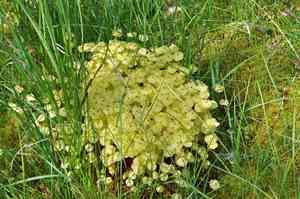
Yellow moosedung moss (Splachnum luteum)
Also known as: Yellow Bird's-nest Moss
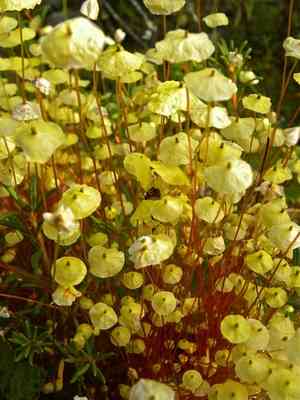
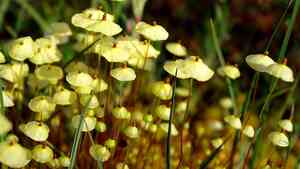
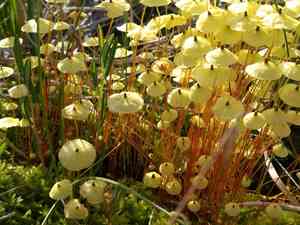
The yellow moosedung moss (Splachnum luteum) is distinguished by its bright yellow, spherical spore capsules, which sit atop tall, slender stalks. These eye-catching capsules play a crucial role in spore dispersal, utilizing their prominent appearance to attract insects. This unique adaptation ensures that spores are effectively transported to new, suitable environments.
In This Article
Attributes of Yellow moosedung moss
Lifespan
Perennial
Plant Height
Up to 10 cm
Spread
Not applicable (moss)
Leaf Color
Green
Flower Size
Not applicable (moss)
Flower Color
Not applicable (moss)
Images of Yellow moosedung moss
Quickly Identify Yellow moosedung moss
1
Splachnum luteum can be identified by its yellow to greenish-yellow capsules which are borne on long, slender stalks. The capsules have a characteristic conical shape and are covered with a membranous calyptra.
Scientific Classification of Yellow moosedung moss
Phylum
Bryophyta
Class
Bryopsida
Order
Funariales
Family
Splachnaceae
Genus
Splachnum
Planting and Growing of Yellow moosedung moss
Care Difficulty
Hard
Watering Schedule
Every 2 days
Sunlight Requirements
Partial sun
Sunshine Duration
6-10 hours
Ideal Temperature
50-68℉
Soil Type
Potting Mix, Peat Mix
Soil pH
4.5-5.5
Fertilizer Type
Balanced
Pruning Season
Spring, Summer
Pruning Area
Branches, Leaves
Pruning Frequency
2 times a year
Repotting Season
Spring
Pot Type
Plastic, Ceramic
 How to Water Yellow moosedung moss?
Splachnum luteum thrives on moist conditions but does not require heavy watering. It's critical to provide about 50 ml of water per session. The goal is to mimic the light moisture it might experience in a natural habitat like marshlands. Too much water can lead to decay; ensure the soil surface is just moist, not soaked.
What are the symptoms of an underwatered Yellow moosedung moss?
›
What should I do if my Yellow moosedung moss is not getting enough water?
›
What are the symptoms of an overwatered Yellow moosedung moss?
›
How to save an overwatered Yellow moosedung moss?
›
 What Are the Sunlight Requirements for Yellow moosedung moss?
Splachnum luteum ideally needs partial to full sun, receiving regular hours of sunlight to maintain healthy growth. Adequate light exposure fosters more robust cell structure and increased metabolic rates, contributing to its overall vigor and beauty.
How much light does Splachnum luteum need?
›
Can Splachnum luteum tolerate shade?
›
What's the solution for insufficient light?
›
 What Is the Ideal Temperature Range for Yellow moosedung moss?
The ideal temperature range for Splachnum luteum lies between 50°F and 68°F. This range accommodates the plants' natural habitat, which tends to be cool and moist. Maintaining temperatures within this range ensures optimal growth and physiological processes. Temperatures outside of this range may affect the plant's metabolic functions.
 What Soil is Best for Yellow moosedung moss?
Splachnum luteum thrives in soils that retain moisture without becoming waterlogged. Peat soils are particularly adept at maintaining the perfect balance of moisture, which is crucial for the physiological processes of this plant. The plant requires organically rich soil to provide essential nutrients. Peat soil systems naturally contain decomposed organic matter, enriching the soil with the necessary macronutrients needed for robust growth. Ensuring the soil is well-aerated allows Splachnum luteum's roots to access oxygen efficiently. Peat and acidic soils typically have a loose structure that supports root penetration and aeration.
 How to Fertilize Yellow moosedung moss?
Splachnum luteum is a bryophyte with modest nutritional requirements. It's crucial not to overwhelm it with excessive nutrients. When using liquid fertilizer, dilute it to half strength, typically around 1/4 teaspoon per gallon of water. For solid slow-release fertilizers, use approximately 1 gram per pot annually, ensuring balanced nutrient supply without overtaxing the plants.
 How to Prune Yellow moosedung moss?
Look for discolored or weakened stems and leaves that seem to hinder the overall vitality of the Splachnum luteum. Prioritize these for removal during your pruning session. Make clean cuts at a 45-degree angle to ensure that water doesn’t collect on the cut surface, which reduces the risk of rot. Be gentle as the plant tissue is delicate.
More About Pruning Techniques→
 How to Propagate Yellow moosedung moss plant?
1
Start by mixing a well-draining soil medium such as a blend of peat moss and sand. Fill sterilized trays with this mixture, ensuring it is evenly distributed and lightly packed.
2
Distribute the seeds evenly over the soil surface. Cover lightly with a thin layer of soil or vermiculite to protect the seeds. Ensure seeds are not buried too deep to allow proper germination.
3
Using a fine spray watering can, mist the surface to keep it moist. Place a plastic cover over the trays to maintain humidity, but remove it once seedlings emerge to prevent mold growth.
 How to Repot Yellow moosedung moss plant?
1
Repotting Splachnum luteum should be done when you notice that its growth has slowed down. If the plant begins to outgrow its container or shows a notable decline in vigour, it's time for a larger pot. Pay attention to roots poking out of the drainage holes or visible root-bound conditions as well.
2
Select a pot that offers good drainage but is only slightly larger than the current one. This will help prevent waterlogging, which moss species like Splachnum luteum are susceptible to. Opting for clay or terra cotta pots is excellent due to their porous nature, allowing for better air exchange and moisture regulation.
3
For Splachnum luteum, an acidic and moisture-retentive soil is ideal. Such soil mimics its natural habitat, ensuring proper water retention without suffocating the roots. A mix that includes peat moss and perlite can provide the balance of aeration and moisture necessary for healthy growth.


