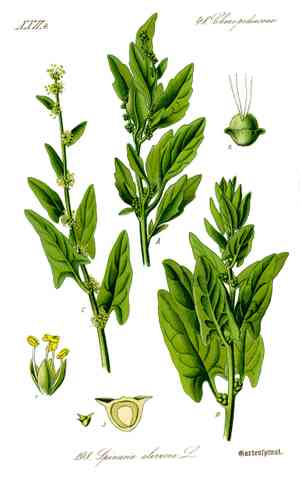
Spinaches (Spinacia) (Spinacia)
Also known as: Spinach
Spinach (Spinacia oleracea) is a widely consumed leafy green vegetable belonging to the amaranth family. Among the few species in the Spinacia genus, spinach is the most well-known and extensively cultivated. China dominates global spinach production, contributing roughly 90% to the world's supply.
In This Article
Attributes of Spinaches (Spinacia)
Lifespan
Annual
Plant Height
15-30 cm (6-12 inches)
Spread
Generally does not form a crown; rosettes can be about 20-30 cm (8-12 inches) across
Leaf Color
Dark Green
Flower Size
Spinach flowers are tiny, usually between 0.2-0.4 cm (0.08-0.16 inches)
Flower Color
Green
Images of Spinaches (Spinacia)
Quickly Identify Spinaches (Spinacia)
1
Spinach is easily identified by its tender, dark green leaves that can be either crinkled or smooth. The leaves are arranged in a rosette form at the base and may grow on an upright stem.
Scientific Classification of Spinaches (Spinacia)
Phylum
Tracheophyta
Class
Magnoliopsida
Order
Caryophyllales
Family
Amaranthaceae
Genus
Spinacia
Planting and Growing of Spinaches (Spinacia)
Care Difficulty
Easy
Watering Schedule
Every 8 days
Sunlight Requirements
Partial sun
Sunshine Duration
6-10 hours
Ideal Temperature
60-65℉
Soil Type
Potting Mix, Peat Mix
Soil pH
6.5-7.5
Fertilizer Type
Balanced
Pruning Season
Spring, Summer
Pruning Area
Branches, Leaves
Pruning Frequency
2 times a year
Repotting Season
Spring
Pot Type
Plastic, Ceramic
 How to Water Spinaches (Spinacia)?
Spinacia, commonly known as spinach, thrives with consistent moisture levels. When watering, aim for about 250ml per session. Your goal is to keep the soil evenly moist but not waterlogged. It's crucial to ensure adequate drainage to prevent root rot, which can occur if the soil remains too soggy.
What are the symptoms of an underwatered Spinaches (Spinacia)?
›
What should I do if my Spinaches (Spinacia) is not getting enough water?
›
What are the symptoms of an overwatered Spinaches (Spinacia)?
›
How to save an overwatered Spinaches (Spinacia)?
›
 What Are the Sunlight Requirements for Spinaches (Spinacia)?
Spinacia ideally grows in partial to full sun, ensuring optimal photosynthesis and growth. Adequate sunlight improves taste and texture, producing vibrant and healthy leaves.
Optimal Sun Exposure
›
Shade Tolerance
›
Problem Solving
›
 What Is the Ideal Temperature Range for Spinaches (Spinacia)?
Spinach thrives best in cooler conditions. The ideal temperature range for growing spinach is between 60°F to 65°F. Within this range, the plant can carry out photosynthesis efficiently while maintaining healthy cellular processes. This moderate temperature balance helps prevent premature bolting, allowing the leaves to develop to full maturity.
 What Soil is Best for Spinaches (Spinacia)?
Spinacia, commonly known as spinach, thrives in well-drained soil. Proper drainage prevents root rot by avoiding waterlogging, allowing the roots to access necessary oxygen and nutrients efficiently. Spinach demands nutrient-rich soil to grow vigorously. Enriching the soil with organic matter, such as compost, boosts the plant's growth and improves leaf yield, ensuring rich, healthy foliage. Consistent soil moisture is vital for spinach, which is why loamy soils are ideal. They retain adequate moisture without becoming waterlogged, supporting sustained growth and preventing leaf wilting.
 How to Fertilize Spinaches (Spinacia)?
Spinacia, commonly known as spinach, thrives with balanced nutritional support. An ideal amount of fertilizer ensures a robust growth cycle. For liquid fertilizers, apply a diluted solution with a nitrogen, phosphorus, and potassium ratio of 10-10-10. Use one tablespoon per gallon of water. For granular fertilizers, gently incorporate 2 pounds per 100 square feet into the soil. Follow package instructions to prevent over-fertilization.
 How to Prune Spinaches (Spinacia)?
Look for any yellowing or dead leaves. These leaves are no longer contributing to the plant's growth and are prime candidates for removal. Gently cut them off at the base without damaging the healthy part of the plant. For a fuller plant, pinch back the top growth. This encourages the plant to branch out rather than grow tall and spindly. You can do this every few weeks during the growing season to encourage lateral branch formation. Pruning doesn't just serve a health function; it also keeps the plant looking tidy and attractive. Regularly remove any untidy or overlapping leaves to maintain the plant’s desired shape.
 How to Propagate Spinaches (Spinacia) plant?
1
Spinach thrives in well-draining soil that is rich in organic matter. Before sowing, prepare the soil by loosening it with a fork or tiller and mixing in compost or aged manure. This ensures that the seedlings have access to essential nutrients and can establish strong roots.
2
Sow spinach seeds about 1/2 inch deep and 2 inches apart. Cover lightly with soil and water gently to ensure the seeds make good contact with the soil. It's important not to plant the seeds too deep, as this could hinder germination.
3
Water the seeds carefully to avoid displacing them. Ensure the soil remains consistently moist but not waterlogged. Too much moisture can lead to fungal issues, so it's important to have good drainage in your seedling trays or planting area.
 How to Repot Spinaches (Spinacia) plant?
1
Vibrant Spinacia, commonly known as spinach, requires repotting when you notice roots emerging from drainage holes or the soil starts to dry quickly. Catch these signs promptly, as they indicate the plant's yearning for fresh space and nutrients!
2
Select a pot that offers adequate drainage and is slightly larger than the current one. Opt for a clay pot, which allows moisture regulation, keeping Spinacia well-hydrated yet not waterlogged, preventing root rot and promoting healthier growth.
3
For Spinacia, seek a well-draining potting mix with a balanced pH. This ensures adequate aeration and nutrient absorption, fostering robust root development. Avoid compacted soils, as they can trap excess moisture and lead to decay.
Learn More About Spinaches (Spinacia) Diseases
Anthracnose
Bacterial Leaf Spot
Bacterial Soft Rot
Bacterial Wilt
Chemical Injury
Clubroot
Cyst Nematode
Damping-off
Downy Mildew
Drought Stress
Fusarium Wilt
Gray Mold
Leaf Spot
Mosaic
Nutrient Deficiency
Nutrient Toxicity
Powdery Mildew
Root Rot
Root-knot Nematode
Rusts
Spider Mites
Temperature Stress
Thrips Damage
White Mold

