
Creeping-oxeyes (Sphagneticola) (Sphagneticola)
Also known as: Creeping-oxeye, Wedelia
Creeping-oxeyes, a small genus with several species of flowering plants, flourish in warm climates. They are prevalent in regions across the Americas, Asia, and numerous tropical islands. Their bright yellow flowers make them easily identifiable.
In This Article
Attributes of Creeping-oxeyes (Sphagneticola)
Lifespan
Perennial
Plant Height
0.1 to 0.3 meters (4 to 12 inches)
Spread
Spreads up to 60 cm (2 feet) wide
Leaf Color
Green
Flower Size
2 to 3 cm (0.8 to 1.2 inches)
Flower Color
Bright yellow
Images of Creeping-oxeyes (Sphagneticola)
Quickly Identify Creeping-oxeyes (Sphagneticola)
1
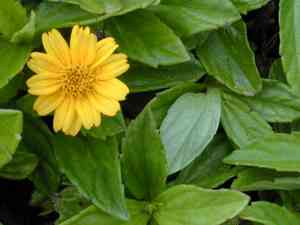
Sphagneticola can be identified by its bright yellow, daisy-like flowers which have a diameter of about 1-2 inches. The leaves are typically green, slightly serrated, and arranged opposite each other along the stem. The plant exhibits a trailing growth habit, often forming dense mats.
Scientific Classification of Creeping-oxeyes (Sphagneticola)
Phylum
Magnoliophyta
Class
Magnoliopsida
Order
Asterales
Family
Asteraceae
Genus
Sphagneticola
Planting and Growing of Creeping-oxeyes (Sphagneticola)
Care Difficulty
Easy
Watering Schedule
Every 8 days
Sunlight Requirements
Full sun
Sunshine Duration
4-6 hours
Ideal Temperature
64-77℉
Soil Type
Potting Mix, Peat Mix
Soil pH
5.5-7.5
Fertilizer Type
Balanced
Pruning Season
Spring, Summer
Pruning Area
Branches, Leaves
Pruning Frequency
2 times a year
Repotting Season
Spring
Pot Type
Plastic, Ceramic
 How to Water Creeping-oxeyes (Sphagneticola)?
For Sphagneticola, it is essential to ensure that the topsoil becomes slightly dry between waterings. This plant requires about 200 ml per watering session, allowing the water to flow evenly through the soil without oversaturating it. Proper drainage is crucial as it prevents the roots from sitting in water, which could lead to root rot.
What are the symptoms of an underwatered Creeping-oxeyes (Sphagneticola)?
›
What should I do if my Creeping-oxeyes (Sphagneticola) is not getting enough water?
›
What are the symptoms of an overwatered Creeping-oxeyes (Sphagneticola)?
›
How to save an overwatered Creeping-oxeyes (Sphagneticola)?
›
 What Are the Sunlight Requirements for Creeping-oxeyes (Sphagneticola)?
Ideally, Sphagneticola thrives with partial to full sun exposure. Providing a consistent balance of light helps the plant maintain its lush greenery and bloom cycles, contributing to a vibrant garden display.
Optimal Sunlight Exposure
›
Balanced Light Environment
›
Enhancing Growth through Optimal Light
›
 What Is the Ideal Temperature Range for Creeping-oxeyes (Sphagneticola)?
The ideal temperature range for Sphagneticola is between 64°F to 77°F. This range provides optimal conditions for photosynthesis and nutrient absorption, ensuring healthy foliage and robust growth. These temperatures mimic the plant's native tropical environment, thereby promoting consistent flowering and vibrant leaf pigmentation.
 What Soil is Best for Creeping-oxeyes (Sphagneticola)?
Sphagneticola thrives in well-draining soil, which ensures that excess water does not accumulate around its roots. This soil characteristic prevents root rot and other water-related diseases, keeping the plant healthy and vibrant. Environments with good drainage help maintain optimal moisture levels. Having a nutrient-rich soil composition is crucial for Sphagneticola. Nutrients provide the plant with essential elements needed for growth, aiding in the development of lush foliage. Enriching your soil with organic matter like compost enhances its fertility and supports robust growth. While Sphagneticola prefers well-draining soil, moderate moisture retention is also beneficial. This helps ensure the plant has access to water without suffering from saturation. Such conditions are achieved through a balance of soil components, promoting continuous growth.
 How to Fertilize Creeping-oxeyes (Sphagneticola)?
For Sphagneticola, it is essential to apply fertilizers sparingly. Use a half-strength balanced water-soluble fertilizer and apply about 5-10 ml per liter of water monthly during the growing season. This allows the plant to receive the nutrients it needs without overwhelming its system.
 How to Prune Creeping-oxeyes (Sphagneticola)?
For optimal growth, make cuts just above a leaf node or a bud. This helps the plant direct energy towards producing new shoots, resulting in a bushier appearance. Focus on creating a balanced and attractive shape by trimming excess growth from one side, then the other. Stand back periodically to assess symmetry and make adjustments as needed. Regularly inspect the plant for dead or diseased material. Removing these can improve airflow and reduce the risk of pests, further invigorating healthy growth.
 How to Propagate Creeping-oxeyes (Sphagneticola) plant?
1
Choose healthy, mature stems from the parent plant, ideally with several nodes and free from disease or pests. This ensures that the cutting has a higher chance of successful propagation.
2
Use well-draining potting soil mixed with perlite or sand. This mixture provides adequate aeration and drainage, which is crucial for the cuttings to develop a strong root system.
3
Insert the cuttings into the prepared soil, ensuring they are deep enough to stand upright. Firm the soil around the cutting to maintain stability, and water thoroughly to settle the soil.
 How to Repot Creeping-oxeyes (Sphagneticola) plant?
1
Look for signs such as roots emerging from the drainage holes or the plant becoming root-bound, indicated by slow growth and wilting leaves. These are strong signals that it's time to refresh your Sphagneticola's environment with a new pot.
2
Select a pot that is 2 inches larger in diameter than the current one. This provides ample room for growth, preventing root congestion and ensuring the plant receives adequate moisture and nutrients.
3
Opt for a well-draining potting mix containing peat, perlite, and sand. This combination minimizes water retention, which is vital to avoid root rot and supports healthy root development.
Learn More About Creeping-oxeyes (Sphagneticola) Diseases
Anthracnose
Bacterial Leaf Spot
Bacterial Soft Rot
Bacterial Wilt
Black Spot
Chemical Injury
Crown Gall
Damping-off
Downy Mildew
Drought Stress
Fusarium Wilt
Gray Mold
Leaf Spot
Mosaic
Nutrient Deficiency
Nutrient Toxicity
Powdery Mildew
Root Rot
Root-knot Nematode
Rusts
Sooty Mold
Spider Mites
Temperature Stress
Thrips Damage
White Mold

