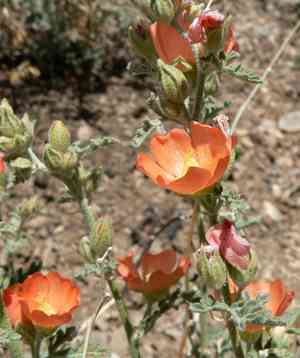
Gooseberryleaf globemallow (Sphaeralcea grossulariifolia)
Also known as: Gooseberryleaf Globemallow, Currant-leaf Globemallow
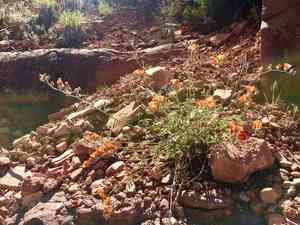
Sphaeralcea grossulariifolia, or gooseberryleaf globemallow, is a perennial herbaceous plant with erect stems that can reach up to 1 meter in height, originating from a woody base. Its extensive root system features a robust taproot accompanied by a network of spreading fibrous roots. The plant's foliage is typically woolly and varies in color from gray-green to purplish, though some hairless variants exist.
In This Article
Attributes of Gooseberryleaf globemallow
Lifespan
Perennial
Plant Type
Herb, Shrub
Plant Height
91 cm to 1.8 m
Spread
2 to 3 feet
Leaf Color
Green
Flower Size
1 to 2 inches
Flower Color
Orange
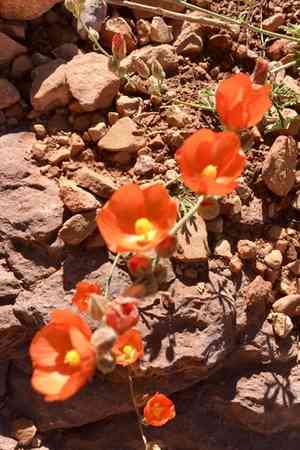
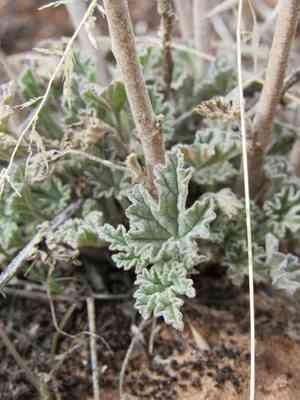
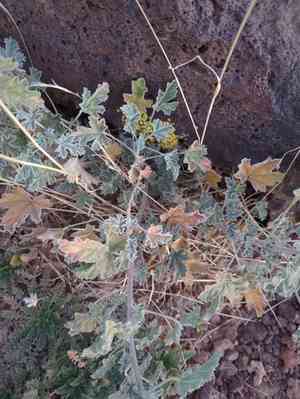
Images of Gooseberryleaf globemallow
Quickly Identify Gooseberryleaf globemallow
1
To identify Sphaeralcea grossulariifolia, look for a low-growing shrub with lobed leaves similar to those of a currant or gooseberry. The plant produces bright orange flowers in clusters and often thrives in arid or semi-arid regions.
Scientific Classification of Gooseberryleaf globemallow
Phylum
Vascular plants
Class
Dicotyledons
Order
Malvales
Family
Mallow
Genus
Globe mallows
Species
Gooseberryleaf globemallow
Planting and Growing of Gooseberryleaf globemallow
Care Difficulty
Easy
Watering Schedule
Every 2 days
Sunlight Requirements
Full sun
Sunshine Duration
6-10 hours
Ideal Temperature
60-75℉
Soil Type
Potting Mix, Peat Mix
Soil pH
6.5-7.5
Fertilizer Type
Balanced
Pruning Season
Spring, Summer
Pruning Area
Branches, Leaves
Pruning Frequency
2 times a year
Repotting Season
Spring
Pot Type
Plastic, Ceramic
 How to Water Gooseberryleaf globemallow?
Sphaeralcea grossulariifolia thrives when watered deeply but infrequently. The aim is to saturate the root zone, ensuring that the soil is moisturized to a depth of about 6 to 8 inches. This depth encourages deeper root growth, aiding the plant in drought tolerance and overall health.
What are the symptoms of an underwatered Gooseberryleaf globemallow?
›
What should I do if my Gooseberryleaf globemallow is not getting enough water?
›
What are the symptoms of an overwatered Gooseberryleaf globemallow?
›
How to save an overwatered Gooseberryleaf globemallow?
›
 What Are the Sunlight Requirements for Gooseberryleaf globemallow?
This plant flourishes in full to partial sun exposure. Access to consistent sunny conditions can enhance its vibrant flowering and overall vigor by enabling efficient photosynthesis processes.
What light conditions does Sphaeralcea grossulariifolia prefer?
›
Where can I position this plant for optimum sunlight?
›
How do I ensure my plant receives adequate sunlight?
›
 What Is the Ideal Temperature Range for Gooseberryleaf globemallow?
For optimal growth, Sphaeralcea grossulariifolia prefers temperatures ranging from 60°F to 75°F. This range provides sufficient warmth without overheating, supporting vigorous growth and healthy blooming. Maintaining this temperature range ensures the plant can maximize its photosynthesis efficiency, which in turn promotes robust vegetative development and flowering.
 What Soil is Best for Gooseberryleaf globemallow?
Sphaeralcea grossulariifolia thrives in well-drained soil that prevents waterlogging. This ensures the plant’s roots receive the right oxygen balance, promoting healthy growth and vibrant blooms. This plant prefers soil with moderate fertility levels. Overly rich soil might lead to excessive foliage at the cost of flowers, so a balanced nutrient presence supports optimal flowering. Given its native habitat, Sphaeralcea grossulariifolia is well-suited to drier soils. This tolerance means it can survive with less water, making it ideal for xeriscaping.
 How to Fertilize Gooseberryleaf globemallow?
For Sphaeralcea grossulariifolia, using about 10 grams of slow-release fertilizer per plant annually is optimal. If you are opting for liquid fertilizer, a concentration that delivers approximately 50-100 ppm of nitrogen every watering session is beneficial without overwhelming the plant.
 How to Prune Gooseberryleaf globemallow?
Begin by identifying and removing any dead or diseased wood. These can be recognized by their brown, brittle texture. Prune these parts back to healthy, green tissue to prevent disease spread. Trim back long or leggy stems to maintain a compact, bushy shape. Make cuts at a 45-degree angle just above a node to encourage new growth in that direction. Avoid over-pruning, which can stress the plant.
More About Pruning Techniques→
 How to Propagate Gooseberryleaf globemallow plant?
1
Begin by soaking the seeds in water for 24 hours prior to planting. This helps to soften the seed coat, encouraging quicker germination. Choose a well-draining potting mix to sow the seeds lightly on the surface.
2
Select healthy stems from the parent plant, and cut them at a 45-degree angle. Ensure each cutting is no longer than 6 inches. Remove leaves from the lower half of the cutting to prevent rotting.
3
Dig up the mature plant carefully and divide the root ball into smaller sections using a clean knife. Ensure each division has roots and shoots, which improves their chance of successful establishment.
 How to Repot Gooseberryleaf globemallow plant?
1
Sphaeralcea grossulariifolia shows it's ready for repotting when roots begin to escape the drainage holes or if growth seems stunted. Also, when the plant outgrows its container or soil becomes compacted, signals a perfect time for fresh surroundings!
2
Select a container with sufficient drainage holes that is slightly larger than the current one. Ensure it provides enough space for root development while avoiding oversized pots, which can lead to oversaturated soil.
3
Pick a well-draining sandy soil mix; this mimics the plant's natural habitat, promoting healthy root development and preventing waterlogging. A blend of soil, sand, and perlite offers optimal conditions for growth.
Learn More About Gooseberryleaf globemallow Diseases
Anthracnose
Bacterial Leaf Spot
Bacterial Wilt
Black Spot
Chemical Injury
Crown Gall
Damping-off
Downy Mildew
Drought Stress
Fusarium Wilt
Gray Mold
Leaf Curl
Leaf Spot
Mosaic
Nutrient Deficiency
Nutrient Toxicity
Powdery Mildew
Root Rot
Root-knot Nematode
Rusts
Sooty Mold
Spider Mites
Temperature Stress
Thrips Damage
White Mold



