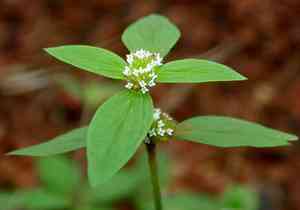
Purple leaved button weed (Spermacoce ocymoides)
Also known as: Buttonweed, False Buttonweed
The purple-leaved button weed (Diodia virginiana) is a low-growing, herbaceous plant commonly found in tropical and subtropical areas. It thrives in warm climates with plenty of sunlight. The plant features small, white or pinkish flowers and leaves that often have a purplish tint, arranged oppositely on the stem. Notably resilient, this species adapts well to a range of environments, from lawns and gardens to roadsides and forest edges.
In This Article
Attributes of Purple leaved button weed
Lifespan
Perennial
Plant Type
Herb
Plant Height
25 cm to 60 cm
Spread
Spreading habit up to 50 cm
Leaf Color
Green Blue
Flower Size
3 mm
Flower Color
White
Images of Purple leaved button weed
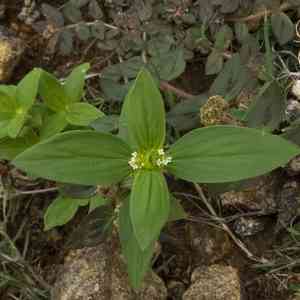
Quickly Identify Purple leaved button weed
1
Look for its small, opposite leaves and clusters of tiny white flowers. It often grows in disturbed areas and can form dense mats.
Scientific Classification of Purple leaved button weed
Phylum
Vascular plants
Class
Dicotyledons
Order
Gentianales
Family
Madder
Genus
Spermacoce
Species
Purple leaved button weed
Planting and Growing of Purple leaved button weed
Care Difficulty
Easy
Watering Schedule
Every 6 days
Sunlight Requirements
Full sun
Sunshine Duration
4-8 hours
Ideal Temperature
68-77℉
Soil Type
Potting Mix, Peat Mix
Soil pH
6.5-7.5
Fertilizer Type
Balanced
Pruning Season
Spring, Summer
Pruning Area
Branches, Leaves
Pruning Frequency
2 times a year
Repotting Season
Spring
Pot Type
Plastic, Ceramic
 How to Water Purple leaved button weed?
Spermacoce ocymoides prefers moderate watering. Ensuring the soil remains consistently moist without being waterlogged is key. Each watering should adequately saturate the top layer of the soil while still allowing for sufficient drainage. Aim for about 200 ml of water per session, ensuring that excess water drains away to prevent waterlogging.
What are the symptoms of an underwatered Purple leaved button weed?
›
What should I do if my Purple leaved button weed is not getting enough water?
›
What are the symptoms of an overwatered Purple leaved button weed?
›
How to save an overwatered Purple leaved button weed?
›
 What Are the Sunlight Requirements for Purple leaved button weed?
Partial to full sun ensures optimal growth, maximizing Spermacoce ocymoides' vigor and vitality. The ideal lighting promotes thicker foliage and more robust flowering, fulfilling its photosynthetic needs.
More About Sunlight Requirements Techniques→
How much sunlight does it need daily?
›
What are the strategies to provide ideal light?
›
What are the benefits of ideal lighting?
›
 What Is the Ideal Temperature Range for Purple leaved button weed?
The ideal temperature range for Spermacoce ocymoides to thrive is between 68°F and 77°F. Within this range, the plant can maintain optimal photosynthesis and metabolic activities, ensuring robust growth and development.
 What Soil is Best for Purple leaved button weed?
Spermacoce ocymoides thrives in well-drained soil as it prevents waterlogging, promoting healthier root growth and reducing the risk of root rot, which is crucial for robust plant development. This plant prefers moderately fertile soil that supplies essential nutrients without overwhelming the plant, supporting steady growth and vibrant foliage. While this plant enjoys well-drained soil, moderate moisture retention is beneficial, allowing for sustained hydration without drowning the roots.
 How to Fertilize Purple leaved button weed?
For Spermacoce ocymoides, using a balanced 10-10-10 liquid fertilizer, apply at the rate of 1 tablespoon per gallon of water. This concentration ensures the plant receives the right mix of essential nutrients without the risk of over-fertilization, which can be detrimental. Adjust this formulation based on specific soil and growth conditions.
 How to Prune Purple leaved button weed?
Begin by pruning back the youngest shoots. This encourages bushier growth and helps the plant maintain a compact shape. Use sharp, clean shears to make precise cuts just above a leaf node, ensuring you do not damage the plant. Inspect the plant for any dead or damaged stems or leaves. Carefully cut these away to prevent the spread of disease, ensuring that you dispose of the removed material to keep your plant's environment healthy. Consider the desired shape of your Spermacoce ocymoides. Trim the plant in a manner that enhances its natural form, whether you want a rounded shape or something more structured. This not only improves appearance but also maximizes light exposure.
More About Pruning Techniques→
 How to Propagate Purple leaved button weed plant?
1
Collect seeds from mature plants at the end of their flowering season. Clean the seeds gently and ensure they are dry before planting. This ensures better germination and reduces the chance of rot.
2
Select healthy stems from the parent plant and cut them with clean pruning shears. Each cutting should be around 4-6 inches long. Remove any lower leaves to prevent rotting and place the cuttings in water or directly into moist soil.
3
Carefully dig up the mature plant and gently separate the root clumps by hand or with a sterilized knife. Ensure each division has ample roots for better survival. Replant the divisions into fresh soil immediately.
 How to Repot Purple leaved button weed plant?
1
Repot Spermacoce ocymoides when you notice slowed growth, roots emerging from drainage holes, or the soil drying out much faster than usual. These are signals that the plant has outgrown its current pot and needs more space to thrive efficiently.
2
Select a pot that is one size larger than the current one, with good drainage holes. A slightly bigger pot prevents overwatering issues and allows roots to expand, supporting healthier growth. Clay pots are ideal as they promote evaporation of excess moisture.
3
Opt for a well-draining soil mix, such as a combination of peat moss, vermiculite, and perlite. This mix provides adequate aeration and prevents waterlogging, which can lead to root rot. It ensures that roots receive sufficient oxygen and nutrients for robust growth.
Learn More About Purple leaved button weed Diseases
Anthracnose
Bacterial Leaf Spot
Bacterial Soft Rot
Bacterial Wilt
Chemical Injury
Cyst Nematode
Damping-off
Downy Mildew
Drought Stress
Fusarium Wilt
Gray Mold
Leaf Spot
Mosaic
Nutrient Deficiency
Nutrient Toxicity
Powdery Mildew
Root Rot
Root-knot Nematode
Rusts
Sooty Mold
Spider Mites
Temperature Stress
Thrips Damage
White Mold



