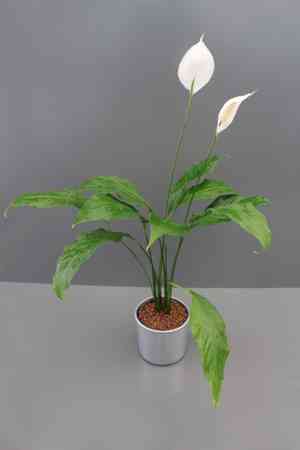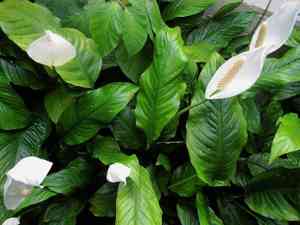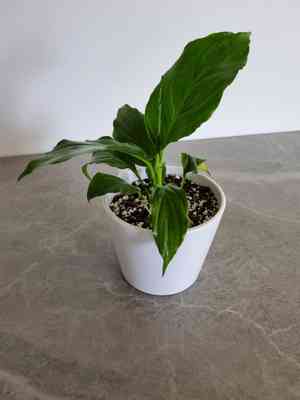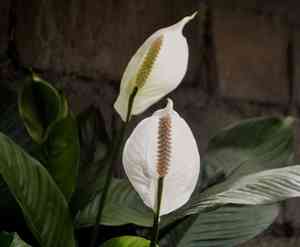
Snow flower(Spathiphyllum floribundum)

Snow flower (Spathiphyllum floribundum)

Also known as: Peace Lily, Spathe Flower

Snow flower (Spathiphyllum floribundum) grows in Venezuela, Columbia, Peru, and Ecuador. Its oddly-shaped flowers can grow as much as 20 cm long. Snow flower has become a popular houseplant around the world because it grows well with or without direct sunlight and because it requires little care.

Attributes of Snow flower

Lifespan
Perennial
Plant Type
Herb
Plant Height
30 cm to 91 cm
Spread
30 cm to 60 cm
Leaf Color
Green
Flower Size
5 cm to 8 cm
Flower Color
White

ForwardPlant - Identify plants with a snap

Identify and diagnose plants, get toxicity alerts, and explore safety guides for all types of fungi.

Try for Free

Images of Snow flower

Snow flower(Spathiphyllum floribundum)

Quickly Identify Snow flower

1
Identify Spathiphyllum floribundum by its broad, dark green leaves and the unique white spathes that resemble a hood or leaf enfolding its flower cluster. The leaves are elongated with a glossy texture, and the spathes eventually turn green as they age.

Scientific Classification of Snow flower

Phylum
Vascular plants
Class
Monocotyledons
Order
Alismatales
Family
Arum
Genus
Peace lilies
Species
Snow flower

Planting and Growing of Snow flower

Care Difficulty
Easy
Watering Schedule
Every 4 days
Sunlight Requirements
Partial sun
Sunshine Duration
4-8 hours
Ideal Temperature
65-75℉
Soil Type
Potting Mix, Peat Mix
Soil pH
6.5-7.5
Fertilizer Type
Balanced
Pruning Season
Spring, Summer
Pruning Area
Branches, Leaves
Pruning Frequency
2 times a year
Repotting Season
Spring
Pot Type
Plastic, Ceramic

water icon How to Water Snow flower?

Spathiphyllum floribundum, commonly known as Peace Lily, thrives with consistent but moderate watering. Aim to water with 200 milliliters at a time, ensuring the soil remains moist but not soggy. Water until the soil is evenly saturated but excess water is not pooling in the saucer.
What are the symptoms of an underwatered Snow flower?
What should I do if my Snow flower is not getting enough water?
What are the symptoms of an overwatered Snow flower?
How to save an overwatered Snow flower?

sunlight icon What Are the Sunlight Requirements for Snow flower?

Sunlight Requirements: Partial sun, Full shade
Duration of light: 3 to 6 hours
Partial sun is best, and maintaining 3 to 6 hours of moderate indirect light suits Spathiphyllum floribundum well, ensuring optimal growth and vibrant leaves.
What is the ideal light condition for Spathiphyllum floribundum?
How can I achieve this ideal light condition?
What benefits will my plant gain from ideal lighting?
More About Sunlight Requirements Techniques

temperature icon What Is the Ideal Temperature Range for Snow flower?

Ideal Temperature: 65 ~ 75℉
The ideal temperature range for Spathiphyllum floribundum, commonly known as the peace lily, is between 65°F and 75°F. At this range, the plant can thrive, maintaining vibrant foliage and producing blooms. It's important that these temperatures are maintained consistently to avoid stress and potential damage to the plant. This ensures not only healthy growth but also optimum flowering conditions.

soil icon What Soil is Best for Snow flower?

Soil type: Loam, Sandy loam, Peat soil
Soil PH: 6.5 ~ 7.5
Spathiphyllum floribundum thrives in nutrient-rich soil, which provides essential minerals necessary for robust growth and vibrant foliage. Loamy soil, enriched with organic matter, enhances the nutrient availability, ensuring the plant's glossy leaves remain healthy and green. Ensuring the soil has excellent drainage properties is vital for Spathiphyllum floribundum to prevent root rot. Sandy loam with its optimal balance of large (sand) and small (clay) particles allows excess water to drain efficiently, keeping the roots from suffocating in waterlogged conditions. While good drainage is crucial, maintaining adequate moisture levels is equally important. Peat soil assists in holding moisture without compromising on drainage, keeping the plant's roots consistently hydrated and supporting healthy, continuous growth. More About Soil

fertilize icon How to Fertilize Snow flower?

Fertilizer type: Balanced
For Spathiphyllum floribundum, use liquid fertilizer at a concentration of 1/2 to 1/4 of the recommended dosage on the product label. For slow-release granular, apply a thin layer, approximately one tablespoon per gallon of soil, to avoid nutrient overload. More About Fertilizing Techniques

prune icon How to Prune Snow flower?

Pruning Time: Spring, Summer
Look for yellowing or brown leaves, as these parts need to be removed. Locate them at the base and prepare to trim at the stem. Cut just above a leaf node or base of a stem. This encourages the plant to produce new growth at the node, making it fuller. Dispose of the trimmed leaves properly, as old leaves can harbor pests and diseases. Keeping them around the plant base can lead to health issues. More About Pruning Techniques

propagate icon How to Propagate Snow flower plant?

Propagate Time: Spring, Early summer
1
Water the parent plant well a day before you plan to divide it. This ensures the plant and soil are hydrated, making it easier to separate the roots without causing undue stress to the plant.
2
Gently remove the plant from its pot and carefully separate the roots, ensuring each new section has a healthy amount of roots and stems. If roots are tangled, use the knife carefully to cut them apart.
3
Plant each division in its own pot with fresh potting mix, and water it thoroughly. Ensure the roots are covered well with soil, and the plant is stable and upright in its new pot.
More About Propagating Techniques

repot icon How to Repot Snow flower plant?

Repotting frequency: Every 1-2 years
1
Spathiphyllum floribundum should be repotted when you notice roots peeking through the drainage holes or the plant has stopped growing. This often occurs every 1-2 years. Another sign is when the soil dries out too quickly, indicating that the pot is too small for the plant.
2
Select a pot that is 1-2 inches larger in diameter than the current one. A slightly larger pot provides ample space for root growth while avoiding excess moisture that can lead to root rot. Ensure the new pot has proper drainage holes to allow excess water to escape easily.
3
The ideal soil for Spathiphyllum floribundum is a well-draining potting mix. A combination of peat, pine bark, and perlite works well, ensuring the soil retains moisture without becoming waterlogged. This prevents root rot and aids in providing balanced aeration and nutrients.

ForwardPlant - Identify plants with a snap

Find the best spots for them to optimize their health, simply using your phone.

Try for Free

Toxicity of Snow flower

Is Snow flower toxic to humans?

The snow flower presents a mild toxic threat to humans if ingested. The entire plant is composed of calcium oxalate, which can result in poisoning if consumed. Should any parts of the snow flower be inadvertently swallowed, the calcium oxalate crystals may infiltrate the delicate tissues of the mouth, throat, and stomach, resulting in severe burning sensations and swelling. Symptoms of toxicity can manifest as oral irritation, excessive salivation, difficulty in swallowing, and vomiting. The discomfort typically arises almost instantly, serving as a warning to individuals about the plant's toxic characteristics and deterring further ingestion. It is essential to exercise caution around the snow flower to avoid accidental consumption, particularly in environments with small children or pets.

Is Snow flower toxic to cat?

Snow flowers can pose a slight toxicity threat to felines. Cats may experience poisoning if they accidentally consume any part of this plant. The presence of calcium oxalate can result in symptoms including oral irritation, a severe burning sensation in the mouth, tongue, and lips, excessive salivation, vomiting, and challenges with swallowing. If a cat displays these symptoms after coming into contact with snow flowers, it is imperative to obtain prompt veterinary assistance to avert further complications and to ensure appropriate treatment.

Is Snow flower toxic to dog?

The snow flower is considered to possess mild toxicity for dogs. Canines might accidentally consume various parts of the snow flower, which can result in poisoning. All sections of the plant, including leaves, stems, and flowers, harbor toxic compounds that pose risks when ingested. Dogs that come into contact with snow flower may show symptoms such as irritation in the mouth, excessive salivation, vomiting, and trouble swallowing. The calcium oxalate present in the plant is the cause of these adverse effects. If a dog shows any signs of poisoning after exposure to snow flower, it is crucial to obtain immediate veterinary assistance to ensure appropriate care and symptom management.

Identify toxic plants for your safety

Learn which plants are harmful to you and your pets, and make informed choices for a safer home!

Try for Free
WARNING
The judgment on toxicity and danger is for reference only. We DO NOT GUARANTEE any accuracy of such judgment. Therefore, you SHALL NOT rely on such judgment. It is IMPORTANT TO SEEK PROFESSIONAL ADVICE in advance when necessary.
More About Toxic Techniques