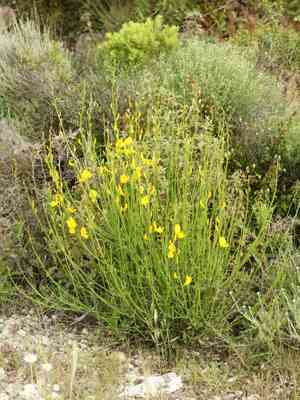
Spanish broom (Spartium junceum)
Also known as: Rush broom
Spanish broom (Spartium junceum) is a deciduous shrub native to regions around the Mediterranean, including West Asia and North Africa. It features tall, green, rush-like stems and is well-known for its vibrant, fragrant yellow flowers that bloom from late spring through summer.
**Key Characteristics:**
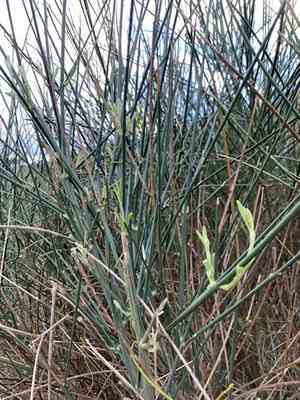
1. **Stems:** Slender, green, resembling rushes.
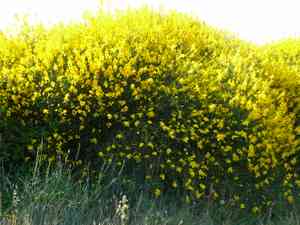
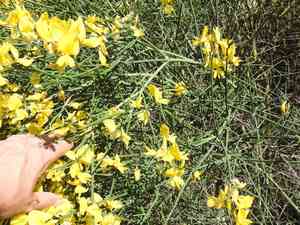
2. **Flowers:** Bright yellow, pea-like, and aromatic.
3. **Leaves:** Very small and sparse, appearing infrequently along the stems.
4. **Growth:** Quick-growing and can become invasive in certain areas.
**Applications:**
1. **Ornamental Use:** Widely planted in gardens and landscapes for its striking flowers and minimal water requirements.
2. **Erosion Control:** Effective in stabilizing soil on slopes and in degraded areas.
3. **Crafting:** The stems are traditionally used in basket weaving and broom making.
4. **Traditional Medicine:** Historically utilized for its fibrous material and medicinal properties.
Note that Spanish broom can be invasive and parts of the plant are toxic if consumed.
Attributes of Spanish broom
Images of Spanish broom

Quickly Identify Spanish broom
Scientific Classification of Spanish broom
Planting and Growing of Spanish broom
 How to Water Spanish broom?
 What Are the Sunlight Requirements for Spanish broom?
 What Is the Ideal Temperature Range for Spanish broom?
 What Soil is Best for Spanish broom?
 How to Fertilize Spanish broom?
 How to Prune Spanish broom?
 How to Propagate Spanish broom plant?
 How to Repot Spanish broom plant?
Toxicity of Spanish broom
Is Spanish broom toxic to humans?
Spanish broom is highly toxic when consumed, primarily because it contains the harmful substances cytisine and sparteine. These hazardous compounds can adversely affect the respiratory system and heart rate. While all parts of the plant contain these toxins, the seeds and flowers are considered the most dangerous. Research indicates that ingestion of the seeds may result in fatal outcomes for children. Poisoning from Spanish broom can lead to gastrointestinal issues such as vomiting, diarrhea, and abdominal discomfort, with neurological symptoms also becoming evident as the amount consumed increases.
Is Spanish broom toxic to cat?
Spanish broom has a moderate level of toxicity for cats. Typically, exposure happens when cats consume different parts of the plant, as every part of the spanish broom is toxic. When a cat ingests spanish broom, it may show signs of physical discomfort, illness, or pain. Given the moderate toxicity of this plant, such symptoms necessitate prompt professional evaluation and treatment from a veterinary clinic to safeguard the cat's health and well-being.
Is Spanish broom toxic to dog?
Spanish broom presents a moderate toxicity hazard to dogs. Any part of the plant is toxic, meaning canines risk poisoning if they ingest it. If a dog consumes portions of spanish broom, it may show symptoms like gastrointestinal distress, vomiting, and diarrhea. In more severe instances, poisoning can result in significant health complications. Therefore, it is essential for dog owners to keep their pets away from Spanish broom. If a dog does consume this plant, prompt veterinary attention is vital for effective management of the poisoning.



