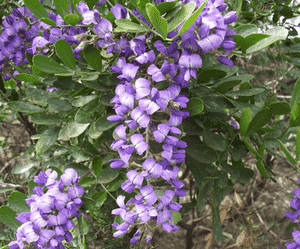
Texas mountain laurel (Sophora secundiflora)
Also known as: Frijolito, Texas mescalbean
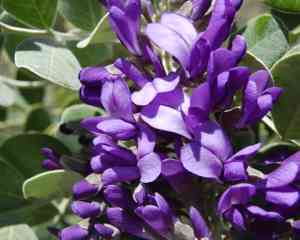
Texas mountain laurel (Sophora secundiflora) is a native evergreen shrub or small tree that typically reaches heights of 10 to 15 feet, though it can grow up to 30 feet. It features clusters of fragrant, purple-blue flowers that bloom in early spring and emit a scent reminiscent of grape soda. The plant produces fuzzy, gray seed pods that contain bright red seeds, which are highly toxic if ingested.
### Distinctive Features:
1. **Flowers**: Showy, purple-blue flower clusters with a grape-like fragrance.
2. **Leaves**: Glossy, dark green, pinnately compound leaves.
3. **Seeds**: Bright red, toxic seeds inside fuzzy pods.
4. **Size**: Generally grows between 10-15 feet, can reach up to 30 feet.
5. **Bark**: Smooth, grayish bark that becomes flaky with age.
### Growing Requirements:
1. **Sunlight**: Thrives in full sun but can tolerate partial shade.
2. **Soil**: Prefers well-drained, alkaline to neutral soils; drought-resistant once established.
3. **Water**: Requires minimal watering; overwatering should be avoided.
4. **Temperature**: Suitable for USDA zones 7-10; withstands high heat and some frost.
5. **Maintenance**: Low maintenance; prune to shape and remove dead wood as needed.
This hardy plant is excellent for xeriscaping and provides ornamental appeal with its stunning flowers and evergreen foliage.
Attributes of Texas mountain laurel
Images of Texas mountain laurel
Quickly Identify Texas mountain laurel
Scientific Classification of Texas mountain laurel
Planting and Growing of Texas mountain laurel
 How to Water Texas mountain laurel?
 What Are the Sunlight Requirements for Texas mountain laurel?
 What Is the Ideal Temperature Range for Texas mountain laurel?
 What Soil is Best for Texas mountain laurel?
 How to Fertilize Texas mountain laurel?
 How to Prune Texas mountain laurel?
 How to Propagate Texas mountain laurel plant?
 How to Repot Texas mountain laurel plant?
Toxicity of Texas mountain laurel
Is Texas mountain laurel toxic to humans?
Texas mountain laurel is classified as a toxic plant, albeit with a relatively low level of severity regarding its adverse effects. Every part of this plant harbors the poisonous alkaloid cytosine, and the seeds pose a particular danger. The presence of cytosine can provoke reactions similar to those of nicotine, leading to gastrointestinal issues such as vomiting and diarrhea. Additionally, it can cause excessive excitement, delirium, and in extreme cases, may induce a comatose condition. Notably, Texas mountain laurel has not been documented to cause skin irritation from direct contact nor does it trigger airborne allergies.
Is Texas mountain laurel toxic to cat?
Texas mountain laurel presents a mild toxic risk to cats. Although every part of the plant is considered toxic, it generally requires substantial quantities to induce poisoning. Cats that consume large amounts of texas mountain laurel may show signs of physical distress or illness, making it essential to seek immediate veterinary assistance. If ingestion occurs, prompt treatment at a veterinary clinic is vital to guarantee the safety and health of the affected cat.
Is Texas mountain laurel toxic to dog?
Texas mountain laurel presents a mild toxicity hazard for dogs. Canines can experience poisoning from this plant if it is consumed in significant quantities. Every part of the Texas mountain laurel, including the leaves, seeds, and flowers, contains toxic substances, meaning ingestion of any portion could potentially result in poisoning. Signs of toxicity may involve gastrointestinal distress, such as vomiting and diarrhea, with more serious symptoms emerging based on how much was ingested. It is essential for dog owners to keep a vigilant eye on their pets and restrict access to Texas mountain laurel. In cases where a dog is believed to have consumed any part of this plant, seeking prompt veterinary attention is critical to secure the most favorable outcome.



